








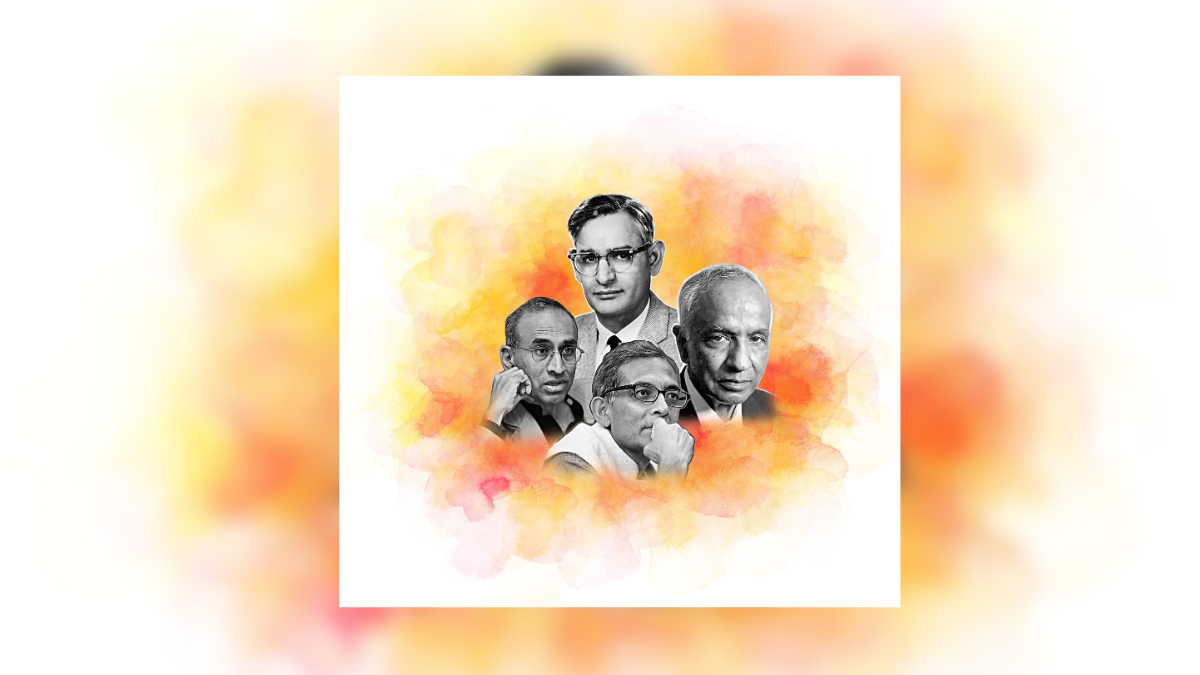
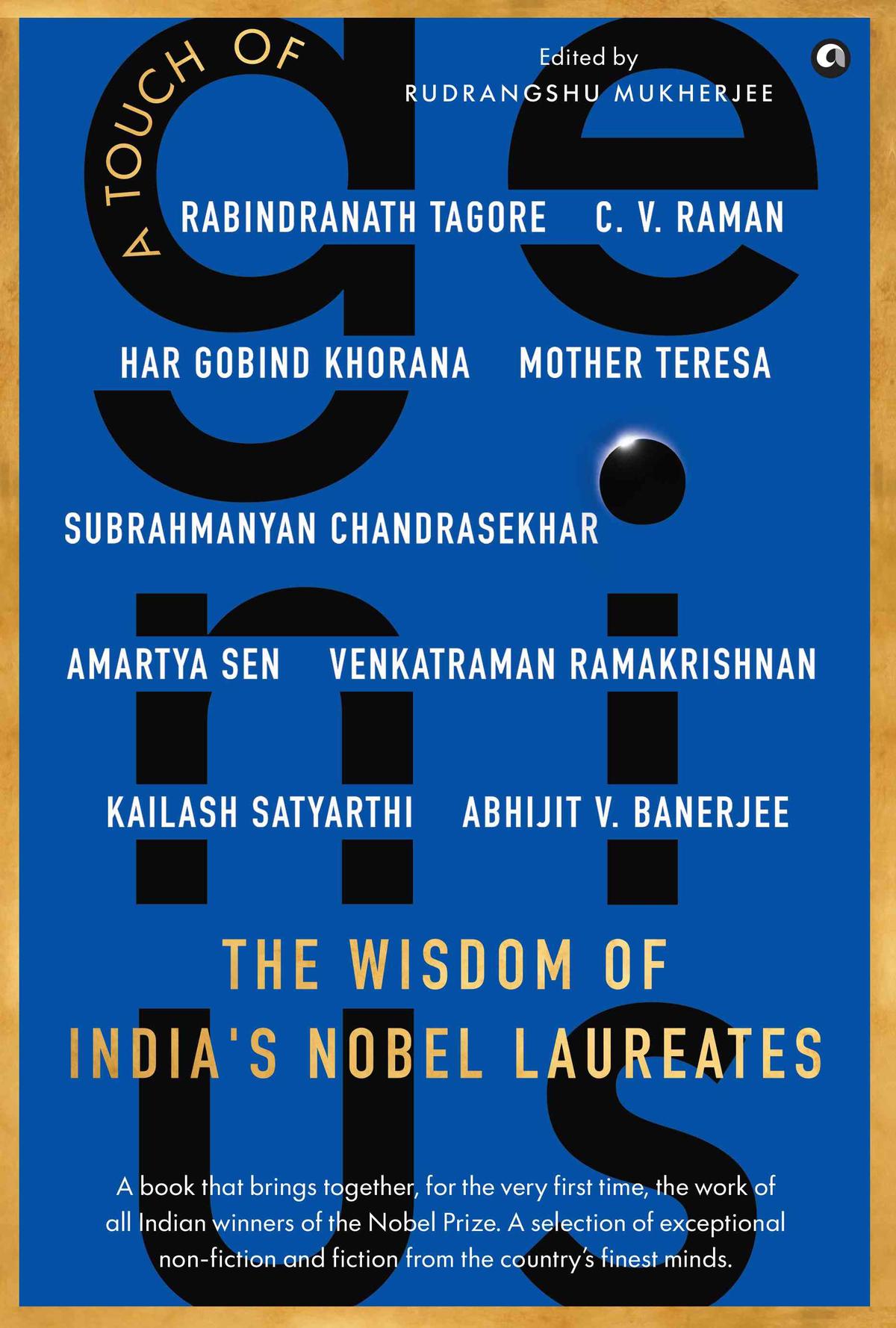
A Touch of Genius, a new anthology of the writings of “Indian Nobel laureates”, edited by historian Rudrangshu Mukherjee, is both nationalist and critical of nationalism — possibly by accident — and exists in an unresolved tension with itself.
But first, Mukherjee’s introduction is absorbing. His use of Isaiah Berlin’s distinction between the hedgehog and the fox to argue that ‘genius’ is that which resists disciplinary pigeonholing is insightful. The intellectual connections he traces between some of the laureates also give the collection a coherence it might otherwise lack.
Risking genetic essentialism
Now, four of the book’s Nobel laureates — Har Gobind Khorana, Subrahmanyan Chandrasekhar, Venkatraman Ramakrishnan and Abhijit Banerjee — won the prize for work they did outside India. None of them were Indian citizens for most of their lives. What makes them or their work “Indian”? When the media addresses these individuals as “Indian Nobel laureates”, the narratives risk celebrating genetic essentialism: the notion that India can claim their work because they share their genes with Indian ones at a population level.
Chandrasekhar did all his most important work when he was at the University of Chicago. Khorana conducted his prize-winning work on the genetic code in the U.S. and Canada. Ramakrishnan did his work on ribosomes at the University of Cambridge. Banerjee has lived and worked in the U.S. for decades now.
If anything, these individuals could be, or could have been, ‘Indian’ because they were moulded by Indian educational and cultural environments before they left. In a conversation with the American physicist Spencer Weart included in the book, Chandrasekhar says C.V. Raman’s discovery had a “big impact” on him. Ramakrishnan grew up in Tamil Nadu and Banerjee’s parents were both Indian economists. It is hard to say where intellectual formation happens.
However, that doesn’t meaningfully make their work ‘Indian’. In fact, the label is best applied to Amartya Sen, Rabindranath Tagore and Raman. Sen’s intellectual preoccupations are about India per se. Tagore and Raman worked in India, for Indian institutions, on problems they encountered in India.
The curation omits these distinctions, however. Many of these laureates left India partly because the scientific and institutional infrastructure of their time could not support their work. If a laureate has not toiled in Indian conditions, including those particular to the country pre-liberalisation — from chronic underfunding to the concentration of institutional power in individual figures — the label only has the counterproductive genealogical meaning.
A Nobel Prize certifies achievement in a particular domain over particular criteria at a particular historical moment. It says nothing about the laureate’s broader wisdom. Yes, these individuals possess the material and reputational freedom to think in public without immediate professional consequences. The range of writing in the book is also remarkable: it has a physicist writing on beauty, an economist on Bengal’s rivers, and a molecular biologist on mortality. But the prize confers no special authority here: wisdom belongs to anyone, Nobel Prize or no.
Beyond the nation
Indeed, if we could set aside the luminance of its authors, A Touch of Genius seems like a showcase of scientific humanism, often delivered in contrasting voices. Raman’s prose is a relic of a more romantic era of discovery as he imbues the physical world with a sense of Victorian wonder. Ramakrishnan, on the other hand, offers a conversational and witty voice, and in the process manages to reveal himself to be human, not institution.
Chandrasekhar wields a sophisticated diction as he looks for beauty in “King Lear, the Missa Solemnis, and the Principia” while Kailash Satyarthi eschews academic distance for the emotional testimonial, focusing on the “blackened feet” of a desperate father or the “cool sunlight” a rescued child feels. Together with Khorana’s modesty and Banerjee’s slightly irreverent scepticism, the collection proves the laureates’ ability to command the English language was essential to making their specialised “geniuses” a public legacy.
Having assembled such a remarkable portrait, the anthology strains to bend it into a smaller, stiffer frame. Simply, you cannot use Tagore — the book’s most voluminous contributor — to make an argument for Indian greatness without sawing off the branch you are sitting on.
Likewise, Sen describes democracy as a universal value and his essays insist on the importance of reasoning and individual capability over any collective identity. The position is fundamentally anti-essentialist. Mother Teresa’s writings are also about Christ, love, and the soul; her theology or ethics are not Indian because they belong to the global history of the Catholic Church, rooted in a Christ-centric worldview indifferent to the book’s nationalist enclosure.
In the end, A Touch of Genius is perplexing because its two characters are at odds with each other. It could be a chance for readers to expand their minds but only if they also ask tough questions about what the ‘genius’ in its pages really has to do with India.
A Touch of Genius: The Wisdom of India’s Nobel Laureates
Ed. Rudrangshu Mukherjee
Aleph Book Company
₹1,499
mukunth.v@thehindu.co.in
Published - May 29, 2026 06:33 am IST