





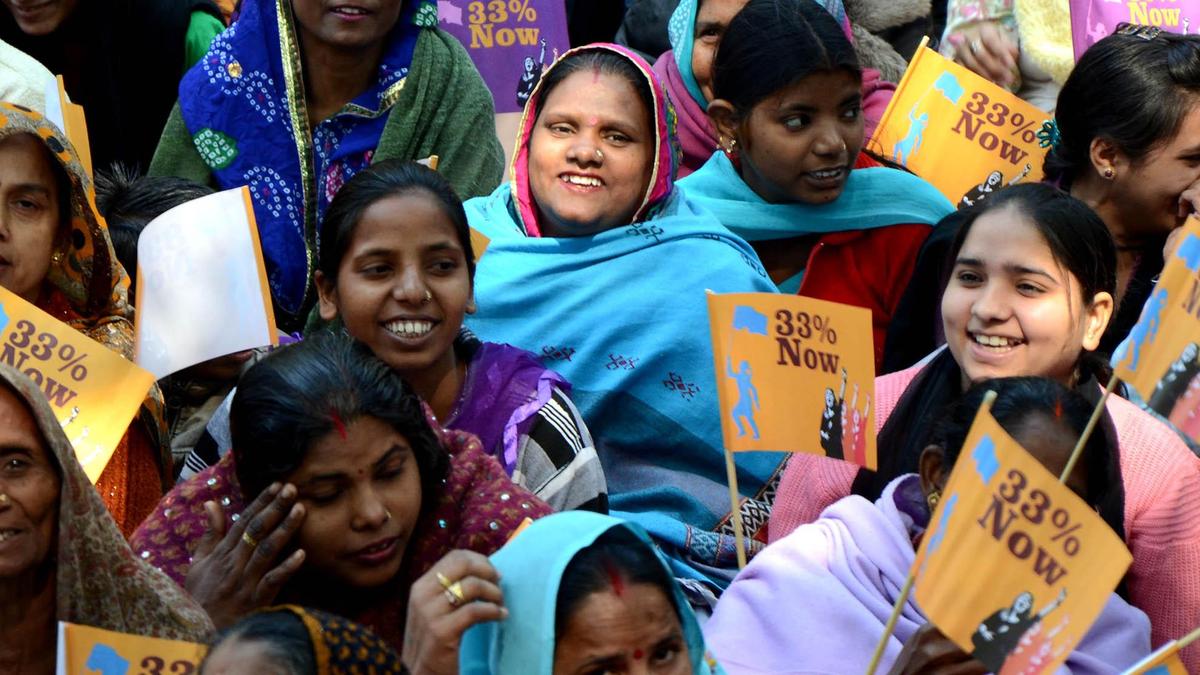
On Tuesday (April 14, 2026), the government announced its proposed legislation aimed at establishing 33% reservation for women in the Lok Sabha and the Legislative Assemblies of States and Union Territories (UTs). The three Bills were made available on the MPs’ portal 48 hours before the Parliament’s upcoming session, which begins on Thursday (April 16, 2026).
The government intends to introduce a Constitution Amendment Bill, a Bill concerning delimitation law, and an enabling Bill to implement the proposed legislation in Delhi, Jammu and Kashmir, and Puducherry—three Union Territories with their own legislatures—during the Lok Sabha session on April 16 to expedite the enactment of the Women’s Reservation Act of 2023.

Here are the key takeaways from Women reservation bill and delimitation that you should be aware of.
Women’s Reservation (Amendment) Bill
1. Unlike the 2023 version, which was tied to the 2021 census, this Bill seeks to eliminate that delay to ensure that one-third of all seats are reserved for women starting in the 2029 General Election. The Bills proposes to to carry out the delimitation based on the latest census, referring to the 2011 Census.
2. With the proposed expansion of the Lok Sabha, one-third of the 850 seats will be specifically reserved for women candidates.

3. The Bill requires that reserved seats be rotated following each delimitation exercise, guaranteeing that women’s representation is spread across various geographical constituencies over time.
4. The reservation will apply not just to the Lok Sabha, but also to State Legislative Assemblies and the Delhi, Puducherry and Jammu and Kashmir Legislative Assemblies.
Delimitation Bill
1. This Bill aims to significantly expand the Lok Sabha from 543 to 850 seats (815 from States, 35 from Union Territories), acknowledging the substantial population growth in India since the last adjustment in 1976.
2. For nearly 50 years, the apportionment of seats in the Lok Sabha had been effectively frozen, with no reallocation based on population shifts. This freeze meant that even as some States experienced population growth while others saw declines, the distribution of seats did not reflect these demographic changes. This bill officially ends the 50-year “freeze” on reallocating seats between States, allowing for a redistribution based on current population trends.

3. This change could have significant consequences for political power and influence at both the State and National levels. The bill will effectively increase the seat count for Northern and Central states (like UP and Bihar), where population growth has been high, while Southern States will see much smaller increases.
Published - April 15, 2026 04:23 pm IST