









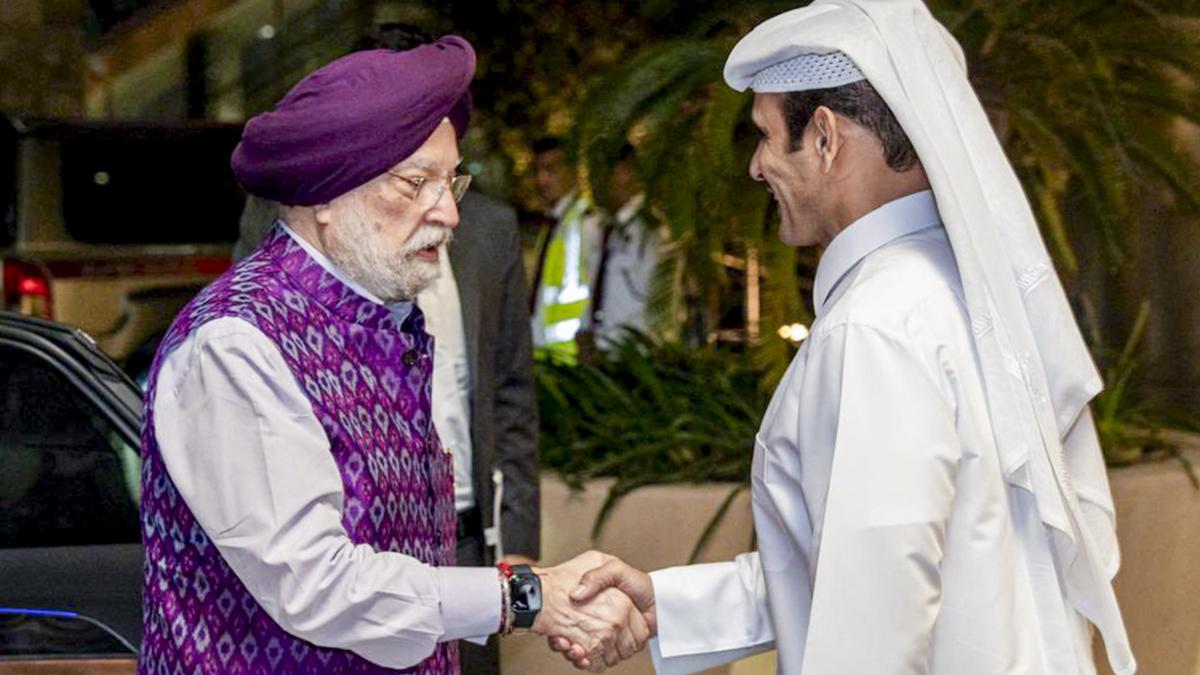
India is looking to turn on the LNG-LPG tap soon from Qatar with Minister of Petroleum and Natural Gas Hardeep Singh Puri completing a two-day visit to the country and meeting with Qatar Energy officials and responsible ministers.
Qatar was contributing some 40% of India’s LNG imports that contributed half of India’s natural gas consumption. India’s first ever LNG imports were intended to come from Ras Laffan, Qatar, some 25 years ago for the troubled Enron power plant in Dabhol. India has since then become a major customer of Qatar, taking in some 15% of its annual LNG production. Citing war, both sides had declared a force majeure termination of contracts.

Qatar produces LPG from its refineries, through a Gas-to-Liquids facility, as well as through natural gas processing, the last being the biggest contributor. Qatar’s LPG provides some 30% of India’s LPG imports. And the current crisis has impacted India’s LPG requirements, much more than even crude oil.
Qatar has reported attacks in its GTL plant and petrochemical units that produce LPG. Fall in natural gas production, too, will in turn affect LPG output and getting natural gas production to full potential may well address the LPG supply to a large measure.
In the recent war, four LNG production trains, out of a total of 14 in Qatar, were damaged, reportedly reducing production capacity by 17%.
“Repairs are a matter of months, probably years, while ramp up of production from the undamaged 10 trains could be a matter of weeks,” says Jean-Christian Heintz, founder at Wideangle LNG consulting.

But the bottleneck may well be shipping, i.e., exporting to India, not ramping up of production at Ras Laffan. Three of the five loading berths are operational, which implies an impairment of 40%.
“Further, the LNG voyage must be 100% safe. Qatar Energy cares a lot about reputation, safety and security,” says Mr. Heintz. The complex dynamics of who ends up controlling the strait will be key in resuming LNG imports to India, or other countries, for that matter.
During Mr. Puri’s visit, the two sides “emphasised the need for unimpeded freedom of navigation and the global flow of commerce to maintain global supply chains.”
But tolls are on the negotiating table.
Qatar’s North Field and Iran’s South Pars are two halves of the same gas field, which may well mean the two countries need to have a working relationship into the future.
While stakeholders such as Adnoc have come out against any tolls, for Qatar, this would mean paying for the repairs to get production up, on top of paying the toll, says Mr. Heintz.
Published - April 11, 2026 11:56 pm IST