









Colours without words
For Rupak Rajendra Munje, colour arrived before language. At 29, this abstract artist has built a quiet but steady presence through canvases filled with fluid strokes, layered pigments and the distinctive drip patterns that have come to define his work. Non-verbal and on the autism spectrum, Rupak communicates largely through art — a practice that began as therapy and gradually evolved into purpose.
Born in Hyderabad and now living at Ranjith Road in Kotturpuram, Rupak was diagnosed with autism and intellectual disability at the age of two-and-a-half. His mother, Ranjana Rajendra Munje, recalls the uncertainty that followed. “There was very little awareness about autism then. We were completely clueless and had to slowly learn about therapies, special education and structured support to help him,” she says.
Art entered his life during an autism awareness programme at Forum Art Gallery in Adyar, where he was introduced to free painting. What began as sensory engagement soon developed into a sustained artistic practice, with abstract compositions, layered textures and drip-based forms becoming central to his work. His father, Rajendra Munje, a fine arts graduate and former advertising professional, stepped away from commercial work to mentor him closely. “We give him a blank canvas and allow him to express freely. He creates first, and we try to understand the art later. It is a do–think process,” he says, adding that he often spends hours interpreting and titling Rupak’s abstract works so viewers can connect with them.
Rupak’s art has since travelled widely, with exhibitions in Delhi, Bangalore and Kochi, and showcases in international galleries, including in Geneva. He has received fellowships from India Inclusion Foundation and Hyundai Art for Hope, and the Tata Steel Foundation’s Sabal Award. One of his most recognised works — a fluid drip painting — was adapted into a mug design by The Indian Twist during the pandemic, bringing his artwork into everyday spaces.
Rupak’s journey is also the subject of a 23-minute documentary, A Palette of Emotions, by filmmaker Rahul Manoj, which explores the Munje family’s acceptance of autism and their shared engagement with art. “It is a story about the family, not just autism,” Rahul says. “When I visited their home, it felt like any other family. That normalcy and acceptance is what stayed with me.” For Rahul, Rupak’s artistic process stood out as both instinctive and deeply rhythmic. “His art has a certain rhythm to it, and he has a great mentor in his father, who is also an amazing artist,” he says.
What struck him most, Rahul notes, was how art had quietly shaped the entire household. “His art journey has not just affected him; the entire family is involved in art — the father is painting, the sister is painting. It was interesting to see how art had become a shared space for the family,” he adds.
Finding his voice
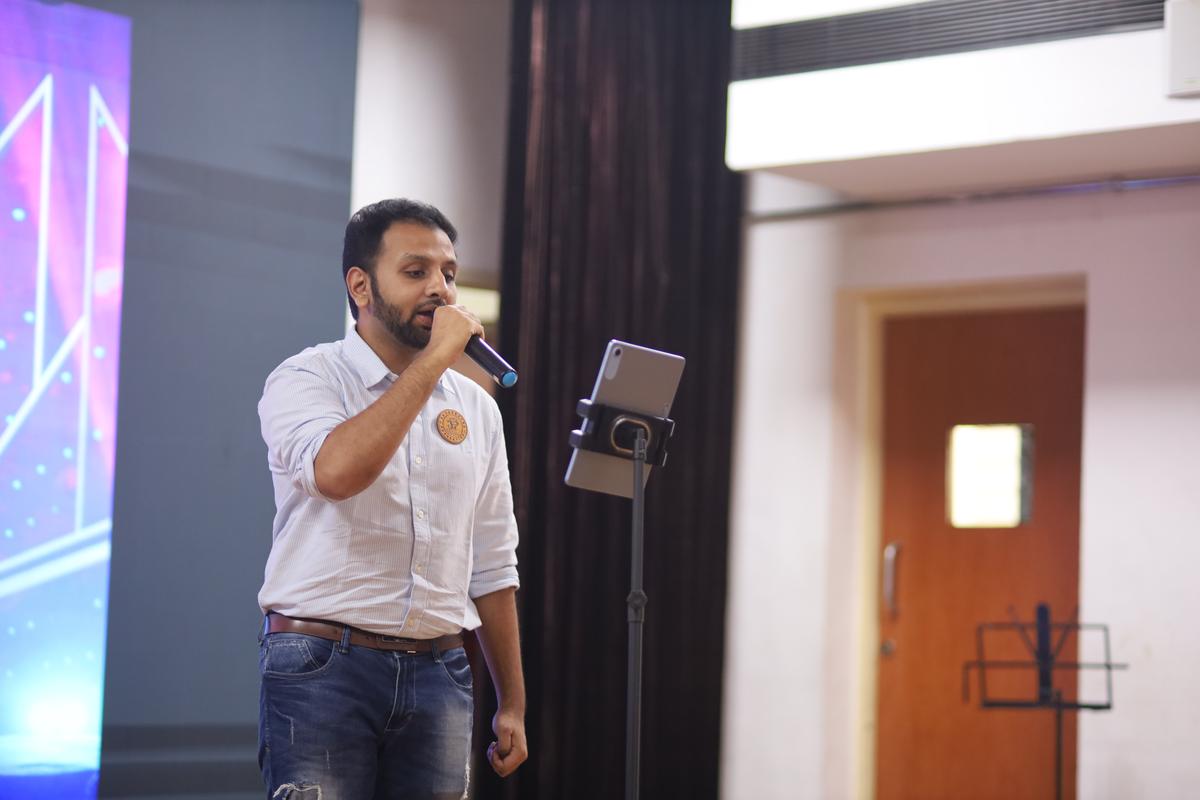
Ashwath Radha Mohan
Thiruvanmiyur resident Ashwath Radha Mohan’s day shuttles between work and music, these two engagements bringing a balance to his life, one he managed with persistence and the steady support of those around him.
Twenty-eight now, Ashwath was diagnosed with autism at the age of three; he was non-verbal until nearly seven. After brief forays into what proved to choppy waters of mainstream schooling, he found himself sailing at an even keel at Alpha Omega, a special school that allowed him to develop independence at his own pace. He would go on to complete both his BSc and MSc in Visual Communication.
Professionally, Ashwath has eased into structured work, having previously worked at Cloud Designs on corporate gift design and currently with Saras Media, where he handles presentations and communication-related tasks while working partly from home.
Music has remained the constant thread in his life. As an infant, he would sit upright and listen intently whenever film songs played, revealing an early sensitivity to sound. Years later, a Hindustani music teacher was struck by his instinctive grasp of pitch and rhythm. The turning point came during the pandemic, when his mother, Sheeba Sojanar, encouraged him to sing and share recordings. This led him to Samagratha, a collective of neurodivergent and visually impaired musicians, where Ashwath now performs at concerts, weddings and public events, earning recognition and professional payment. He continues voice culture and hopes to participate in reality singing competitions.
“I think 60% of Ashwath’s journey is his own hard work and the rest is the love and acceptance he received from people around him,” says Sheeba. “There is nothing wrong in being autistic, it is just being different, and I am very proud of my son.” --
‘Cooking up’ confidence
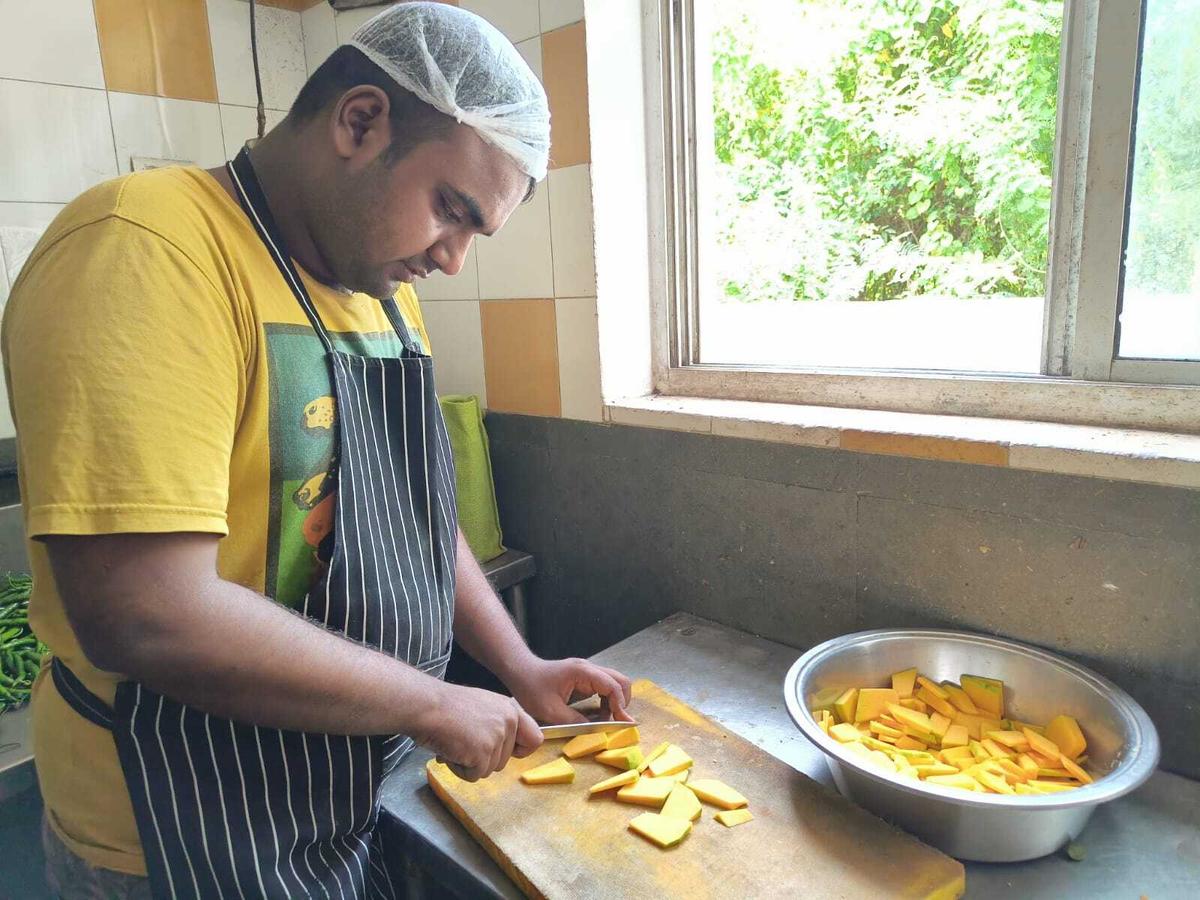
M. Ramanathan
One afternoon at his home in Vettuvankeni, M. Ramanathan took charge of the kitchen. When his mother stepped away for a work call, leaving half-prepared pasta on the counter, Ramanathan turned to his grandmother and began guiding her through each step, pointing to ingredients, signalling what needed to be added next, and ensuring the dish was completed. By the time his mother returned, the pasta was ready.
“That was the moment I realised how confident he had become,” says his mother, S. Subbulakshmi. “He knew the process and was able to communicate and get the work done.”
Diagnosed with autism at a young age, Ramanathan has gradually built independence through his interest in cooking. His journey began at home, where he observed his grandmother in the kitchen and started helping with small tasks such as arranging ingredients and cutting vegetables. Structured training at The CanBridge Academy in Thiruvanmiyur helped develop this interest further through step-by-step visual instructions and routine-based learning. The training later led to an internship at Uncle Sam’s Kitchen, where Ramanathan worked in an inclusive environment preparing vegetables and assisting in meal preparation. Twenty-six years old now, Ramanathan now continues to work there and receives a stipend.
“Cooking came naturally to him because he is a keen observer,” Subbulakshmi says. “The internship helped him gain confidence and understand a work routine.” Biryani, pulao and pasta are among his favourite dishes, and he often assists with cooking at home. His communication, she adds, has improved through structured routines and workplace exposure.
“Autism is just one part of his life,” she says. “What matters is that he has found something he enjoys and is able to work with confidence and dignity.”