





In encapsulating multitudes, Frank O’Hara’s ‘Having a Coke With You’ seems peerless. There is a sleight of hand at work in the poem that can easily escape readers, so primed are they for consummate pleasure. It begins with vulnerability — a confession of love — and while it gestures towards a critique of art and artists, wandering through a city that can make and break you, it ends with: …which is why I’m telling you about it. The post-facto rationalisation of events is, in the end, about love. And that appears to be the point.
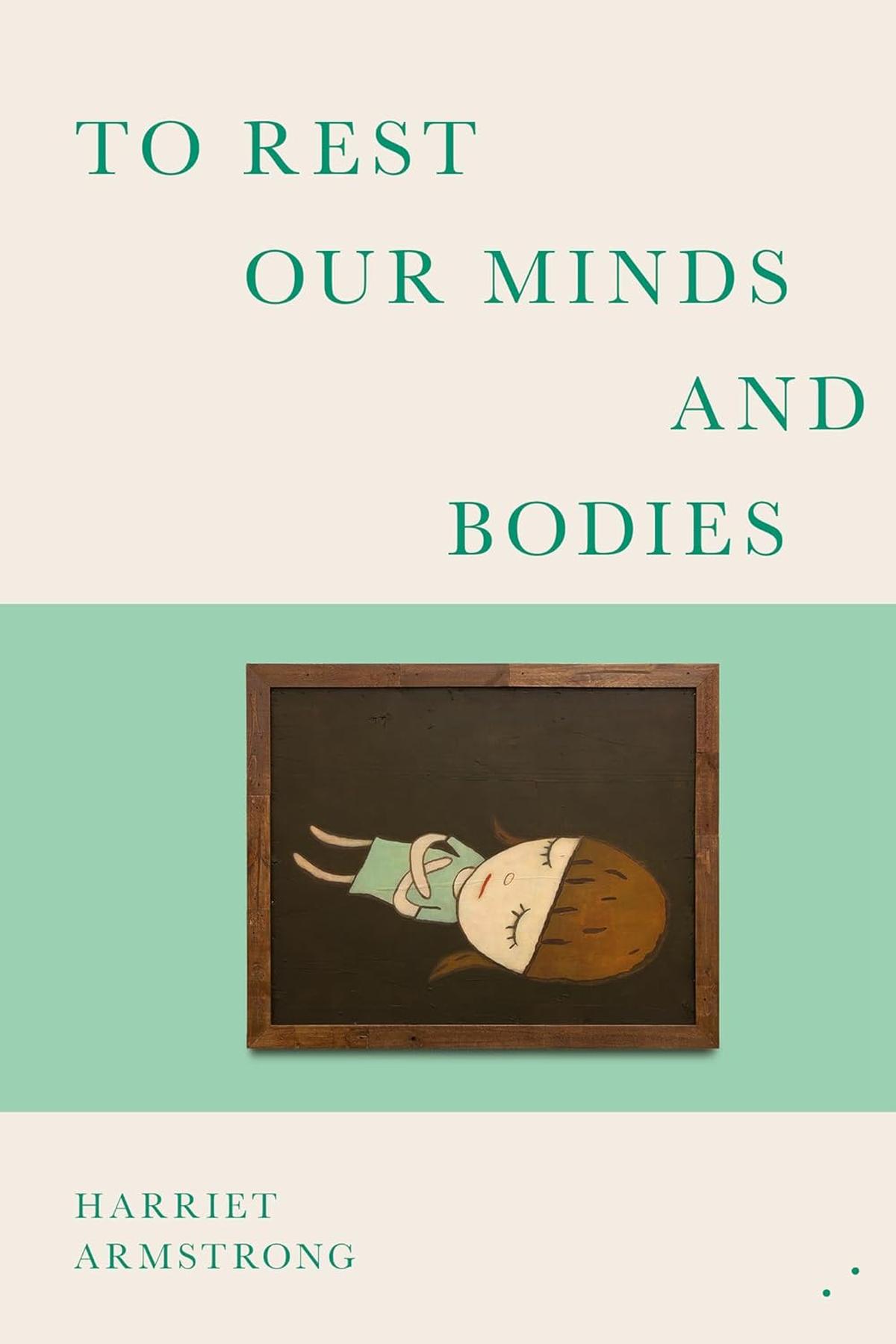
If there is a contemporary novel that captures both the complexity of unrequited love and the uncertainties of a 20-something narrator driven to make sense of her experience, it is Harriet Armstrong’s To Rest Our Minds and Bodies (Les Fugitives). Shortlisted for the 2026 Dylan Thomas Prize, the debut novel is already being translated into multiple languages. In this interview, the London-based author shares her thoughts on exploring experiences around female sexuality. Edited excerpts:


 How did you conceptualise To Rest Our Minds and Bodies?
 I had a visual sense of the structure and trajectory of the novel before I had really figured out the details of the plot and characters. I conceptualised the book as following a shape whereby the protagonist starts out quite detached from everything around her, and experiences a move inward, towards this sense of meaning and connection she’s been longing for — before being flung out again into distance and disconnect. I also had the idea that I wanted the book to feel like life as it is lived: a series of events that don’t seem to be leading the protagonist towards anything, or following any meaningful pattern or ‘plot’; I wanted to attend to details, even details which seemed irrelevant, and to look honestly at experiences which feel, at least to the protagonist, incoherent or illegible. That combination of ideas guided the novel’s early stages.
Given that your book has been compared to contemporary classics in the tradition of The Bell Jar, how do you view Sylvia Plath’s prose and poetry?
Yes, I love The Bell Jar very much. Reading it at 17 and then again at 21, while writing the novel, definitely inspired me in all sorts of conscious, and surely unconscious, ways in writing my own book. I’m very happy my novel has been read by some as in conversation with Plath’s work.

Reading your Granta essay ‘Lol I’m trying to tell you how it feels for me’ alongside your book, I wondered if you were exploring how the inability to articulate certain emotions can itself become a form of expression?
That’s an interesting question — yes, certainly. In To Rest Our Minds and Bodies, I was interested in trying to articulate these feelings and experiences which the protagonist herself is unable to articulate — her love for Luke, for instance. And that’s true, my Granta essay is also linked with that drive to use language to explore certain unexpressed or coded states or feelings. I love the thought of writing as a context in which certain feelings and ideas can be expressed, despite being largely inexpressible in social life or real-time speech.
It’s rare to find a rage-baiting or disordered non-male protagonist taking up space in a novel. Would you consider your debut a pushback against this notion?
A: I think I was more interested in exploring my protagonist’s relationship with gender, and her relationship with the act of sex, too, and in looking at the ways in which those relationships impact and are impacted by her interactions with men. So many of my favourite books are about women’s internal lives, so I suppose that writing a book about it didn’t particularly feel like pushback against anything, to me. I was interested in trying to write about certain experiences which I hadn’t seen explored in fiction before, relating to female sexuality (though not only female sexuality, of course). I was trying to push boundaries in how I wrote about sex, more than through the gender of the protagonist.
The interviewer is a Delhi-based queer writer and culture critic.