


This is the story of a lineage spanning nine generations, replete with dance and music, culture and customs, trials and tribulations. The torchbearer of this line, Aniruddha Knight, grandson of the illustrious Balasaraswati, narrates the story.
Pappammal, who lived in the mid-18th century, was an esteemed dancer, part of the Thanjavur court of yore. That she was not a fictitious character is evident from the records of taxes that she had paid the British government. Her daughter Rukmini was a musician in the same court as was her grand-daughter Thanjavur Kamakshi, who was a well-known dancer as well.
There seems to have been a continuous entwining of the lineage of this family with that of the Thanjavur Quartet. Thus, it was that Thanjavur Kamakshi came to the Travancore court, famed for its patronage of the arts, along with Sivananda and Vadivelu. The patronage of the royal courts must have surely been based on the credentials of these gifted women — Kamakshi was a disciple of Subbaraya Sastri, son of Syama Sastri of the Trinity of Carnatic music, and her daughter Sundarammal was a disciple of Annaswami Sastri, his grandson. Into this enriched ancestry came Veena Dhanammal, who was also reportedly taught by the direct descendants of Dikshitar’s parampara.
Continuing the legacy were her four daughters, one of whom was Jayammal, Balasaraswati’s mother. Aniruddha’s mother, Lakshmi, was Balamma’s only daughter. “She used to recollect how Balamma enjoyed watching me move to her music and nattuvangam, accompanied by her brothers, T Ranganathan on the mridangam and T Viswanathan on the flute,” says Aniruddha.
Edited excerpts from an interview.
What was the kind of training that your grandmother underwent to mould her into the legend she became?
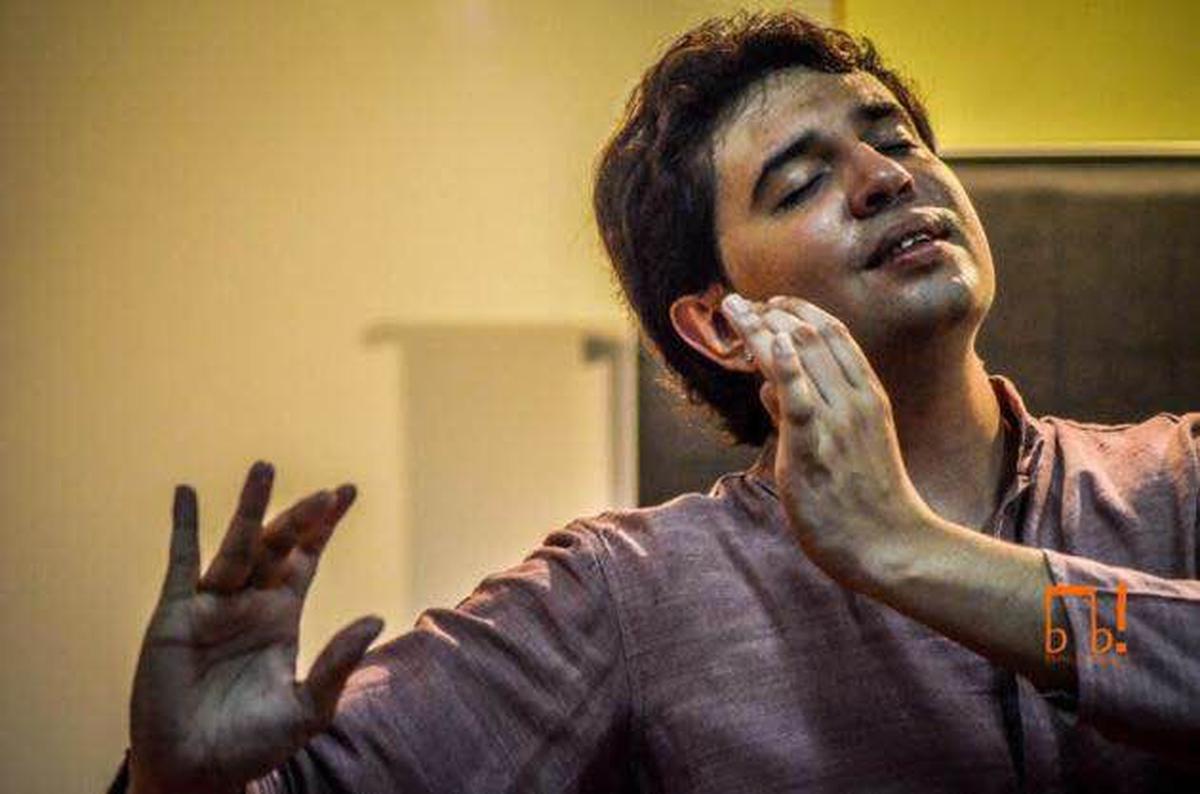
Aniruddha Knight | Photo Credit: Special arrangement
Kandappa Nattuvanar, a great-grandson of Ponnayya of the Tanjore Quartet, was her guru. Her style of dancing bore the influence of his tutelage, which was meticulous. One had to master 150 adavus, only after which the student could move on to abhinaya. Insisting on perfection, he demanded six hours of intense training every day. He was so strict that after a point only Balamma was left as his student! My mother says that she noticed the scars from the caning on her legs after my grandmother died! Balamma was well trained in music and she was a scholar in Telugu, Sanskrit and Tamil, all of which enhanced her art, making it holistic. Apart from all this was her resilient nature that surmounted personal challenges and illnesses such as rheumatic fever and cancer. She was on a no-salt, no-sugar diet almost her entire life!
How would you describe the Balasaraswati style?

Aniruddha Knight with his grandmother, the legendary danseuse Balasaraswati | Photo Credit: ANIRUDDHA KNIGHT
The style is very detailed and music is equally important in the performance. The accompanying musicians would do alaap, especially before the varnam. In fact, in those days, the first rows in the hall would be occupied by known musicians of the time, who came to enjoy the music as well! The dancer sang as she performed and the manodharma part would be enacted spontaneously and not choreographed – choreography is a Western concept! The hallmark of this traditional Bharatanatyam was extempore abhinaya and the interaction with the pakkamelam during the recital.
Balamma’s forte was her capacity to involve the audience totally as she got into the role of the character she was playing. Embellishments by way of costume and props were minimal – as though she wanted to convey that the characters she portrayed and the art she stood for, rose above such triviality.
What was her journey like? How did she become popular in the West?
The series of legislations that culminated in the Devadasi Abolition Act, 1947 posed a dampener to those seriously practising the art, like Balamma. This led to a a lull in her career. But in 1961, she was invited to present at the East-West Music Encounter conference in Tokyo, where she got an overwhelming response. Following this, she was invited to the US by the Asia Society that had sent Charles Reinhart to request her.
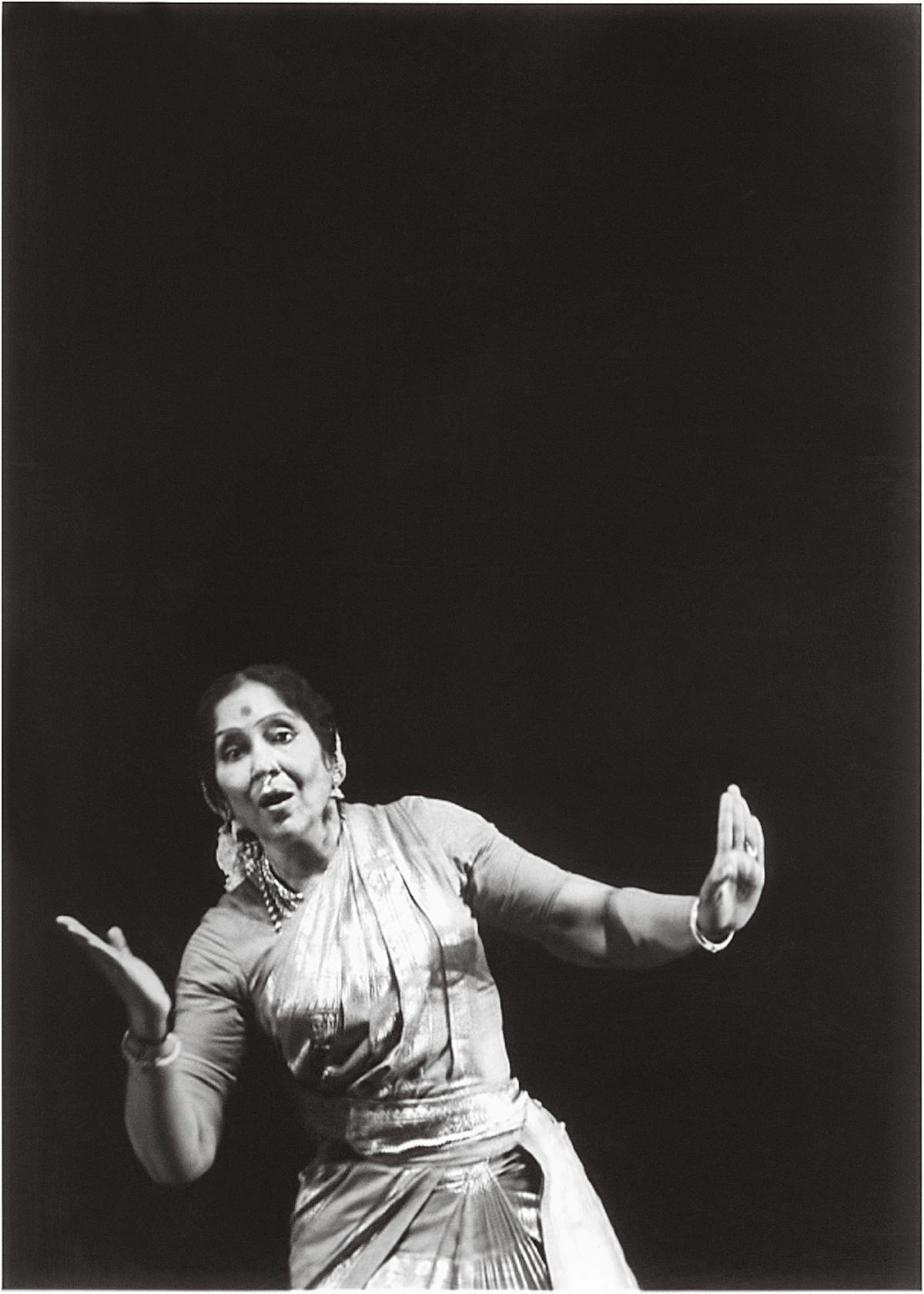
San Francisco 1974 Balasaraswathi Photo: Jan Steward | Photo Credit: JAN STEWARD
‘Do you know I waited three months to get your grandmother to agree!’ Charles once told me. Thus it was that she performed at the prestigious Jacob’s Pillow in Massachusetts in 1962, which was the beginning of a series of successful tours in the ensuing years. It is ironic that it was in the West that she started to be appreciated and valued. In the following two decades she continued to visit the US and held residencies at Wesleyan University.
Having said this, I must mention that she performed widely in India too. In fact, she was one of the earliest dancers to perform at the Navarathri Mandapam in Thiruvananthapuram.
As the sole descendant of the lineage how do you carry the tradition forward? Do you face any challenges?
I was very young when my grandmother passed on and, at that point, my mother, Lakshmi Knight was the only direct successor in the line. With her falling prey to cancer, I was devastated – losing a mother, friend and guru all at once! Both of us realised we were racing against time and so it was a period of intense teaching and training from her, as she passed on the legacy to me.
Aniruddha Knight | Photo Credit: SPECIAL ARRANGEMENT
Through the Balasaraswati Institute of Performing Arts, we teach students for free, but with no compromise to the training process or the tradition. Along with dance they are taught music, the mridangam and nattuvangam. The sad fact is that people do not realise the education that needs to go into dance. Students too do not understand the vastness of any art form. Everyone needs quick fixes!
The challenges are more for me than the students. The boundaries of the style are open. But how far can you push it within the tradition? The traditional recital with its equal emphasis on music, would require a minimum of three hours to present the margam. When you try to fit it to the present scenario, we end up losing a lot of items from the repertoire.
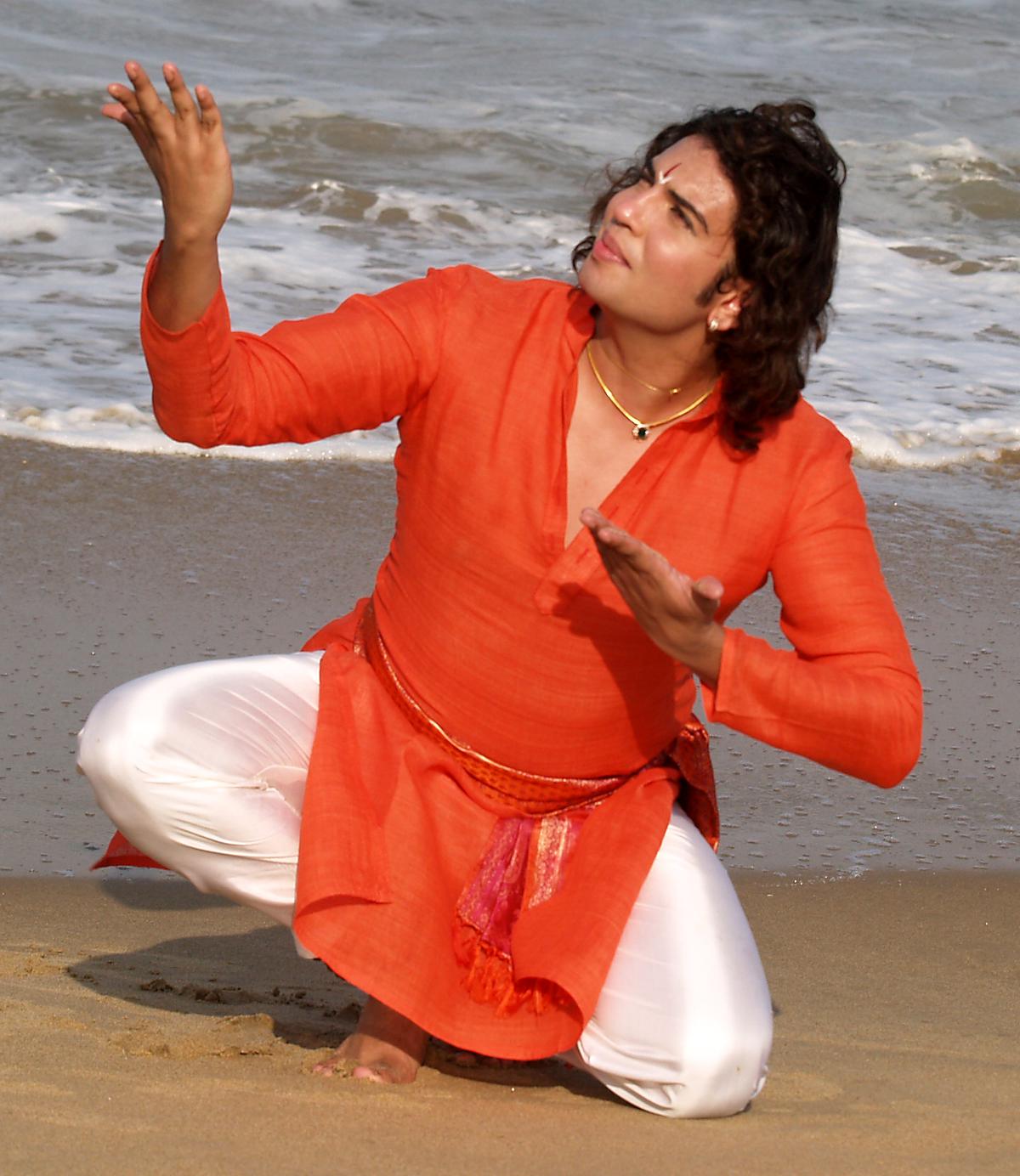
Anirudha Knight at Neelankarai Beach, in Chennai on July 28, 2009. | Photo Credit: KARUNAKARAN M
Then there is the question of gender bias too – when I present heroine-based themes, which constituted most of Balamma’s repertoire, there is reluctance from the audience to accept me. In response I would like to ask – if men played female characters in Kathakali and Kuchipudi, why can’t a man do vice versa in Bharatanatyam? Birju Maharaj, for instance, played nayikas in Kathak. I would say that art transcends gender. Going beyond looks and costumes, this was what Balasaraswati conveyed through her art – to rise above superficiality!