







Every summer, restaurants across Chennai begin speaking the language of mangoes. Mango cheesecakes appear on café counters, mango thalis arrive on banana leaves, and nearly every seasonal menu promises some variation of nostalgia built around the fruit. What was once a marker of home kitchens and roadside carts has now become an annual dining trend of its own.
This is perhaps why another mango-themed meal can initially feel easy to dismiss. But somewhere between the manga pachadi, slow-cooked indigenous dals, and conversations around forgotten native grains, the lunch at Cook Gramam begins to unfold into an attempt to reconnect diners with ingredients that have quietly disappeared from urban Tamil kitchens.

Back after a renovation and revamp, Cook Gramam in Anna Nagar is now an elevated dining experience for those who want to eat a summer-friendly native-kitchen inspired meal. “Everybody already knows idli, dosa, rice and sambar. We wanted to bring back old foods in a new way. People had forgotten many indigenous grains and pulses because they didn’t know how to cook them,” says PK Senthil Kumar, who runs the restaurant along with his partner Devi.
The special mango meal experience opens with a glass of mambazham then saru. Though labelled a saru (juice), it arrives closer to a thick mango pulp which is noticeably sweet and best eaten with a spoon. The mambazham paniyaram, sweet and crisp, served with a sweet and sour dip would have fit better on the dessert platter. The mangai bhaji is unique and reminds one of raw mangoes eaten at the beach, and mangai kosimbiri is among the fresher dishes in the spread.
Served thali style on a banana leaf, the virundhu brings mango into the meal in different forms — raw, ripe, tempered and pickled — without turning every dish into a novelty. The mangai thalicha pappu is comforting and well-rounded, while the mango kottai kadugu kulambu, made with the seed of the fruit,has a deeper, more pungent flavour. The mangai poondu rasam, with its garlic-flavoured warmth and gentle tartness, is one of the more memorable parts of the meal.
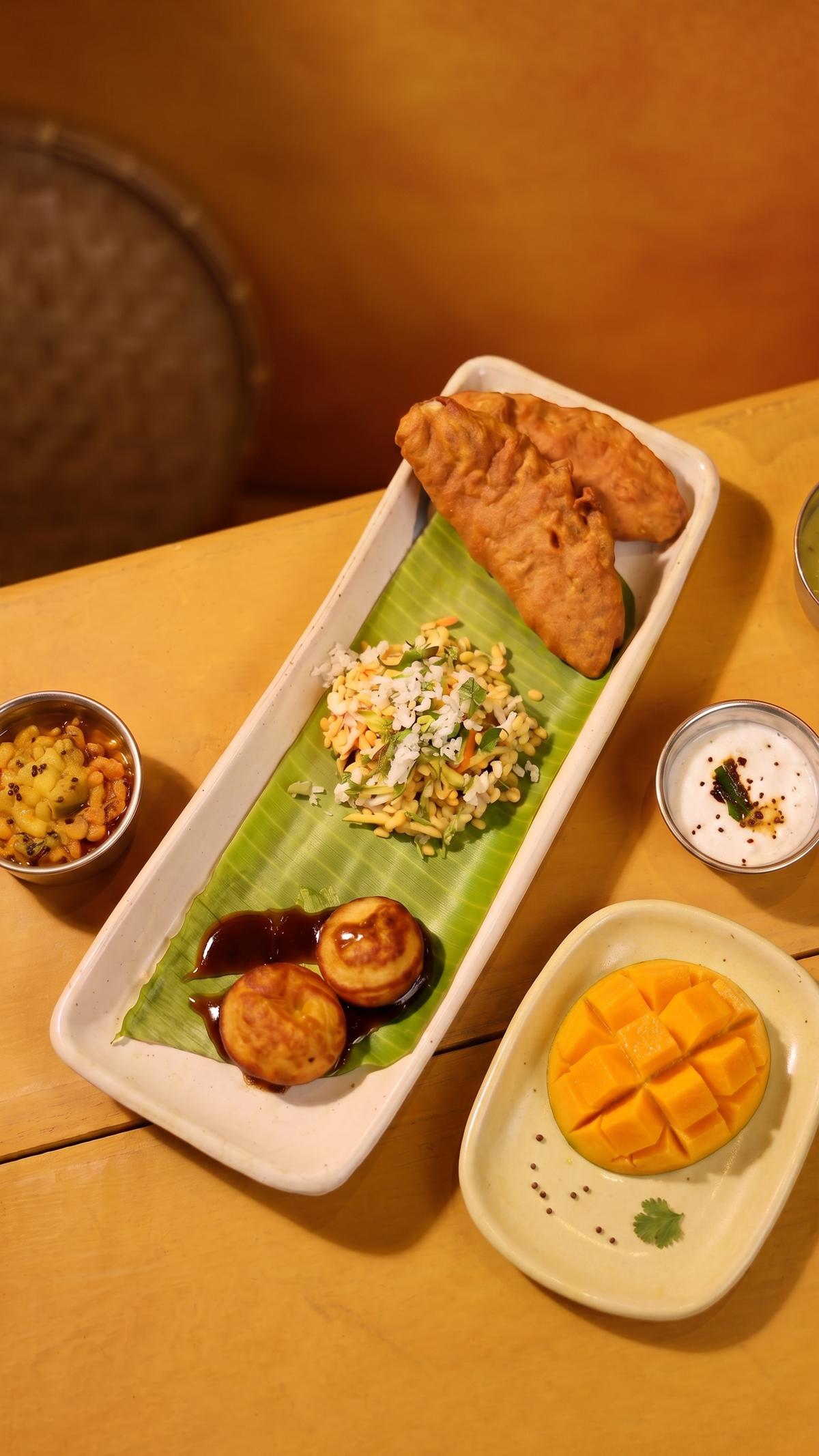
The accompaniments hold their own too. The pacha mangai chutney adds freshness, the pickle brings the familiar heat and salt pairing perfectly with curd rice. The desserts lean more indulgent. The cold mambazham signature dessert arrives with a sorbet-like texture, but the sweetness feels a little overpowering after an already elaborate meal. The mambazham halwa, on the other hand was rich with ghee, but balanced in sweetness and far more satisfying overall.
The idea for the restaurant, Senthil Kumar says, began with a gap he noticed nearly a decade ago. When G Organic first started in 2014, and later expanded into the Anna Nagar restaurant space in 2017, customers called millets bird food, he says.. Ingredients like nari payir, he says, were barely recognised outside farming communities. “We want people to understand these ingredients. Not just millets, but indigenous pulses, seasonal produce and the old style of balanced food people used to eat earlier.”
Beyond the seasonal mango spread, the regular menu hints at the restaurant’s larger ambitions. Dishes are built around slow-cooked indigenous dals, tomato gravies served with idli instead of standard sambar, and ingredients like manga inji that rarely make appearances in mainstream restaurant menus anymore. Millet-based tiffin varieties, traditional rice dishes and balanced meal combinations are regular offerings at the restaurant, reflecting the kitchen’s focus on reviving older food habits rather than dramatically reinventing Tamil cuisine.
Cook Gramam is at 13th Main Road, Anna Nagar West, Chennai. A meal for two costs ₹2,200. The Mango Virundhu is on till May 12.