







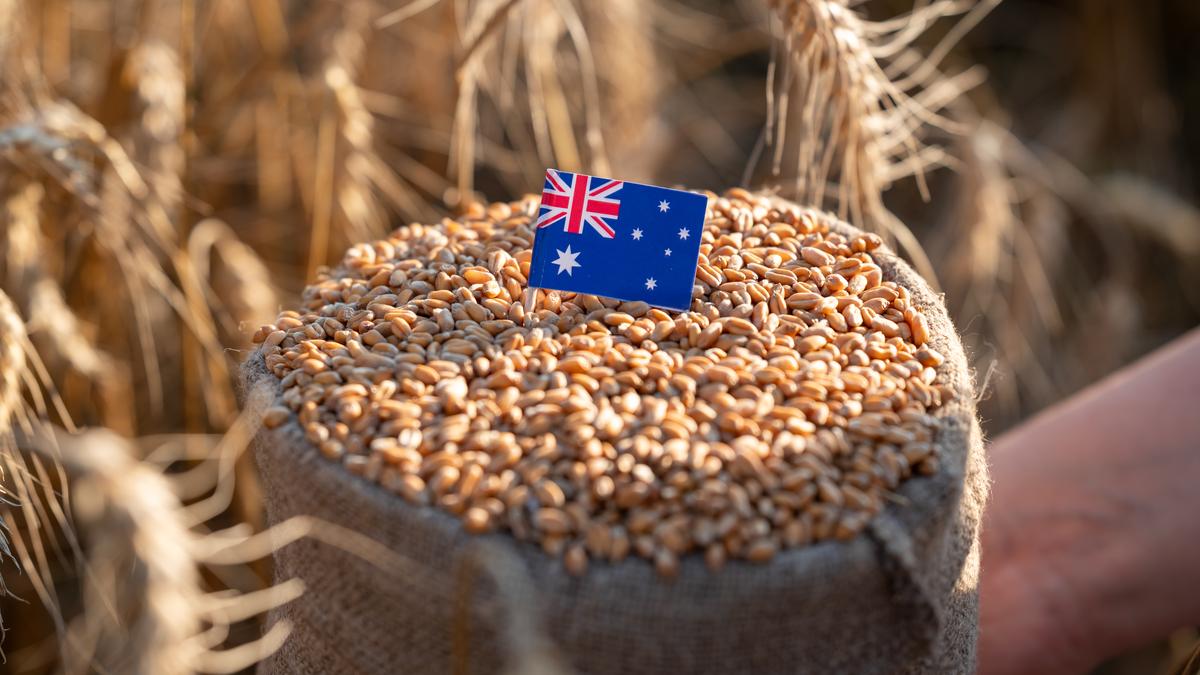
Is a comprehensive India-Australia Free Trade Agreement (FTA) in the offing? With the Australian Foreign Minister Penny Wong in India for the Quad Foreign Ministers’ meeting, there is anticipation that a Comprehensive Economic Cooperation Agreement (CECA) may be inked. This would expand the 2022 Economic Cooperation and Trade Agreement (ECTA) that had opened 100% of the Australian market to India while India reciprocated with roughly 70% market access covering nearly 91% of trade value. Canberra has since been pushing for parity, both privately and publicly. Meanwhile the West Asia crisis has forced upon India — in the words of the Chief Economic Adviser — a “balance of payments crisis stress test”, making trade expansion and courting investments an urgent necessity for the country.

India has been in a hurry over the past year to conclude trade agreements; geopolitical fragility and the unpredictability of tariff politics have pushed India to sign agreements with the EU, the U.S., New Zealand and the U.K. CECA fits neatly into this larger recalibration.
The problems with Australia
But with Australia, the trade situation is complicated. Since ECTA, bilateral merchandise trade doubled from $12.2 billion in FY 2020-21 to $24.1 billion in FY 2024-25. These gains, however, have not been evenly shared. Australian exports to India account for nearly two-thirds of the bilateral trade.
Even in services, where bilateral trade has crossed $10 billion, Australia’s higher education sector alone accounts for close to 60%. In contrast, investment tells the opposite story: as of 2024, Indian investment in Australia had touched nearly $32 billion against Australia’s cumulative FDI into India of about $18 billion.

The bilateral relationship is thus beset by interconnected problems. Australia wants parity in market access. But the question for India is not whether India should simply concede more market access; it is whether India can trade some market access for a more balanced overall relationship. Australia’s 2025 Economic Engagement Roadmap for India identified four bilateral ‘superhighways’: clean energy, education, tourism, and agribusiness. On the first three, there appears to be broad alignment but not on the fourth. Agriculture is where this bargain becomes most difficult. India has restricted access to its agricultural market in nearly all its major trade agreements. Despite being compelled to keep India’s most vulnerable sectors (dairy, wheat, rice, sugar and chickpeas) outside ECTA, Australian farm exports to India have risen by nearly 90%, while Indian agricultural exports to Australia have grown more modestly by 35%.
This asymmetry reflects two very different agricultural realities. The average Indian farm is about 0.73 hectares; the average Australian farm exceeds 1,400 hectares. Agriculture contributes around 16% to India’s GDP and 2.5% to Australia’s. For Australia, agriculture is an export industry. For India, it is a livelihood that supports more than half of its population and remains the bedrock of its food security.
The notion of a “level playing field” between these two systems is hence a misframing of the problem. Indian farmers, even with subsidised inputs, remain structurally exposed to monsoon variability, fragmented landholdings and thin margins. Protecting the Indian market from cheap Australian imports, particularly wheat, is not a negotiating position; it is a political necessity. Yet, given the industrial scale of Australia’s farming, Canberra will understandably push India to open up its market fully.
Using agriculture as an opportunity
Nonetheless, agricultural trade talks between the two countries need not become a zero-sum game. Agriculture can become the sector through which India converts Australia’s demand for market access into a broader opportunity for institutional cooperation and investment. Two low-hanging fruits stand out.

First, the future of India-Australia agricultural trade must depend less on tariff concessions and more on mutual recognition of biosecurity and phytosanitary standards. Building on the 2025 organic products arrangement, both countries can expand cooperation in digital certification, quarantine protocols and regulatory alignment. This would give Indian farmers a fairer shot at the Australian market even as India considers reciprocal access for Australian farmers.
Second, Australia’s strategic opportunity in India may lie beyond agricultural commodities and in exporting the systems that make modern agriculture possible: precision farming technologies, cold-chain infrastructure, water management expertise and climate adaptation practices. India loses anywhere from 15% to 35% of its agricultural output to pests, disease and post-harvest inefficiencies every year. Australia’s extensive experience in dealing with drought cycles, heat extremes and water scarcity is knowledge that would interest India.
However, this experience sharing must go hand-in-hand with real investments. Australian capital, technology and know-how must register a deeper presence inside India’s agricultural sector — in storage facilities, logistics networks, farm-level tools and agri-technology partnerships between firms, universities and local governments. The recently launched India-Australia Smart Farm Network Initiative points in the right direction.

Need for complementarity
Agriculture is too politically important in India to be treated as just another line item in a trade schedule; equally, it is too economically important to be left outside the bilateral partnership altogether. Rather than making the new FTA one of absolute symmetry in market access alone, India and Australia should make it an agreement based on complementarity across trade and investment.
Should the diplomats succeed, the day when Chyawanprash and Vegemite sit on the same breakfast table in the two countries is not far.
Vaibhav Jain is an incoming delegate of the Australia-India Youth Dialogue. Raja Karthikeya is a former delegate of the Australia-India Youth Dialogue. The views expressed are personal
Published - May 26, 2026 12:08 am IST