








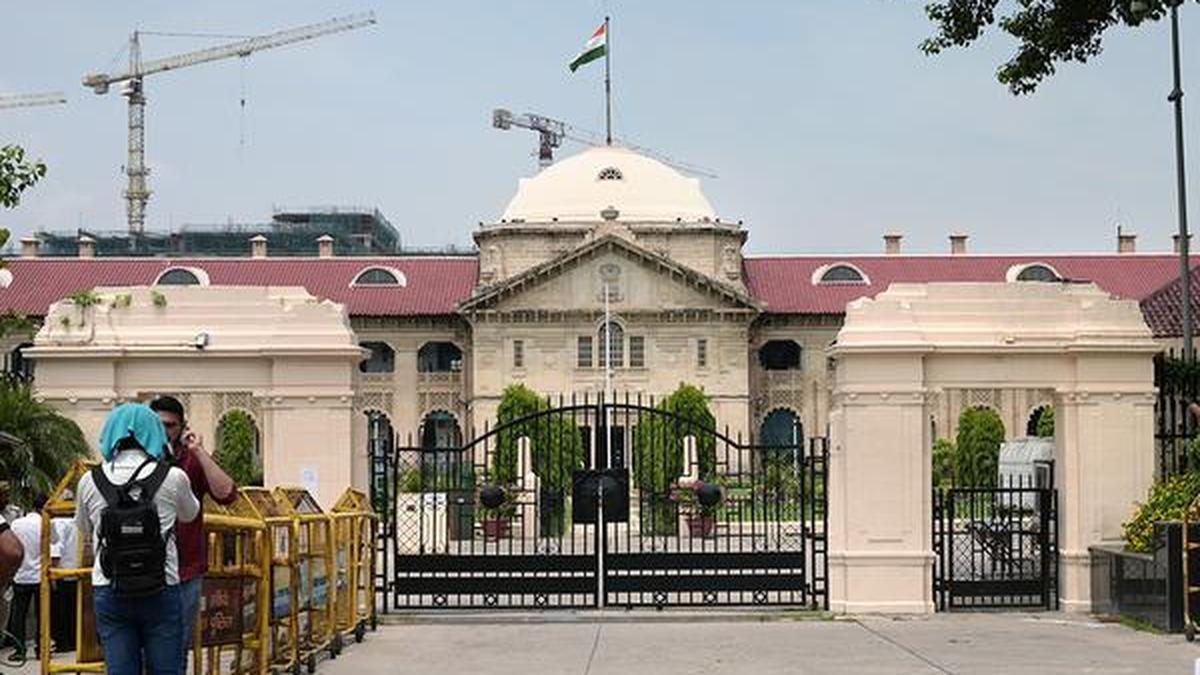
The Allahabad High Court on Thursday (April 16, 2026) refused to quash an FIR against school-going girls booked under the Uttar Pradesh Prohibition of Unlawful Conversion of Religion Act, 2021, for allegedly making a Hindu classmate wear a burkha, eat meat and forcing her into “religious conversion”.
A Bench of Justices Tarun Saxena and J.J. Munir was hearing a petition filed by a Class 12 student, who sought to quash the FIR registered against her and her friends by the Moradabad police on a complaint by the brother of their Hindu classmate.
In her complaint to the police, the complainant described an incident in December 2025 when she was allegedly forced to wear the veil and later taken to a restaurant by the accused girls, whom she referred to as “friends”.

The accused girls told her that their religion was “better”, and she felt pressured by these interactions, the complainant stated. She also told a Magistrate that her classmates lured her into eating meat. When she refused, they asked her to taste the gravy, claimed the complainant.
‘Allegations vague’
During the hearing, the counsel for the petitioners argued that the FIR contained vague allegations, lacked specific details, and was motivated by personal animosity.
The counsel also contended that no actual conversion had taken place and that the complaint was filed with mala fide intent.
The petitioner stated that she is an 18-year-old Class 12 student and has been unable to concentrate on her studies.

Opposing the plea against quashing the FIR, lawyers representing the State government and the complainant told the court that the allegations warranted a thorough probe.
‘Need for probe’
The court observed that the material on record, including the victim’s statements and evidence collected during the probe such as CCTV footage, prima facie indicated the need for further probe. The court held that it would be premature to examine the merits of the allegations at this stage or to determine whether they ultimately constitute unlawful conversion.
“We must be alive to the situation that the 2021 Act was enacted to curtail an emergent situation in society, where certain persons go about not only professing or propagating their religion, but also thrusting it upon others... If this trend is seen among young people, it is all the more disturbing. This is time in their lives when they should be thinking more towards developing their skills in different fields of education and dedicate themselves in the service of the society and the nation,” the Bench said.
Published - April 17, 2026 01:20 am IST