


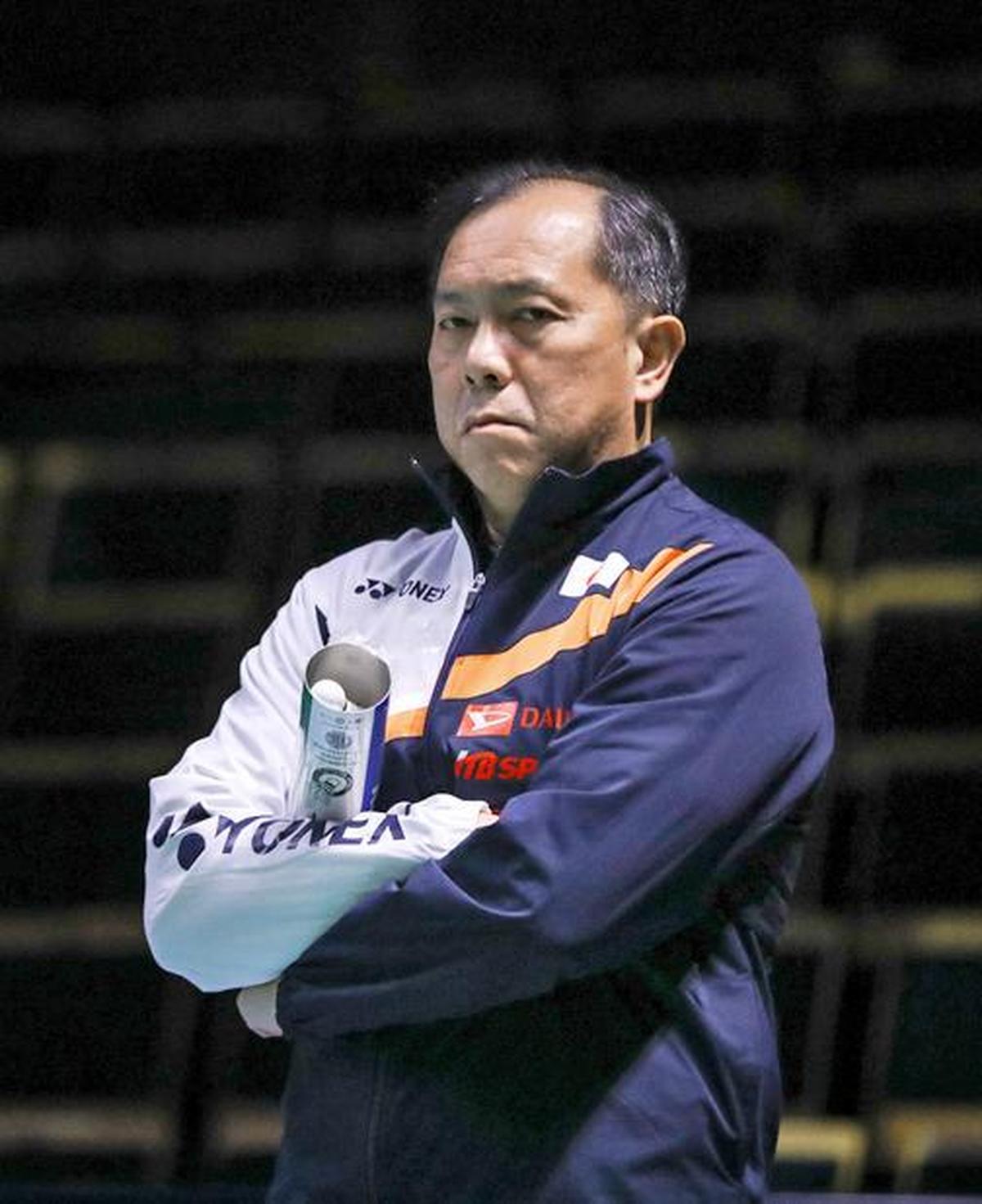
India's Satwiksairaj Rankireddy and Chirag Shetty with coach Mathias Boe during the Paris 2024 Olympics. | Photo Credit: PTI

India's Satwiksairaj Rankireddy and Chirag Shetty with coach Mathias Boe during the Paris 2024 Olympics. | Photo Credit: PTI
Former Olympic silver medallist-turned-coach Mathias Boe had taken Chirag Shetty and Satwiksairaj Rankireddy to the top of the badminton world rankings but had quit after a heartbreaking loss at the Paris Olympics, where the Indians had gone in as medal favourites.
Nearly two years later, Boe announced through a post on social media that he’s returned to work with the men’s doubles pair.
In a conversation with Sportstar, Boe explains why he returned and talks about whether he has a point to prove following the Paris disappointment and the changes he wants to see in Chirag and Satwik as the duo bids to return to the top of men’s doubles badminton.
Q: You’ve now returned to work with Satwik and Chirag. How did this happen? You mentioned in your Instagram post that this move has been in the works for a while now...
A: As I wrote, I have a little more time available now. I missed parts of being a coach because I genuinely enjoy what I do. I’ve been in contact with Satwik and Chirag over the last two years, especially Chirag when I was in Mumbai.
I’ve watched more or less all their matches and followed them quite intensely since we started working together. So in many ways, I never really completely left. But because of my personal situation at the time, it wasn’t possible for me to be physically with them.
I felt they needed something extra. They had gone through a title drought for almost two years. The last tournament they won (2024 Thailand Open) was when I was still there. They had some good runs, but they weren’t able to finish tournaments. I felt they needed to play with a little bit more of a plan, play a little bit smarter than just how they have been playing.
So, I reached out and told them that now I had some more time; I could come on board as a consultant alongside (current coach) Tan Kim Her. The idea was to structure training better, do more match and video analysis, identify where they need to improve, and help them play with a better plan instead of relying on just one style of badminton. That’s what we’ve been working on for the last month and a half just after the Thomas Cup.
From the outside, what did you feel was not working for them over the last couple of years?
They were playing very hard and hoping that would be enough. In many matches, it was enough. But you cannot keep playing the same style all the time.
In badminton terms, they were pushing hard on almost everything. From the backcourt, they were hitting hard. In drive situations, they were driving hard. But they weren’t blocking enough, building attacks enough, or mixing up play from the back and midcourt.
That’s often the most challenging thing against top Southeast Asian players — Malaysians, Indonesians and others. They are very good when the pace is high and people are just hitting hard at them. But if you slow things down a little, play softer in front of them, and use angles, they struggle more.
I didn’t feel Satwik and Chirag were doing enough of that. So, one of the things I want to bring is a better plan — understanding opponents through match analysis, identifying strengths and weaknesses, and then taking advantage of those weaknesses. That’s something I believe I’m quite good at, both from my years as a player and a coach.
So, would you be focussing more on tactics and match analysis while Tan Kim Her handles the day-to-day training?
That is correct. At the moment, I’m not based in India. When I am in India, I’m in Mumbai, so daily training in Hyderabad isn’t practical for me. It’s not possible for me to stay there permanently and do daily sessions.
Coach Tan Kim Her and Boe have been communicating daily regarding Sat-Chi’s training structure among other things. | Photo Credit: SPECIAL ARRANGEMENT
Coach Tan Kim Her and Boe have been communicating daily regarding Sat-Chi’s training structure among other things. | Photo Credit: SPECIAL ARRANGEMENT
So, a lot of my work will happen online. I plan things with coach Tan, and we communicate daily on exercises, training structure, match analysis and all those things. He handles the day-to-day sessions and tournaments, while I work more on the planning and tactical side. But I will be coming to Hyderabad for a few days, where I’ll be at training and sparring sessions before the World Championships and also at the Asian Games later in the year.
There are some good signs already since your return. At the Singapore Open, they beat the world No. 1 pair (Kim Won-ho and Seo Seung-jae of South Korea) and won a badminton title after a very long gap. What did that result mean, and what kind of work was happening behind the scenes?
It meant a lot to them. Maybe they had also lost a little confidence in recent days because they kept missing that last step on the podium.
They had played a good Thailand Open and, of course, were disappointed in the final. Credit to the Indonesians — they played very well. When top pairs play each other, it’s always very difficult. The margins are always very small.
Before the final in Singapore, we spoke about trusting the plan more, being more aggressive and not being satisfied with just getting close. We needed to take that final step and had discussed how to do that against opponents who, on paper, were the stronger Indonesian pair.
So, that was really the focus.
Paris was heartbreaking. Satwik and Chirag were expected to do very well at the Olympics. How difficult was that experience for you personally? And does returning now come from a belief that there is still unfinished business?
When I do something, I put myself into it 100 per cent. I’m passionate about this work. I’m not doing it for the paycheque.
So, when you invest yourself fully into something and you’re not successful, of course it hurts. I think everyone can relate to preparing really hard for an exam, doing everything possible, and then not being able to produce your best on the day and ending up with a disappointing result.
READ: Satwik-Chirag win first title of season at Singapore Open 2026
That’s probably the easiest comparison for people to understand what it feels like for an athlete and a coach.
And in sport, you have to do it again and again. Imagine having exams back to back. Failure happens more often than success.
How much of this return is about proving a point – for you, or even for Satwik and Chirag?
I don’t have anything to prove. I know I’m the best in the world at what I’m doing. I had one coaching job which was working with Chirag and Satwik. I took them from being ranked around eight to ten in the world to becoming the best in the world. So, I don’t feel I need to prove anything.
As I said, I do this because I’m passionate about it. I personally like Satwik and Chirag a lot. They’re nice to work with, down-to-earth boys who are incredibly good badminton players.
They just need a few modifications to become the best in the world consistently. I believe I can contribute to that, and that’s why I want to work with them again.
What do you think is their ceiling? Is Los Angeles already part of the conversation?
The Olympics are always on your mind as a player and coach. But right now, there are many big things they still need to achieve before that.
First of all, I want them to win more tournaments — whether those are Super 500s, 750s or 1000s. Right now, there are a lot of tournaments they need to win.
Then we can look at where they are in a couple of years when the Olympics come closer. A lot can happen in two years.
For now, the focus is on winning titles, staying injury-free, and continuing to challenge at the top level. If they can do that, I’m pretty sure they can keep competing with the best.
Published on Jun 01, 2026
此内容由惯性聚合(RSS阅读器)自动聚合整理,仅供阅读参考。 原文来自 — 版权归原作者所有。