



惯性聚合 高效追踪和阅读你感兴趣的博客、新闻、科技资讯
阅读原文 在惯性聚合中打开

推荐订阅源

让小产品的独立变现更简单 - ezindie.com
Microsoft Azure Blog
大猫的无限游戏
大猫的无限游戏
月光博客
月光博客
V
V2EX
PCI Perspectives
PCI Perspectives
Latest news
Latest news
博客园 - 三生石上(FineUI控件)
C
CERT Recently Published Vulnerability Notes
W
WeLiveSecurity
Last Week in AI
Last Week in AI
奇客Solidot–传递最新科技情报
奇客Solidot–传递最新科技情报
P
Palo Alto Networks Blog
T
The Exploit Database - CXSecurity.com
K
KPMG report finds enterprise disconnect between AI and its ROI | CIO
cs.AI updates on arXiv.org
WordPress大学
WordPress大学
V
Vulnerabilities – Threatpost
H
Heimdal Security Blog
Attack and Defense Labs
cs.CV updates on arXiv.org
Hacker News: Ask HN
Hacker News: Ask HN
博客园 - 叶小钗
V
Visual Studio Blog
Jina AI
Jina AI
P
Proofpoint News Feed
罗磊的独立博客
SecWiki News
SecWiki News
J
Java Code Geeks
freeCodeCamp Programming Tutorials: Python, JavaScript, Git & More
L
LINUX DO - 热门话题
Security Archives - TechRepublic
The Hacker News
The Hacker News
Hugging Face - Blog
Hugging Face - Blog
N
News and Events Feed by Topic
NISL@THU
NISL@THU
T
Tailwind CSS Blog
T
Tenable Blog
Recent Commits to openclaw:main
Recent Announcements
H
Hacker News: Front Page
Exploit-DB.com RSS Feed
T
Tor Project blog
宝玉的分享
宝玉的分享
Help Net Security
Help Net Security
S
Security Affairs
Microsoft Security Blog
Google DeepMind News
F
Fortinet All Blogs
G
GRAHAM CLULEY

Special edition for students | The HinduBusinessLine

IIT Madras signs off milestone year with 3,518 degrees awarded IIT-Madras, IIT-Kanpur launch practice oriented cybersecurity course IIIT-B opens applications for B.Tech and Integrated M.Tech programmes for 2026–27 IIT Madras inaugurates Centre for Theoretical Computer Science Technovalley signs MoUs with Nehru College of Engineering and Research Centre and Jawaharlal College of Engineering and Technology IIT Madras launches Bachelor of Science in Management and Data Science How GenAI can bridge the academia-industry divide CEPT University announces MBA in Real Estate BITSoM seeks to give its students an AI edge IAF, IIT Madras partner to develop indigenous airborne communication system Hackathon on ocean plastic and oil elimination mission SRM Institute crosses 500 granted patents Key ingredients of a good case study are as they were 100 years ago: The Case Centre CEO ‘India to transform healthcare access for billions’ IIM Kozhikode’s globalizing Indian thought conclave 2025 kicks off IIM Kozhikode, BEL ink MoU for leadership development and management excellence V-Guard announces winners of the Big Idea 2025 competition Buimerc India Foundation, IIT Palakkad to launch entrepreneurship support programme IIM Kozhikode terminates MoU with Sabancı University, Turkey Mangaluru’s St Aloysius to start four full-time B.Tech programmes IIM Kozhikode ranked 2nd among IIMs, 22nd in Asia Pacific in Executive MBA NITK looks to bridge theory, practice and industry needs in curriculum IIM Kozhikode launches 4-year Bachelor of Management Studies programme at Kochi Campus Govt should promote industry-academia collaboration: BITS Pilani V-C India less vulnerable to global trade war due to its socio-cultural traits: S Gurumurthy Building future-ready business leaders A B-school for the social sector ICFAI Incubator and T-Hub Foundation sign MoU for supporting student startups TAPMI’s new MBA programme aims to develop AI-led business leaders How business schools are getting AI-ready IIMB secures 100% placements; 595 students land offers from 176 firms TalentSprint launches Gen AI course for professionals MBA placements: Trends and expectations Bribery scandal exposes NAAC’s Achilles’ heel ISB graduates 505 students Harivansh Chaturvedi receives AIMS Ravi J Matthai Fellowship for contributions to management studies Castrol India, SPJIMR collaborate on case study to resolve lubricant major’s distribution channel dilemma Kerala leads in start-up initiatives among other states: Industries Minister Rajeeve Despite hiring headwinds, most campuses remain optimistic IIMK’s one-year MBA makes debut in Financial Times Global Rankings ‘We need to reinvent the MBA’ Accounting in the era of STEM The challenges and opportunities for Indian B-schools IIM Kozhikode launches one-year Diploma in Management Nayanta University to focus on interdisciplinary courses The role of English in modern business Using gamification to enhance learning BIMTECH launches blockchain-based currency BIMCOIN Shaping inclusive leaders: How B-schools are integrating DEI into education and practice NITK cooks up tech to make tubers irritation-free to eat Work smarter, live better: An open letter to Gen Z T-Hub launches Business Incubation Management & Leadership programme Giving security training an edge Top trends that will shape jobs for tech-MBAs Traits young managers need to develop Shashidhar Nanjundaiah receives 2024 Leadership Award from PRSI The buzz ITC’s Interrobang has with B-schoolers The future of tech-driven classrooms IIM Kozhikode, SAIL signs MoU for collaborative learning IIMA eyes final placements as barometer of job market Classroom to community Five key factors for students to achieve business success
Government of India to pump-in ₹500 crore as Tribhuvan Sahkari University takes shapes in Gujarat
By Avinash Nair · 2025-04-14 · via Special edition for students | The HinduBusinessLine

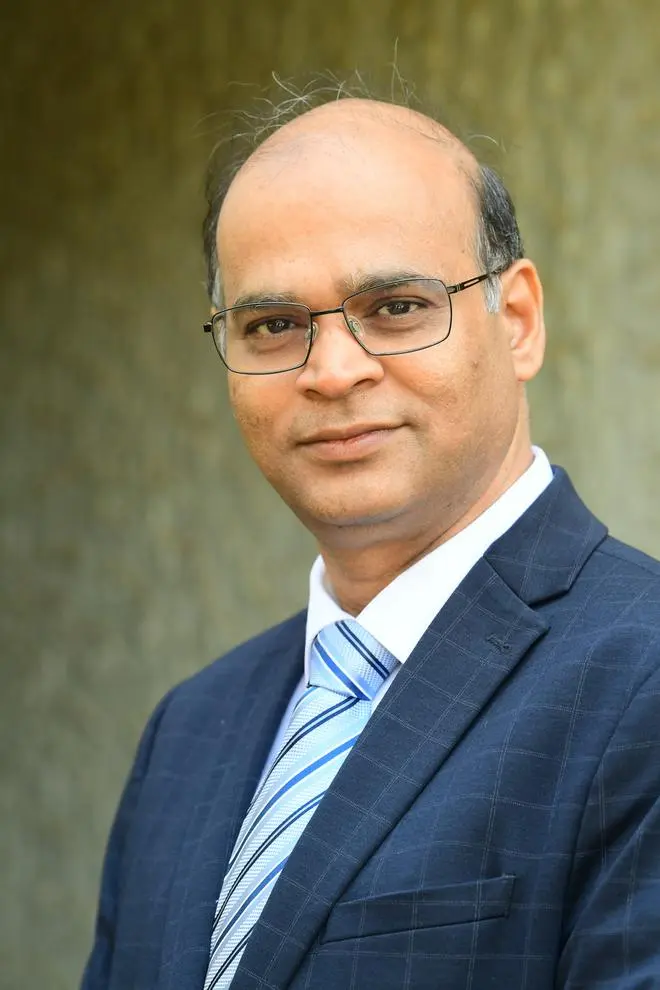
Umakant Dash, Director, IRMA

Umakant Dash, Director, IRMA

During the just-concluded Budget session of Parliament, the Tribhuvan Sahkari University Bill 2025 was passed, paving the way for setting up of Tribhuvan Sahkari University. An institution of national importance, it will be headquartered at Anand in Gujarat. Named after Tribhuvan Das Patel, who laid the foundation stone for the Institute of Rural Management Anand (IRMA), the Central government is expected to pump in ₹500 crore for the new entity, that will not only function as a pan-India apex educational institution for India’s cooperative sector, but it will incorporate IRMA, an institution founded by Dr Verghese Kurien for nurturing managers and professionals for rural India, within itself, says Umakant Dash, Director, IRMA, during an interaction with businessline. Excerpts:

How will Tribhuvan Sahkari University take shape?

We have been working for the cooperative sector for the last 45 years. When IRMA began, it was confined to the dairy cooperatives. Now we are getting converted to a national university, where we will play a major role in education, training and research related to India’s cooperative sector. The idea is to meet the education and training requirements of the entire cooperative value chain that extends from our villages to a cooperative body. The mandate is now much bigger.

For the new university, we will need a much bigger infrastructure. It will operate as a hub-and-spoke model. The current IRMA campus will become the hub of the university at Anand. The spokes will be the institutions affiliated to us.

What is the future for IRMA after the passage of the Bill? Will it continue to exist?

IRMA will be part of Tribhuvan Sahkari University. It will become a school of the university offering rural management as the flagship programme. This way, the brand and legacy of IRMA will continue to be preserved. IRMA will become the centre of excellence in rural management under the university.

After consultations, like IRMA we will set up other schools within the university which offer sector-specific programmes including those for dairy cooperatives, sugar cooperatives and poultry and livestock, cooperative banking and agribusiness management, among others. To make it pan-India, we will have schools in other affiliated institutions that will offer similar courses.

What about the funding for the new university?

We will get ₹500 crore from the Government of India for developing infrastructure and other requirements of the new university. We will need new buildings for the schools, staff quarters, administrative building and student facilities. The scale and size will be much bigger than what exists on ground. The university will need a bigger set-up and therefore we will have to add more infrastructure. Otherwise, it will be running in a self-sustaining mode and we will be getting support from the cooperative sector.

We plan to have a pan-India presence. In States with higher density of cooperatives, we will begin setting up four-five institutions that are affiliated to Tribhuvan University. If demand grows, we will have more such affiliated institutions. We will be able to reach a steady state in the next four-five years. During this period, we plan to provide affiliation to 250 institutions under this hub-and-spoke model.

Will the new institution have academic and administrative autonomy similar to the one enjoyed by IRMA?

Like other Central universities or other Centrally-funded technical institutions, the university will have its own executive body, which will be the primary decision-making body. For IRMA, the academic autonomy will continue and it will continue to offer the current programmes as long as its Board of Governors decide to keep offering the courses. As much as possible, we are trying to retain the legacy and the wealth of programmes running successfully for the last 45 years.

What are the first steps the university will take?

The idea, initially, is to use the existing infrastructure and not duplicate it. There are close to 300 small and medium educational institutions associated with the cooperative sector. Some are run by the National Council for Cooperative Training (NCCT), National Cooperative Development Corporation, National Bank for Agriculture and Rural Development. We will try to bring all the existing institutions serving the sector first. This will ensure there is no duplication of infrastructure. We have already started stakeholder consultations with the 20 institutions under the NCCT to convey the process and benefits of affiliation with our university. These institutions are present in Maharashtra, Karnataka, Tamil Nadu, Kerala, Odisha, Bihar, Punjab, Uttarakhand, Uttar Pradesh, Madhya Pradesh, Assam and West Bengal. Wherever there is a requirement, we will handhold them. We will be running degree, diploma and certificate programmes and we need affiliations to run them.

Published on April 14, 2025