


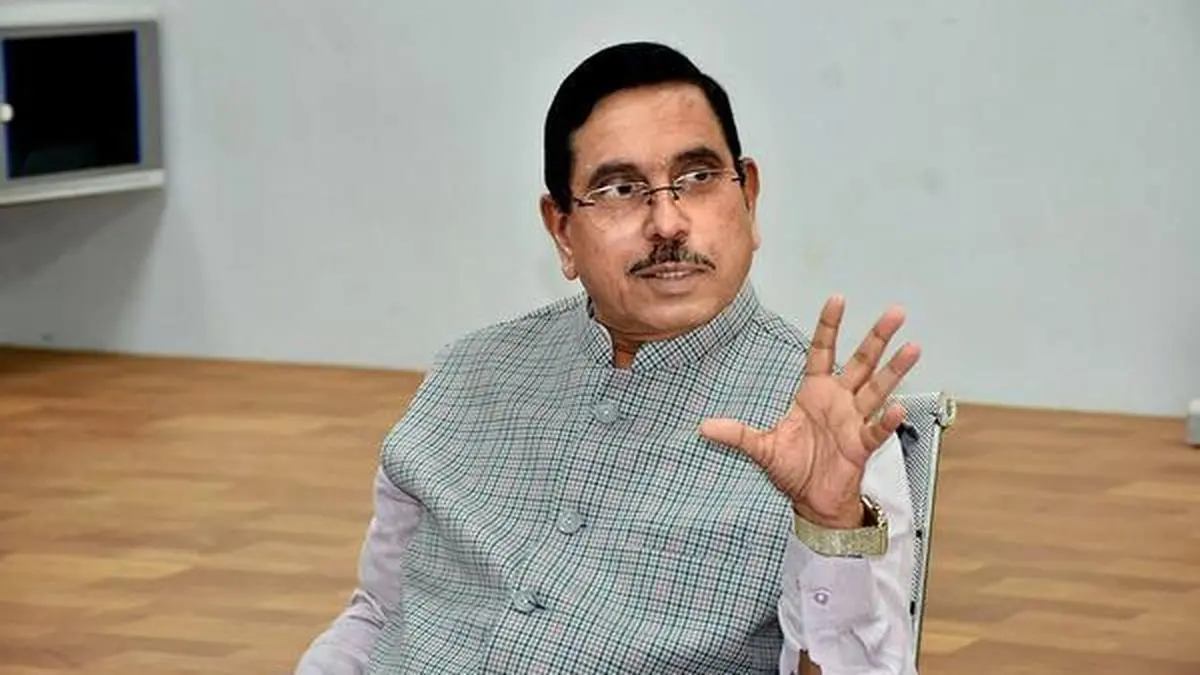
Union Minister Pralhad Joshi
India is poised to lead the global net zero transition with the 150-GW solar milestone and 5.1 million green jobs potential, according to Union Minister for New & Renewable Energy Pralhad Joshi.
Speaking at the second edition of FICCI Net Zero Forum – “Pathways to a Climate-Responsible Future” held here on Friday, Joshi said India is ‘firmly’ resolved to lead the global transition towards net-zero emissions. He added that India’s journey towards energy Atma Nirbharta (self-reliance) was no longer aspirational but was being actively delivered through decisive policy action and rapid capacity expansion.
“Today, India stands as the third-largest country globally in solar power capacity, after China and the US. The country has achieved a significant milestone, with approximately 50–55 per cent of its installed electricity capacity coming from non-fossil fuel sources, including solar, wind, hydro, and nuclear energy,” he said.
A landmark achievement in this transition was India reaching around 150 GW of installed solar power capacity, positioning it among the top three solar power nations globally and strengthening its role as a clean energy leader. India’s progress towards net-zero emissions could generate approximately 51 lakh (5.1 million) green jobs over the next four years, reflecting the strong linkage between climate action and economic growth, he added.
Navin Mittal, Principal Secretary, Department of Energy, Government of Telangana, said following India’s solar revolution, the next major transformation would be driven by energy storage, which would play a critical role in ensuring reliability and efficiency in renewable systems.
India was consuming nearly 150 billion litres of petrol and diesel annually, underscoring the urgent need for cleaner alternatives. He emphasized that solar-powered electric mobility can cost as low as ₹0.60 per kilometre, compared to approximately ₹10 per kilometre for fossil fuels and ₹2 per kilometre for conventional EVs, Mittal said.
Highlighting deepening UK–India cooperation, Gareth Wynn Owen, British Deputy High Commissioner in Hyderabad said significant investments such as a £1 billion (approx. $1 billion) UK-backed project in Vijayawada, Andhra Pradesh, was a testament to growing clean energy collaboration. He noted that both countries are aligned under the leadership of their Prime Ministers, with a shared vision towards long-term climate targets, including 2035 ambitions.
Rajesh Miglani, Senior Climate Business Specialist and Climate Anchor, IFC South Asia, World Bank Group, said under the Country Partnership Framework (CPF), the World Bank Group plans to deploy US$8–10 billion annually, unlocking up to US$20 billion per year from private markets through blended finance instruments.
IFC has a portfolio of approximately $11.7 billion globally, and in FY25 alone, provided $5.5 billion in financing in India, mobilising an additional $3.4 billion from other investors, including investments in Telangana.
Published on April 10, 2026
此内容由惯性聚合(RSS阅读器)自动聚合整理,仅供阅读参考。 原文来自 — 版权归原作者所有。