惯性聚合 高效追踪和阅读你感兴趣的博客、新闻、科技资讯
阅读原文 在惯性聚合中打开

推荐订阅源

Engineering at Meta
Engineering at Meta
人人都是产品经理
人人都是产品经理
大猫的无限游戏
大猫的无限游戏
博客园 - 三生石上(FineUI控件)
量子位
腾讯CDC
The Cloudflare Blog
酷 壳 – CoolShell
酷 壳 – CoolShell
云风的 BLOG
云风的 BLOG
Vercel News
Vercel News
钛媒体:引领未来商业与生活新知
钛媒体:引领未来商业与生活新知
L
LangChain Blog
aimingoo的专栏
aimingoo的专栏
The Hacker News
The Hacker News
T
The Exploit Database - CXSecurity.com
B
Blog
S
SegmentFault 最新的问题
P
Privacy & Cybersecurity Law Blog
T
Threatpost
博客园 - 聂微东
T
Tailwind CSS Blog
The Last Watchdog
The Last Watchdog
C
Check Point Blog
N
Netflix TechBlog - Medium
D
DataBreaches.Net
爱范儿
爱范儿
IT之家
IT之家
S
Secure Thoughts
M
MIT News - Artificial intelligence
NISL@THU
NISL@THU
C
Cisco Blogs
TaoSecurity Blog
TaoSecurity Blog
有赞技术团队
有赞技术团队
A
Arctic Wolf
OSCHINA 社区最新新闻
OSCHINA 社区最新新闻
P
Proofpoint News Feed
Spread Privacy
Spread Privacy
Schneier on Security
Simon Willison's Weblog
G
GRAHAM CLULEY
雷峰网
雷峰网
Project Zero
Project Zero
博客园 - Franky
H
Heimdal Security Blog
A
About on SuperTechFans
Security Latest
Security Latest
Webroot Blog
Webroot Blog
Exploit-DB.com RSS Feed
Hugging Face - Blog
Hugging Face - Blog
H
Hackread – Cybersecurity News, Data Breaches, AI and More

Latest BL Explainers | The HinduBusinessLine

Explained: How the India-UK CETA could boost pharma, medtech exports Deep dive into IFSCA’s Proposed Direct Listing Framework Explained | Can Vimag’s ‘virtual magnet’ replace rare-earth magnets in EV motors? Why has India cut broken grain share in PDS rice under Rice Milling Transformation scheme? What the NMC case means to Bank of Baroda investors SEBI third-party payment proposal for mutual funds explained for investors How Ebola is turning into a public health emergency, needing international efforts How coal gasification promises to be a gamechanger in energy security, cutting imports UAE’s OPEC exit could be advantage India in the long-term All you want to know about the women’s reservation and delimitation bills fiasco Hungary’s historic elections and its implications How West-Asia war could reshape the AI race Can SEBI’s reset revive social stock exchanges? Explained Decoding RBI’s move to curtail rupee speculation BL Explainer: How excise duty cuts support OMCs, leave consumers high and dry PNG vs LPG: Why the govt wants you to shift to piped gas All you want to know about India’s crude oil and gas reserves and why we are lagging on this count Anatomy of the India LPG crisis and how to tackle it -- explained What is Essential Commodities Act, why has it been invoked for LPG supply? Electronic banking frauds: What frauds are covered? How much will be compensated? How to claim your refund? How IDFC First Bank got de-defrauded of ₹590 crore Will RBI’s new rules on bank lending to brokers impact stock market trading? What the merger of PFC and REC means for investors Biopharma Shakti explained: What the Budget’s ₹10,000-crore bio bet means Explained: What Anthropic’s latest launch means for Indian IT Explainer: MGNREGA or VB-G RAM G, which is better? How do Stablecoins differ from other cryptos such as bitcoin? Why is RBI opposed to them? Explained Chaos on the floor: Why it is a bad season for air travellers Explained: Why Sanchar Saathi sparked a backlash — and what the rollback means All you want to know about DoT’s SIM-binding decision Why the Delhi-Mumbai airport user fee battle matters for passengers What are fractional shares? What has been the experience in Canada, US and Japan, explained Explained: All you need to know about TCS-DXC case Digital Personal Data Protection (DPDP) Rules, 2025: All you need to know Explained: How does digital gold work? What are the key concerns flagged by SEBI? India’s AI Governance Guidelines Explained: A middle path between innovation and regulation Explainer: What do new MF regulations on TER and brokerage costs mean to you? How is SIR 2.0 different from Bihar SIR? All you want to know about the work of Mokyr, Aghion and Howitt, the Nobel winners for economics in 2025 Draft Electricity (Amendment) Bill, 2025, proposes to align reforms with industry requirements Pace of adoption and integration of digital receivers will be key for growth of digital radio services in India How India plans to wean itself off Chinese ships with Centre’s shipbuilding plan Cough syrup deaths in MP & Rajasthan: All you need to know What happens during US government shutdown? How does it impact the US, India? What is Arattai? Does it have the muscle to take on WhatsApp? E20 petrol issue explained: What is all the fuss about? Why Leh’s Gen Z took to the streets: Ladakh’s unrest explained Data focus: Zubeen Garg’s funeral, the final measure of his accomplishment Gold’s breathless rally: How are jewellery buyers, central banks and investors responding? Understanding Waqf (Amendment) Act, 2025, and Supreme Court’s interim order Nepal protests explained: The Gen Z uprising in Nepal and what lies ahead HIRE Act: What It means for outsourcing, US jobs, and Indian IT companies BL Explainer: Will E20 fuel vroom ahead with removal of restriction on ethanol production? GDP deflator explained: How it will play havoc with GDP numbers for 2025-26 A tug-of-war over cashless health insurance that could threaten policy holders BL Explainer: Decoding the new income tax law Online money games explained: Why the Centre is banning them Decoding ICICI Bank’s move to sharply raise minimum account balance for new customers BL Explainer: 50% tariff on US exports: What will be the impact? Mobile number validation – boon or bane? Why Nayara Energy is caught in the crosshair of EU sanctions against Russia BL Explainer: How CERC’s market coupling decision impacts IEX What is the strategic significance of Airtel-Perplexity partnership BL Explainer: What Shubhanshu Shukla’s space odyssey means to Gaganyan mission and ISRO What is the status of Trump’s reciprocal tariffs and their shifting deadlines BL Explainer: Will Dreamfolks-Adani fracas affect your airport lounge access? BL Explainer: Are CAFE norms punishing small-car makers? SEBI cracks down on Jane Street over ₹36,671 cr Bank Nifty manipulation More than just a ‘skinny jab’: Semaglutide and its class of diabetes & weight loss drugs BL Explainer: What do the new expiry days on BSE and NSE mean to you? Strait of Hormuz: West-Asia tensions raise concerns over oil markets as Iran-Israel clashes Why are South, North India divided on delimitation? What drives changes to constituency boundaries?
What is US-Iran peace deal & what it means for India
By Ramasamy Jayaprakash · 2026-04-08 · via Latest BL Explainers | The HinduBusinessLine

In a major de-escalation in West Asia, the United States and Iran have agreed to a two-week ceasefire.

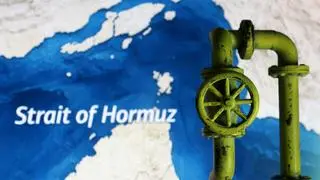
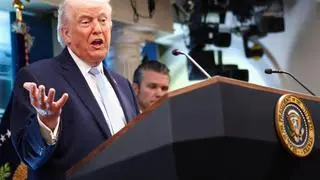
US President Donald Trump announced the ceasefire on Tuesday after more than a month after intense hostilities broke out, leading to Iran’s blockade of the Strait of Hormuz. The blockade caused significant disruption to global energy flows and led to sharp price increases for oil and gas.

Here is a breakdown of what has been agreed upon and what it means:

What has been agreed in the ceasefire deal?

The ceasefire deal includes a two-week pause in the attacks and bombings by the US (and by extension, Israel) and missile strikes by Iran in the ongoing West Asian conflict, including any retaliatory actions linked to the conflict.

However, Israel has stated that the ceasefire does not apply to its current offensive in Lebanon against the Hezbollah militants, despite Pakistan, which mediated the ceasefire, saying it does. This leads to some uncertainty about how this would pan out.

Additionally, Iran has provisionally agreed to allow freight transport in the Strait of Hormuz, albeit with military supervision which comes with a ‘fee’ which would be imposed in co-ordination with Oman.

The Pakistan-mediated ceasefire is said to proceed with further diplomatic talks in Islamabad on April 10, 2026 for which Pakistan Prime Minister Shehbaz Sharif extended invitations to delegates from both the warring nations.

What are Iran’s terms?

In addition to claiming victory, Iran has stated that the war would be concluded only if the US accepts its 10-point peace proposal, many of which were earlier rejected by the US and were the reasons for the escalation in the region. Some of Iran’s demands from the proposal includes,

  • Acceptance of Iran’s uranium enrichment program
  • Lifting of all primary and secondary sanctions on Iran
  • Releasing frozen assets of Iran
  • Full US military withdrawal from the region
  • Immediate ceasefire on Iran and its allies
  • Continuation of Iran’s control over the strait
  • Making these conditions binding through a UN Security Council resolution.

What are the terms US is laying down?

US President Donald Trump has claimed a “total and complete victory” in the war.

He said the pause is subject to Iran agreeing to and honouring the “complete, immediate, and safe opening” of the Strait of Hormuz and called it a ‘double-sided ceasefire.’ He also added that US military objectives had already been met and that negotiations toward a broader, formal agreement were “very far along.”

He wrote “We received a 10-point proposal from Iran and believe it is a workable basis on which to negotiate.” Trump added that “almost all” major points of contention had been resolved. However, Trump has posted on TruthSocial that there would not be any uranium enrichment in Iran and the US would work with Iran to “dig up and remove” the deeply buried nuclear dust.

Will ships be allowed to pass through the Strait of Hormuz now?

Yes. Ships will be allowed to pass through the narrow Strait of Hormuz for which the US said would help to clear the massive backlog of shipping traffic that accumulated during the blockade.

Reports from the region suggest ships are already preparing to resume operations as the blockade has essentially ended, for the time being.

However, Iran has declared that traffic would be allowed with its military supervision along with a ‘fee’ which some reports claim could go up to $2 million per ship.

Iran has indicated that it would be split with Oman and would be used to fund reconstruction of damaged infrastructure.

What will be the impact on India?

The ceasefire comes as a massive relief to India as India imports over 60 per cent of its LPG and about 90 per cent of it traverse through the Strait of Hormuz.

Additionally, 30 per cent of India’s crude and 47 per cent of natural gas comes via the narrow strait. The month-long blockade put a significant strain in the domestic supply of LPG, forcing price hikes and securing supply from more diverse and expensive sources for now.

Roughly four LPG, three LNG and 10 crude oil tankers are waiting in west Persian Gulf awaiting transit through the strait. This will help open up the Strait allowing much needed stocks of LPG to reach India.

According to ICRA, “The announcement of ceasefire in West Asia provides much needed relief to the domestic oil and gas sector given the high reliance on West Asia for supplies. While crude and product flows may take months to normalize, some supplies would start for crude oil and petroleum products like naphtha, LPG, thereby alleviating the immediate shortage. Additionally, with the prospect of supplies recommencing from the Strait of Hormuz, crude oil and LPG prices have eased thereby reducing the pressure on marketing margins and LPG under recoveries of oil marketing companies. Apart from crude oil, natural gas supplies are urgently needed for sectors such as fertilisers, however supplies may take weeks to commence, apart from stranded cargoes.”

(with inputs from Rishi Ranjan Kala, Senior Assistant Editor, thehindubusinessline)
More Like This

U.S. President Donald Trump

Dado Ruvic

Published on April 8, 2026