





惯性聚合 高效追踪和阅读你感兴趣的博客、新闻、科技资讯
阅读原文 在惯性聚合中打开

推荐订阅源

Martin Fowler
Martin Fowler
博客园 - 三生石上(FineUI控件)
WordPress大学
WordPress大学
博客园_首页
宝玉的分享
宝玉的分享
S
SegmentFault 最新的问题
Jina AI
Jina AI
Hugging Face - Blog
Hugging Face - Blog
V
Visual Studio Blog
美团技术团队
IT之家
IT之家
罗磊的独立博客
Blog — PlanetScale
Blog — PlanetScale
Google DeepMind News
月光博客
月光博客
Microsoft Azure Blog
H
Help Net Security
OSCHINA 社区最新新闻
OSCHINA 社区最新新闻
Last Week in AI
Last Week in AI
博客园 - 叶小钗
M
MIT News - Artificial intelligence
B
Blog RSS Feed
有赞技术团队
有赞技术团队
Y
Y Combinator Blog

Latest BL Explainers | The HinduBusinessLine

What’s new about ISRO’s latest EOS-05 Satellite, explained Why India's strong GDP growth is raising eyebrows BL Explainer: Why is Starlink struggling to enter the Indian market? India’s gene-edited rice is ready for the fields: What you need to know Tata Trusts’ governance dispute raises concerns ahead of Tata Sons’ AGM What is Chandipura virus? Symptoms, outbreaks, treatment and prevention explained Will UPI remain free? All you need to know about MDR, the new Taxation Bill, and its impact BL Explainer: SEBI’s new Closing Auction Session, what investors need to know Why are companies on the hunt for Forward Deployment Engineers? Explained All you need to know about India’s CJP-led Gen Z protests Explained: How the India-UK CETA could boost pharma, medtech exports Deep dive into IFSCA’s Proposed Direct Listing Framework Explained | Can Vimag’s ‘virtual magnet’ replace rare-earth magnets in EV motors? Why has India cut broken grain share in PDS rice under Rice Milling Transformation scheme? What the NMC case means to Bank of Baroda investors SEBI third-party payment proposal for mutual funds explained for investors How coal gasification promises to be a gamechanger in energy security, cutting imports UAE’s OPEC exit could be advantage India in the long-term All you want to know about the women’s reservation and delimitation bills fiasco Hungary’s historic elections and its implications How West-Asia war could reshape the AI race What is US-Iran peace deal & what it means for India Can SEBI’s reset revive social stock exchanges? Explained Decoding RBI’s move to curtail rupee speculation BL Explainer: How excise duty cuts support OMCs, leave consumers high and dry PNG vs LPG: Why the govt wants you to shift to piped gas All you want to know about India’s crude oil and gas reserves and why we are lagging on this count Anatomy of the India LPG crisis and how to tackle it -- explained What is Essential Commodities Act, why has it been invoked for LPG supply? Electronic banking frauds: What frauds are covered? How much will be compensated? How to claim your refund?
How Ebola is turning into a public health emergency, need...
By PT Jyothi Datta · 2026-05-24 · via Latest BL Explainers | The HinduBusinessLine
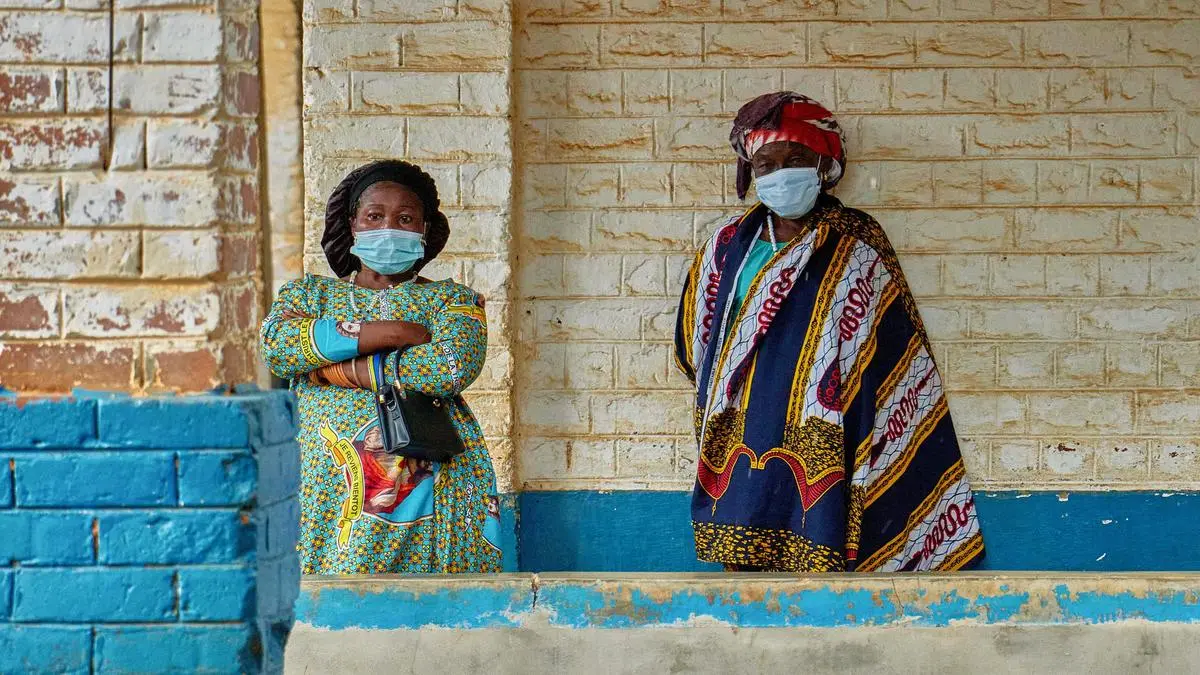
People wait to be attended at the Mongbwalu General Referral Hospital, as aid agencies intensify efforts to contain an Ebola outbreak caused by the Bundibugyo virus in Mongbwalu, Democratic Republic of Congo

People wait to be attended at the Mongbwalu General Referral Hospital, as aid agencies intensify efforts to contain an Ebola outbreak caused by the Bundibugyo virus in Mongbwalu, Democratic Republic of Congo | Photo Credit: REUTERS/Gradel Muyisa Mumbere

The outbreak of Ebola in the Democratic Republic of Congo (DRC) and Uganda resulted in the World Health Organization (WHO) calling it a Public Health Emergency of International Concern (PHEIC) — the highest level of alarm from the UN health agency.

The Africa Centres for Disease Control and Prevention (Africa CDC) have also declared a Public Health Emergency of Continental Security. And, the Indian government has now urged citizens to avoid unnecessary travel to high-risk regions like Democratic Republic of Congo (DRC), Uganda and South Sudan.

Ebola’s outbreak comes even as the Covid-19 pandemic remains a recent memory.

What do we know about Ebola?

Three different viruses are known to cause Ebola disease outbreaks — Ebola virus, Sudan virus and Bundibugyo virus, according to the WHO. The disease is severe, often fatal in humans — with the average case fatality rate being around 50 per cent.

First reports of the Ebola disease are from 1976 — two simultaneous outbreaks — Sudan virus disease in what is now South Sudan; and Ebola virus disease in DRC. The latter occurred in a village near the Ebola River, thus the name.

International health administrators are worried at the speed of the spread, exacerbated by, among other things, weak health infrastructure, reduced US funding and conflict in some regions. According to the WHO, as of May 21,  82 cases were confirmed in DRC — the ground-zero of the Ebola outbreak — with seven confirmed deaths. There are almost 750 suspected cases and 177 suspected deaths. Uganda reported two confirmed cases in people who travelled from DRC, with one death, the health agency said.

How does the Ebola virus spread?

The zoonotic virus (from an animal) spreads between people through direct contact — from broken skin or mucous membranes; blood or body fluids of a sick person or one who has died from Ebola disease; from objects or surfaces that have been contaminated with body fluids (like blood etc). Health care workers often get infected while treating patients with Ebola disease — if infection control measures are inadequate.  

People cannot transmit the virus before they have symptoms, but they remain infectious as long as their blood contains the virus. As a result, burial ceremonies involving direct contact with the body of a person who has died can also contribute to the transmission of Ebola disease, the WHO said.

What does the PHEIC mean? Does it mean the world faces another pandemic?

On May 17th, 2026, WHO said that the Ebola disease caused by the Bundibugyo virus in DRC and Uganda constitutes a PHEIC, but stopped short of calling it a global pandemic, as it did not meet the criteria of the International Health Regulations (2005). The definition calls for an international coordinated response, to an outbreak presently reported locally in Africa.

Has India reported Ebola in the past, is the country at risk?

India has not reported an Ebola case this time, or during previous outbreaks, said Union Health Ministry representatives.

What measures is the Indian government taking?

The Centre, on Sunday, urged citizens to avoid non-essential travel to Ebola-affected regions. This follows an earlier advisory calling for the screening of travellers from these high-risk regions. Passengers showing symptoms even 21 days after travel have been asked to contact local health authorities.

What are the symptoms and treatment?

Symptoms include fever, fatigue, muscle pain, headache and sore throat. It can be followed by vomiting, diarrhoea, rash, internal and external bleeding.

The WHO chief recently said, unlike previous Ebola outbreaks, caused by Zaire virus, this outbreak from the Bundibugyo virus has no approved vaccines or therapeutics. Those infected are isolated and given supportive treatment to address the symptoms.

More Like This

Congolese medical workers wearing personal protective equipment (PPE) load a coffin of a patient that died of Ebola on a mobile trailer at the Rwampara General Hospital as authorities intensify efforts to contain a new Ebola outbreak involving the Bundibugyo strain outbreak in Rwampara outside Bunia, Ituri province, Democratic Republic of Congo

Congolese medical workers wearing personal protective equipment (PPE) prepare to bury the coffin of a patient who died of Ebola, as authorities intensify efforts to contain a new Ebola outbreak involving the Bundibugyo strain outbreak in Rwampara outside Bunia, Ituri province, Democratic Republic of Congo

Published on May 24, 2026