惯性聚合 高效追踪和阅读你感兴趣的博客、新闻、科技资讯
阅读原文 在惯性聚合中打开

推荐订阅源

P
Privacy International News Feed
CTFtime.org: upcoming CTF events
Jina AI
Jina AI
T
Tailwind CSS Blog
WordPress大学
WordPress大学
Scott Helme
Scott Helme
C
Cybersecurity and Infrastructure Security Agency CISA
博客园 - Franky
C
CERT Recently Published Vulnerability Notes
cs.AI updates on arXiv.org
雷峰网
雷峰网
Schneier on Security
博客园 - 聂微东
T
Tor Project blog
Hugging Face - Blog
Hugging Face - Blog
博客园 - 司徒正美
AI
AI
T
Troy Hunt's Blog
Security Latest
Security Latest
T
The Blog of Author Tim Ferriss
cs.CV updates on arXiv.org
C
Check Point Blog
T
Threat Research - Cisco Blogs
W
WeLiveSecurity
V
Vulnerabilities – Threatpost
Recorded Future
Recorded Future
Recent Commits to openclaw:main
Cisco Talos Blog
Cisco Talos Blog
C
CXSECURITY Database RSS Feed - CXSecurity.com
Cloudbric
Cloudbric
J
Java Code Geeks
罗磊的独立博客
C
Cyber Attacks, Cyber Crime and Cyber Security
aimingoo的专栏
aimingoo的专栏
L
LangChain Blog
freeCodeCamp Programming Tutorials: Python, JavaScript, Git & More
P
Privacy & Cybersecurity Law Blog
Google DeepMind News
Threat Intelligence Blog | Flashpoint
让小产品的独立变现更简单 - ezindie.com
L
Lohrmann on Cybersecurity
I
InfoQ
MongoDB | Blog
MongoDB | Blog
OSCHINA 社区最新新闻
OSCHINA 社区最新新闻
The GitHub Blog
The GitHub Blog
The Hacker News
The Hacker News
H
Help Net Security
钛媒体:引领未来商业与生活新知
钛媒体:引领未来商业与生活新知
P
Proofpoint News Feed
N
News and Events Feed by Topic

Latest BL Explainers | The HinduBusinessLine

SEBI third-party payment proposal for mutual funds explained for investors How Ebola is turning into a public health emergency, needing international efforts How coal gasification promises to be a gamechanger in energy security, cutting imports UAE’s OPEC exit could be advantage India in the long-term All you want to know about the women’s reservation and delimitation bills fiasco Hungary’s historic elections and its implications How West-Asia war could reshape the AI race What is US-Iran peace deal & what it means for India Can SEBI’s reset revive social stock exchanges? Explained Decoding RBI’s move to curtail rupee speculation BL Explainer: How excise duty cuts support OMCs, leave consumers high and dry PNG vs LPG: Why the govt wants you to shift to piped gas All you want to know about India’s crude oil and gas reserves and why we are lagging on this count Anatomy of the India LPG crisis and how to tackle it -- explained What is Essential Commodities Act, why has it been invoked for LPG supply? Electronic banking frauds: What frauds are covered? How much will be compensated? How to claim your refund? How IDFC First Bank got de-defrauded of ₹590 crore Will RBI’s new rules on bank lending to brokers impact stock market trading? What the merger of PFC and REC means for investors Biopharma Shakti explained: What the Budget’s ₹10,000-crore bio bet means Explained: What Anthropic’s latest launch means for Indian IT Explainer: MGNREGA or VB-G RAM G, which is better? How do Stablecoins differ from other cryptos such as bitcoin? Why is RBI opposed to them? Explained Chaos on the floor: Why it is a bad season for air travellers Explained: Why Sanchar Saathi sparked a backlash — and what the rollback means All you want to know about DoT’s SIM-binding decision Why the Delhi-Mumbai airport user fee battle matters for passengers What are fractional shares? What has been the experience in Canada, US and Japan, explained Explained: All you need to know about TCS-DXC case Digital Personal Data Protection (DPDP) Rules, 2025: All you need to know Explained: How does digital gold work? What are the key concerns flagged by SEBI? India’s AI Governance Guidelines Explained: A middle path between innovation and regulation Explainer: What do new MF regulations on TER and brokerage costs mean to you? How is SIR 2.0 different from Bihar SIR? All you want to know about the work of Mokyr, Aghion and Howitt, the Nobel winners for economics in 2025 Draft Electricity (Amendment) Bill, 2025, proposes to align reforms with industry requirements Pace of adoption and integration of digital receivers will be key for growth of digital radio services in India How India plans to wean itself off Chinese ships with Centre’s shipbuilding plan Cough syrup deaths in MP & Rajasthan: All you need to know What happens during US government shutdown? How does it impact the US, India? What is Arattai? Does it have the muscle to take on WhatsApp? E20 petrol issue explained: What is all the fuss about? Why Leh’s Gen Z took to the streets: Ladakh’s unrest explained Data focus: Zubeen Garg’s funeral, the final measure of his accomplishment Gold’s breathless rally: How are jewellery buyers, central banks and investors responding? Understanding Waqf (Amendment) Act, 2025, and Supreme Court’s interim order Nepal protests explained: The Gen Z uprising in Nepal and what lies ahead HIRE Act: What It means for outsourcing, US jobs, and Indian IT companies BL Explainer: Will E20 fuel vroom ahead with removal of restriction on ethanol production? GDP deflator explained: How it will play havoc with GDP numbers for 2025-26 A tug-of-war over cashless health insurance that could threaten policy holders BL Explainer: Decoding the new income tax law Online money games explained: Why the Centre is banning them Decoding ICICI Bank’s move to sharply raise minimum account balance for new customers BL Explainer: 50% tariff on US exports: What will be the impact? Mobile number validation – boon or bane? Why Nayara Energy is caught in the crosshair of EU sanctions against Russia BL Explainer: How CERC’s market coupling decision impacts IEX What is the strategic significance of Airtel-Perplexity partnership BL Explainer: What Shubhanshu Shukla’s space odyssey means to Gaganyan mission and ISRO What is the status of Trump’s reciprocal tariffs and their shifting deadlines BL Explainer: Will Dreamfolks-Adani fracas affect your airport lounge access? BL Explainer: Are CAFE norms punishing small-car makers? SEBI cracks down on Jane Street over ₹36,671 cr Bank Nifty manipulation More than just a ‘skinny jab’: Semaglutide and its class of diabetes & weight loss drugs BL Explainer: What do the new expiry days on BSE and NSE mean to you? Why are South, North India divided on delimitation? What drives changes to constituency boundaries?
Strait of Hormuz: West-Asia tensions raise concerns over oil markets as Iran-Israel clashes
2025-06-18 · via Latest BL Explainers | The HinduBusinessLine
Flows through the Strait of Hormuz in 2024 and the first quarter of 2025 made up more than one-quarter of total global seaborne oil trade and about one-fifth of global oil and petroleum product consumption.

Flows through the Strait of Hormuz in 2024 and the first quarter of 2025 made up more than one-quarter of total global seaborne oil trade and about one-fifth of global oil and petroleum product consumption. | Photo Credit: Hamad I Mohammed

As tensions rise in West Asia with intense clashes between Iran and Israel, oil markets are jittery whether the war will spill over to the Strait of Hormuz, the chokepoint that drives one-fifth of the global crude oil trade. Blocking the strait could lead to heightened volatility in crude oil prices and a shortage can push prices to $100 a barrel.

For instance, the US EIA said that following the recent tensions in the region, the price of Brent crude oil increased from $69 per barrel on June 12 to $74 on June 13, which highlights the importance of the strait to global oil supplies.

What is Strait of Hormuz?

The 90 nautical miles (167 km) long Strait of Hormuz, which is located between Oman and Iran, connects the Persian Gulf with the Gulf of Oman and the Arabian Sea. The strait is one of the world’s most important oil chokepoints. Large volumes of oil flow through the strait, and very few alternative options exist to move oil out of the strait if it is closed. More than 85 per cent of crude oil flowing out of the Persian Gulf travels through the strait.

In 2024, oil flow through the strait averaged 20 million barrels per day (b/d), or the equivalent of about 20 per cent of global petroleum liquids consumption. In the first quarter of 2025, total oil flows through the Strait of Hormuz remained relatively flat compared with 2024, says the US EIA.

Why is it important for global oil trade?

Flows through the Strait of Hormuz in 2024 and the first quarter of 2025 made up more than one-quarter of total global seaborne oil trade and about one-fifth of global oil and petroleum product consumption. In addition, around one-fifth of global liquefied natural gas (LNG) trade also transited the Strait of Hormuz in 2024, primarily from Qatar. Around 3,000 vessels cross the strait every month.

Based on tanker tracking data published by Vortexa, Saudi Arabia moves more crude oil and condensate through the Strait of Hormuz than any other country. In 2024, exports of crude and condensate from Saudi Arabia accounted for 38 per cent of total Hormuz crude flows (5.5 million b/d), as per the US EIA.

It is estimated that 84 per cent of the crude oil and condensate and 83 per cent of the liquefied natural gas (LNG) that moved through the Strait of Hormuz went to Asian markets in 2024. China, India, Japan, and South Korea were the top destinations for crude oil moving through the Strait of Hormuz to Asia, accounting for a combined 69 per cent of all Hormuz crude oil and condensate flows in 2024. These markets would likely be most affected by supply disruptions at Hormuz.

What are its alternatives?

Most volumes that transit the strait have no alternative means of exiting the region, although there are some pipeline alternatives that can avoid the Strait of Hormuz.

Saudi Arabia and the UAE have some infrastructure in place that can bypass the Strait of Hormuz, which may somewhat mitigate any transit disruptions through the strait.

The pipelines do not typically operate at full capacity, and US EIA estimates that about 2.6 million b/d of capacity from the Saudi and UAE pipelines could be available to bypass the Strait of Hormuz in the event of a supply disruption.

Saudi Aramco operates the 5 million-b/d East-West crude oil pipeline, which runs from the Abqaiq oil processing center near the Persian Gulf to the Yanbu port on the Red Sea.

The UAE also operates a pipeline that bypasses the Strait of Hormuz. This 1.8 million-b/d pipeline links onshore oil fields to the Fujairah export terminal in the Gulf of Oman. Iran inaugurated the Goreh-Jask pipeline and the Jask export terminal on the Gulf of Oman (avoiding the Strait of Hormuz) with a single export cargo in July 2021. 

What if Strait of Hormuz is closed?

Closing Strait of Hormuz will have a ripple effect across the global oil and gas markets. The closing will lead to a surge in crude oil and LNG prices considering the volume of cargos that traverse through the channel. Major supplies such as Saudi Arabia, Iran, the UAE, Qatar and Iraq use it to export crude oil and LNG, while major consumers such as China, India and Japan depend on it for supplies.

Blocking the straits of Hormuz will also lead to higher freight rates as ships will take the longer routes, such as via the Cape of Good Hope, to transport supplies. This will lead to higher freight rates and longer delivery schedules.

What will be the impact of closing the strait on India?

Blocking the strait will impact the movement of oil and gas to Indian ports and would consequently lead to higher prices, which will, in turn, swell up India’s import bill.

The world’s third largest crude oil importer and fourth largest LNG buyer purchases around 40 per cent of its crude and almost half of its imported LNG from the Middle East.

To deal with disruptions, India has already diversified its crude oil sources from 27 to 40. It is also forging stronger links in South America and North America for oil and gas supplies.

Oil Minister Hardeep Singh Puri has already said that India has sufficient supplies of crude oil and petroleum products. Besides, the situation is being constantly reviewed.

More Like This

Mount Lewotobi Laki-laki spews smoke and volcanic ash as seen from Kawalelo village in East Nusa Tenggara province, Indonesia, June 17, 2025.

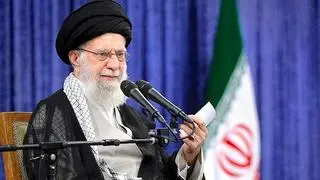
File photo of Iran’s Supreme Leader Ayatollah Ali Khamenei VIA REUTERS OFFICE OF THE IRANIAN SUPREME LEADER

Smoke rises in the direction of Khojir complex as the Israel-Iran air war continues, in Tehran, Iran in this screen grab obtained from a social media video released on June 18, 2025

Tourists and protesters gather outside the White House after US President Donald Trump cut his G7 trip short and returned as the Israel-Iran air war continues, in Washington, D.C., U.S., on Tuesday.

Published on June 18, 2025