
惯性聚合 高效追踪和阅读你感兴趣的博客、新闻、科技资讯
阅读原文 在惯性聚合中打开

推荐订阅源

Microsoft Azure Blog
aimingoo的专栏
aimingoo的专栏
F
Fortinet All Blogs
Blog — PlanetScale
Blog — PlanetScale
GbyAI
GbyAI
MongoDB | Blog
MongoDB | Blog
月光博客
月光博客
The Cloudflare Blog
量子位
T
Tailwind CSS Blog
Cyber Security Advisories - MS-ISAC
B
Blog
MyScale Blog
MyScale Blog
T
The Blog of Author Tim Ferriss
The GitHub Blog
The GitHub Blog
G
Google Developers Blog
D
DataBreaches.Net
V
Visual Studio Blog
奇客Solidot–传递最新科技情报
奇客Solidot–传递最新科技情报
Last Week in AI
Last Week in AI
U
Unit 42
博客园 - 聂微东
有赞技术团队
有赞技术团队
A
About on SuperTechFans

Latest Agricultural News, Crop Prices, Farming, Agri Business News | The HinduBusinessLine

Basmati exporters urge govt to suspend ₹83/tonne levy amid delayed payment, shrinking margin India could limit sulphur exports as supplies tighten, sources say China resumes buying broken rice from India Hot, dry conditions may prevail over most of North-West, Central India for another week IMD issues intense heatwave warning for several parts of Maharashtra Kerala fisheries sector hit by fuel shortage & rising kerosene prices ITC makes history with India’s first FSA 3.0 certification for wheat, paddy NSRCEL, Pernod Ricard India Foundation conclude 3rd cohort of Circular Economy Incubation Programme India’s sugar output up 8% at 27.39 mt as of April 15 NAAS suggests govt to consider one-time licensing for imported horticulture hybrids Polavaram project: Construction of ECRF dam to be be completed by March 2028 Climate-hit Kashmir saffron farmers battle rising porcupine menace India targets cocoa self-sufficiency by 2040 with national mission and reforms Avi Polymers launches KrishiBuddy AI platform to transform smart farming in India India gets imported Urea offer at $935, $959 per tonne Indian agriculture sector under threat by below-Normal Monsoon, El Nino, and West Asia war: ICRA Hindustan Zinc’s DAICHI launches products on retail and quick commerce platforms Oppressive heat conditions to spread out over Central and East India from today Global fertilizer supply crunch tightens farm economics India's green fuel plans collide with farmers' water fears Madhya Pradesh CM says basmati rice from the State is exported to 47 nations NAAS calls for developing smart alternate fertilisers to achieve self sufficiency TRI launches agri-voltaic project to help farmers earn double income Temperatures may trend up over North-West, Central India until weekend Global coffee prices rise as fertiliser costs and West Asia tensions threaten supply India’s soyabean imports surge to 3.09 lakh tonnes during Oct-Mar 2025-26 oil year IMD forecast of below-normal Indian monsoon poses risk to agriculture, economy Unnat Krishi Mahotsav concludes, farmers to emerge as energy, fuel & hydrogen providers, says Gadkari ‘UP banned only forced sale of non-subsidised fertilizers to farmers’ How kashmir’s breakthrough is making Gucchi mushroom farming possible
Tamil Nadu farmer turns coconut losses into profitable ag...
By PTI · 2026-05-29 · via Latest Agricultural News, Crop Prices, Farming, Agri Business News | The HinduBusinessLine
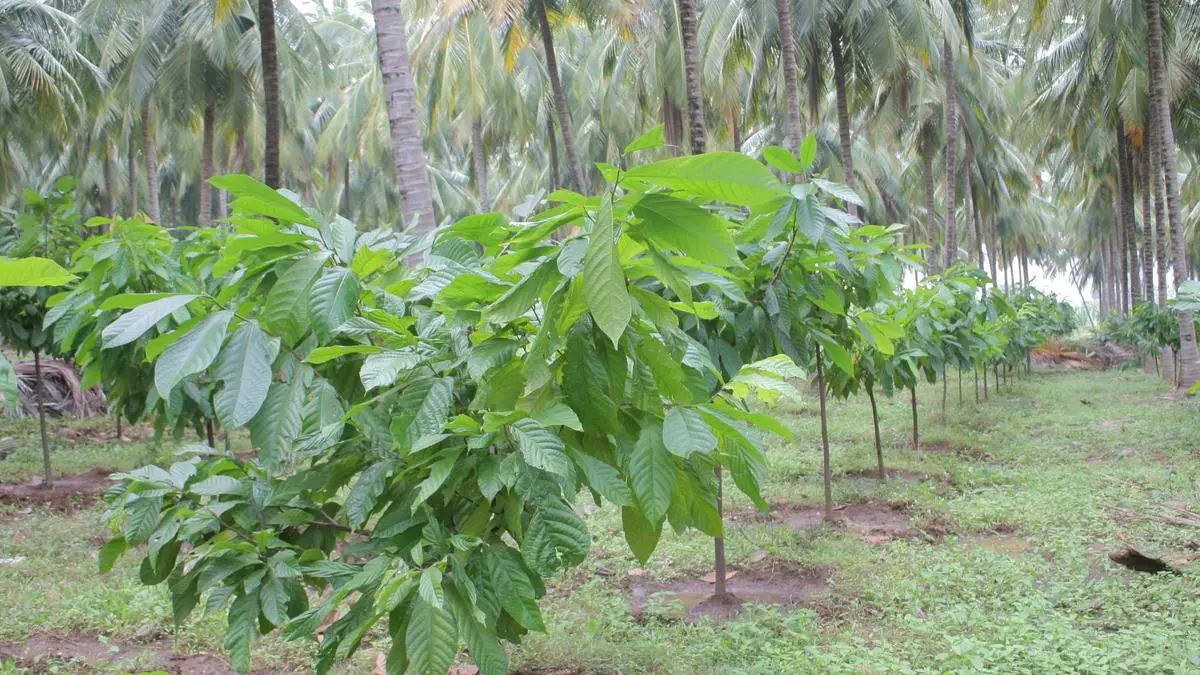
A farmer from Pollachi in Tamil Nadu has transformed his loss-making coconut farm into a profitable multi-crop, tree-based agriculture model, earning up to ₹3 lakh per acre annually and recognition as a UN FAO Soil Farmer Hero. (A representative photo)

A farmer from Pollachi in Tamil Nadu has transformed his loss-making coconut farm into a profitable multi-crop, tree-based agriculture model, earning up to ₹3 lakh per acre annually and recognition as a UN FAO Soil Farmer Hero. (A representative photo) | Photo Credit: K Ananthan

A Tamil Nadu farmer who once lost Rs 200 on every coconut tree he grew, has transformed his 11 hectare holding into a Rs 2.5-3 lakh per acre enterprise through multi-crop, tree-based farming — earning him recognition as a UN FAO Soil Farmer Hero.

Valluvan (58), who cultivates in Pollachi district, said he was spending Rs 500 per tree annually while earning just Rs 300, leaving him in a cycle of losses before he overhauled his approach in 2009.

“I was losing money on every coconut tree I owned. I knew I had to find a solution,” he told reporters here.

The turnaround came after he encountered Isha Foundation’s The Save Soil - Cauvery Calling programme, promoted by spiritual leader Sadhguru Jaggi Vasudev, which advised a shift to multi-crop, multi-tier tree-based agriculture.

From three crop varieties, Valluvan now cultivates over 14 types on the same land — coconut, nutmeg, pepper, seven banana varieties, turmeric, elephant yam, curry leaves and 30 tree varieties.

Income rose steadily from Rs 30,000 to Rs 2.5-3 lakh per acre annually, while soil organic carbon content climbed from 0.5 per cent in year one to 1.56 per cent by year seven.

Farm survives droughts with low-water agriculture methods

The farm also withstood two severe droughts, including a 2017 crisis when groundwater levels dropped beyond 1,000 feet and no rain fell for two consecutive years — a period when many neighbouring farmers felled their coconut trees.

Through mulching and rainwater harvesting pits, the farm retained sufficient moisture without additional irrigation.

It now uses one-tenth of the water previously required, and Valluvan expects to eliminate irrigation needs entirely within a few years.

“Even sensitive crops like nutmeg and pepper, which farmers say need lots of water, survived without extra irrigation,” he said.

Multi-crop farming seen as climate and income safeguard

The farm’s multi-crop model also functions as an economic hedge, said Anand Ethirajalu, Project Director at Save Soil - Cauvery Calling.

“If coconut prices fall, his nutmeg saves him. If nutmeg also falls, his banana saves him. He has a series of crops,” Ethirajalu said, comparing the strategy to a cricket team with equally competent substitutes.

Since its 2019 scaling, Cauvery Calling has planted 13.4 crore trees on private farmland across Tamil Nadu and Karnataka — roughly 10 per cent of the 242 crore trees targeted to restore year-round flows in the Cauvery river basin.

Ethirajalu, however, flagged scaling, funding and policy barriers as key obstacles to wider adoption, calling for drip-irrigation support for timber crops, removal of restrictive state-level timber-sale regulations, and insurance and subsidy schemes for tree-based agriculture.

“Tree-based agriculture is the only solution for global warming and the climate crisis threatening the entire world,” Valluvan said.

Published on May 29, 2026