


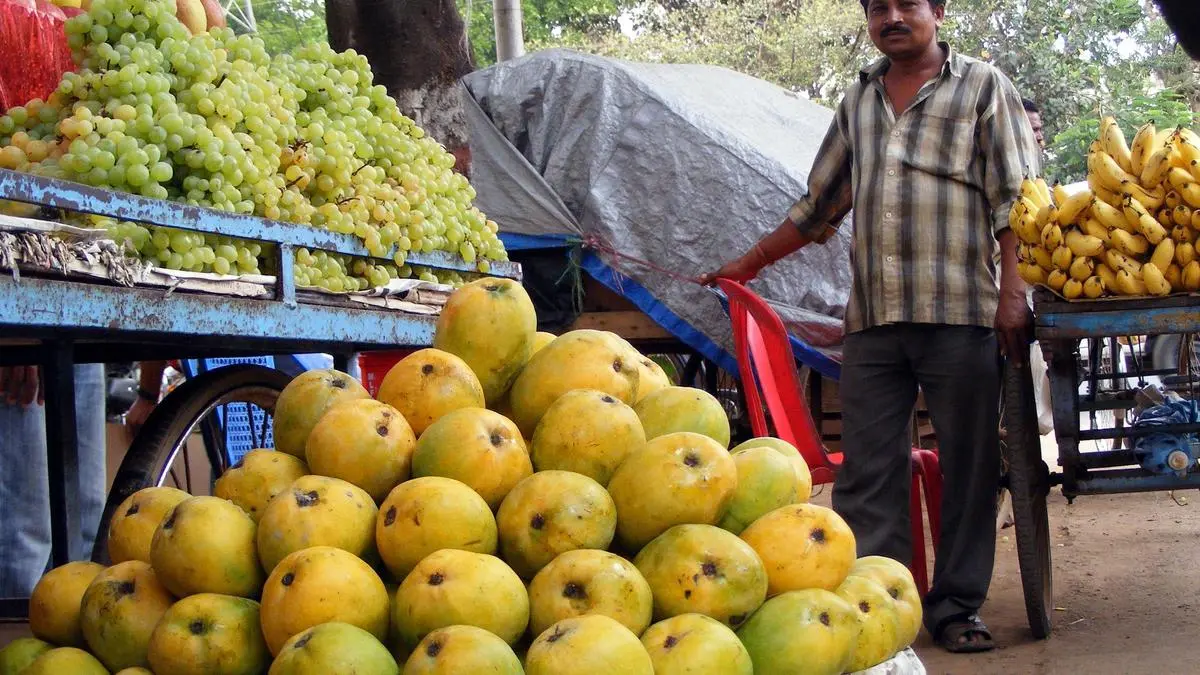
In its advisory, the authority also noted that certain food business operators are engaging in the practice of dipping fruits like bananas in ethephon solution, and added that such a practice is prohibited | Photo Credit: LINGARAJ PANDA
The Food Safety and Standards Authority of India (FSSAI) has directed States to crack down on the practice of artificially ripening fruits by using non-permitted chemicals. In its order, FSSAI reiterated that the use of calcium carbide for artificial ripening of fruits such as mangoes, bananas and papayas is strictly prohibited as it poses serious health risks.
“All food safety commissioners, regional directors & central licensing authorities have been advised to intensify surveillance, conduct inspections and take stringent action against violations to curb the use of unauthorised ripening agents,” FSSAI stated in its latest order.
In its advisory, the authority also noted that certain food business operators are engaging in the practice of dipping fruits like bananas in ethephon solution, and added that such a practice is prohibited.
In wake of such instances, FSSAI has directed States to intensify inspections and maintain strict vigilance of fruit and vegetable mandis as well as storage facilities, warehouses, distributors and wholesalers, particularly where seasonal fruits are stored and the use of substances like “masala” is suspected.
“Special enforcement drives may be undertaken to curb the illegal use of calcium carbide or other non-permitted ripening agent, waxes and synthetic colours. The presence of calcium carbide on the premises or alongside fruit crates may be treated as circumstantial evidence for initiating prosecution against the FBO,” the advisory noted.
Additionally, the FSSAI advised enforcement officials to use strip paper tests and procedures to determine the presence of acetylene in godowns and ripening chambers used for the artificial ripening of fruits.
Published on April 17, 2026
此内容由惯性聚合(RSS阅读器)自动聚合整理,仅供阅读参考。 原文来自 — 版权归原作者所有。