


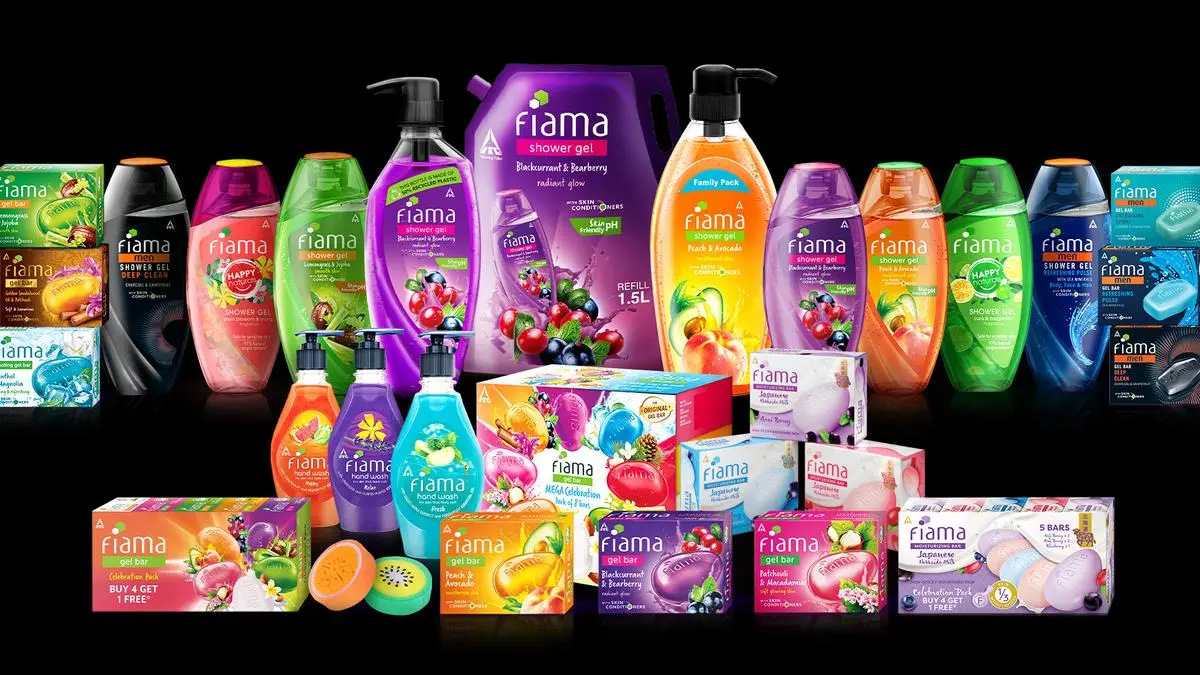
BATHED IN LUXURY. Fiama is an ₹800-crore premium personal-care brand
ITC’s premium personal-care brand Fiama aspires to hit ₹1,000 crore revenue within two years, from ₹750–800 crore at present. The brand, launched as Fiama di Wills in 2007 with a shampoo range, has maintained over 20 per cent CAGR over the last five years, growing across urban and rural markets.
Starting off as a personal care experiment for the tobacco major, the brand’s impressive growth makes for an interesting case study. With over 3,000 brands and around 3,500 varieties, soap is the largest personal care category in India, valued around ₹26,000 crore. It is challenging for any new brand to break into this highly penetrated market and turn both sustainable and profitable. It’s an even greater challenge for a premium soap.
Over the years, brand Fiama (it dropped di Wills along the way) has been built to be vibrant and youthful. “We created a very different emotional promise. ITC positioned the entire Fiama brand on the concept of the joy of bathing,” says Sameer Satpathy, Chief Executive of ITC’s Personal Care Products Division.
“There are two parts to a bath — one is focused on the quality of your skin and skincare, and the second is the freshness and enjoyment you get out of the daily routine. Both are important to consumers. One is more short-term, while the other is long-term. Fiama positioned itself uniquely to balance both the bathing needs,” he explains.
The brand’s marquee product, besides shower gels, is the gel bar it created in 2009 using a proprietary liquid crystal freezing technology — a first of its kind globally — supported by the ITC Life Science and Technology Centre in Bengaluru.
“The whole idea was to offer something distinctly different, superior and interesting as opposed to anything that was already in the market,” Satpathy says.
The brand targets the “young at heart” — consumers who value their daily shower as a three-minute “dose of happiness” before they get ready for the world, says Satpathy.
It then launched a multi-variant soap pack — from peach and avocado to lemongrass and jojoba, and patchouli and macadamia. “Young consumers want variety. We were able to package a wide variety into one pack... This came from the insight that people tend to buy different soaps when they go shopping. This was also one of the reasons we were able to make great inroads into the market,” Satpathy says.
Fiama products are manufactured across ITC’s three integrated units — at Haridwar in Uttarakhand, Baddi in Himachal Pradesh, and a new digitally-enabled factory near Kolkata.
A recent innovation is its Japanese Hokkaido milk soap range in variants like blueberry, goji berry and acai berry — which, it says, offer high moisturisation without the stickiness of cream-based soaps.
Satpathy says the brand maintains a steady innovation pipeline with two to three launches per year.
On Amazon, the brand has just launched Hokkaido milk body scrubs in two variants — papain and niacinamide. It previously launched a range of shower gels, loofas and handwashes.
“We launched as a premium brand even before premiumisation was a significant trend. With a strong innovation pipeline and robust portfolio strategy, we have ensured that the brand remains relevant and exciting for consumers. This is evident from the encouraging market standing and continued consumer love that the brand has achieved over the years,” Satpathy says.
Ask brand strategist Ambi MG Parameswaran, who has worked on soap brands like Santoor, about his views on Fiama and he says, “The premium soap segment is not very large in India and it is difficult to build a large credible brand in the segment. Dove and Pears literally rule the roost, at least in modern trade. Fiama has stayed the course and managed to build a good customer base, largely based on its product formulation, packaging and fragrance.”
Can it raise the bar further?
Published on April 20, 2026
此内容由惯性聚合(RSS阅读器)自动聚合整理,仅供阅读参考。 原文来自 — 版权归原作者所有。