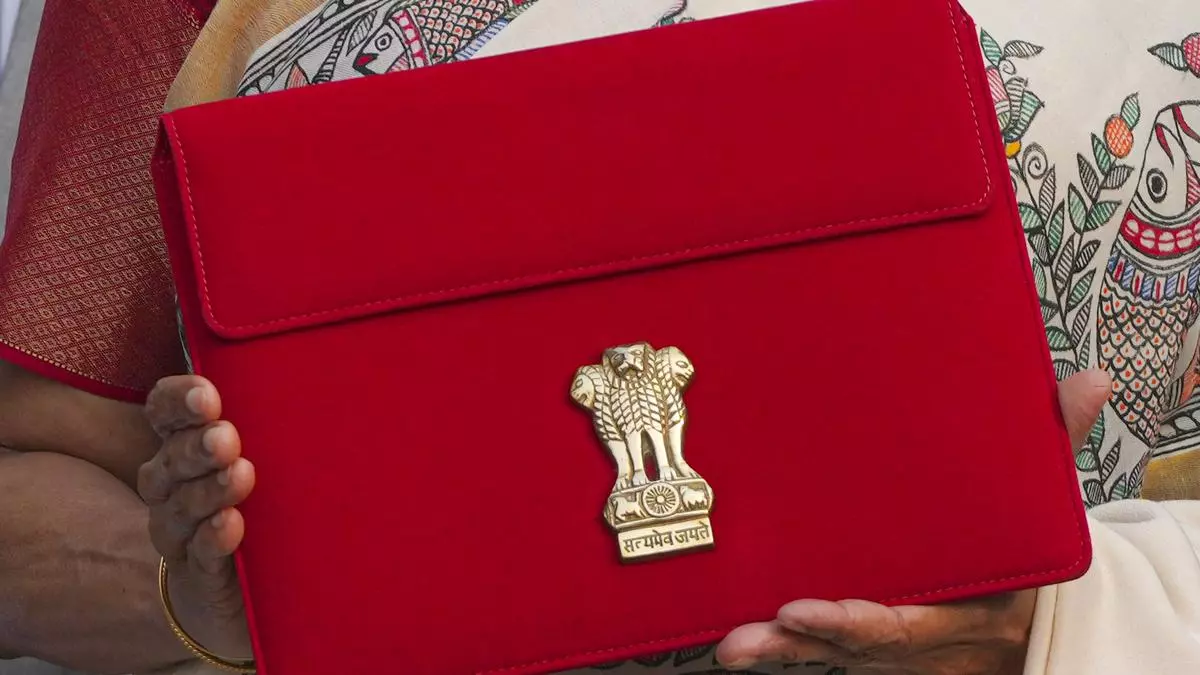
With India’s real GDP growth expected to slow sharply to 6.4 per cent in FY25 from 8.2 per cent last year and capital outflows tying the RBI’s hands on cutting rates, all eyes were on the Union Budget to announce big-bang measures to boost growth. An initial analysis of the budget numbers and the speech suggest that it has delivered a muted bang, in trying to keep its sights on the fiscal deficit.
Five features of the Budget suggest this.
Muted capital spend: Post-Covid, the NDA regime relied on sharp increases in its capital spending to drive the investment leg of the economy. For FY26 though, capital outlays have been budgeted at Rs 11.2 lakh crore, just a 10 per cent increase over revised estimates of Rs 10.18 lakh crore for FY25. This is well below the 17 per cent increase targeted last year. Moderate capital outlay assumptions are probably pragmatic, given that FY25 capital spending undershot targets (RE at Rs 10.18 lakh crore against Rs 11.1 lakh crore budgeted). With Central capital outlays to grow at the same level of nominal GDP, government spending on capex may no longer deliver a kicker to growth. This may signal government intent to get out of the way, so that the private sector can pick up the baton, helped by additional concessions on the ‘ease of doing business’ front.
Tight revenue spending: The NDA regime has consistently maintained a tight grip on revenue expenditure and FY26 will be no exception. Overall revenue expenditure is expected to rise 6.6 per cent in FY26, slightly more generous than the 4.7 per cent increase budgeted last year. But as revenue spending at this rate will not keep up with nominal GDP growth (10.1 per cent), this can’t act as much of a stimulus to GDP. In fact, if we remove interest expenses, the net revenue spends are budgeted to rise only 4.2 per cent. One can’t fault the Centre for being tight-fisted with revenue expenses. The 8th Pay Commission is likely to sharply bloat the Centre’s salary and pension bill next fiscal. So the Centre is probably trying to create headroom to absorb this, without the fiscal deficit going out of control.
Modest nominal growth: The nominal GDP growth assumed in the budget is a key number to watch for. It impacts the achievability of the fiscal deficit target and tells us how the Centre views economic prospects. Nominal GDP growth for FY26 has been assumed at 10.1 per cent, lower than the 10.5 per cent assumed last year, but slightly higher than the 9.7 per cent likely to be achieved in FY25. This puts the 4.4 per cent fiscal deficit target within reach. But it also hints that the government is resigned to economic activity just about sustaining at current levels in FY26.
Personal tax concessions: Personal tax cuts were a big ask from this budget. Here again, the Centre has done what it could give fiscal constraints. The lifting of the rebated income threshold to Rs 12 lakh from Rs 7 lakh and the tinkering with tax slabs is expected to result on revenue foregone of Rs 1 lakh crore. This is the extent of growth stimulus in this budget. This is likely to flow mostly to households at the lower end of the consumption pyramid and may thus impact demand for essentials, FMCGs etc more. Despite lower tax rates, the Centre expects personal tax collections to chip in with 14.4 per cent growth in FY26 (higher than nominal GDP growth) versus 10.2 per cent growth in corporate taxes. The achievability of this number needs to be seen.
Flat borrowings: With the Centre hoping to contain its fiscal deficit number at Rs 15.6 lakh crore - same as FY25 - on an expanding GDP base, the fiscal deficit for the full year is expected at 4.4 per cent of GDP. This means that for the third year running, net government borrowings will remain at Rs 11.5 lakh crore. This is good news for the bond markets, as flatlining government borrowings allow other actors such as companies, banks, NBFCs etc who have been scrambling for funds, raise more funds from the bond markets without being edged out by the government.
Published on February 1, 2025
THIS AD SUPPORTS OUR JOURNALISM.
SUBSCRIBE
FOR MINIMAL ADS.
THIS AD SUPPORTS OUR JOURNALISM.
SUBSCRIBE
FOR MINIMAL ADS.