
惯性聚合 高效追踪和阅读你感兴趣的博客、新闻、科技资讯
阅读原文 在惯性聚合中打开

推荐订阅源

Apple Machine Learning Research
AWS News Blog
AWS News Blog
Google DeepMind News
U
Unit 42
博客园 - 叶小钗
博客园 - 聂微东
GbyAI
GbyAI
Stack Overflow Blog
Stack Overflow Blog
有赞技术团队
有赞技术团队
aimingoo的专栏
aimingoo的专栏
D
DataBreaches.Net
CTFtime.org: upcoming CTF events
Jina AI
Jina AI
美团技术团队
The Cloudflare Blog
M
MIT News - Artificial intelligence
Microsoft Azure Blog
I
InfoQ
S
Schneier on Security
C
Check Point Blog
Project Zero
Project Zero
The Hacker News
The Hacker News
Scott Helme
Scott Helme
K
KPMG report finds enterprise disconnect between AI and its ROI | CIO
Cisco Talos Blog
Cisco Talos Blog
P
Privacy International News Feed
SecWiki News
SecWiki News
Latest news
Latest news
MongoDB | Blog
MongoDB | Blog
S
Secure Thoughts
Google Online Security Blog
F
Fortinet All Blogs
博客园 - 三生石上(FineUI控件)
H
Help Net Security
TaoSecurity Blog
TaoSecurity Blog
cs.CL updates on arXiv.org
Last Week in AI
Last Week in AI
P
Privacy & Cybersecurity Law Blog
Forbes - Security
Forbes - Security
G
GRAHAM CLULEY
N
Netflix TechBlog - Medium
L
Lohrmann on Cybersecurity
A
About on SuperTechFans
T
The Exploit Database - CXSecurity.com
C
Cisco Blogs
PCI Perspectives
PCI Perspectives
大猫的无限游戏
大猫的无限游戏
T
Troy Hunt's Blog
H
Hacker News: Front Page
Vercel News
Vercel News

Clean Tech News | The HinduBusinessLine

Solar self-reliance may cost India ₹30,000 cr this year No reply from CEA: CERC Utah bets on nuclear to power AI-driven data centre growth RE sector awaits easing of generation forecast norms Agastya Energy secures ₹4,000-cr loan from IREDA ‘Right of way’ issue is killing us: Wind industry RE projects: Build more, save ₹2.27 lakh cr Integrating climate finance into the banking regulatory framework GEF: The conservation kitty just shrank 36% The fresh wind turning Suzlon 2.0 turbines An e-dumper locator for safe disposal of electronic waste Smart meter rollout is impeded by its ambiguous status How protected are power plants from the risk of flooding? New coating steps up green hydrogen output, lowers cost India’s nuclear power ambitions face a tariff test Electrifying energy consumption India’s ambitions for nuclear energy face a tariff test How India’s ethanol hedge is paying back Why Tamil Nadu needs more verified clean power Wartsila’s fresh pitch to industry — grid stability The wait for atmanirbharta in pumped storage projects CERC sends out feelers for ‘capacity markets’ APTEL’s judgement is a wakeup call for discoms After a lull, why temperature spikes are likely to intensify in north India Power regulator’s nudge towards ‘market coupling’ Cruising towards Indian carbon market Renewable energy ministry approves pilot CfD scheme Renewable components supply chained to imports Despite PFBR going critical, India is still a long way from thorium utilisation Oil-starved industry looks to reignite heat pumps Key takeaways from CEA’s national power generation adequacy plan for the coming decade Storage, flexible usage and ‘virtual supply’ are key to taming peak power demand CERC settles dispute dating back a quarter century New NDC: As wars rage elsewhere, India must battle to green itself Can ‘district cooling’ temper peak power demand? Buzz in energy storage sector Electrifying effect of India Energy Stack What is slowing residential rooftop solar installations Indian solar sector hits third century International Energy Agency voices concern over rising electricity bills Well-intentioned, but politically fraught New concepts reflect NEP 2026’s modern thinking PM Surya Ghar: Where does India stand on the second anniversary of the scheme? NLC to add 650 MW of solar power capacity this year CCUS: An idea whose time has come, but at a price Why rigid control of power grid frequency should be a thing of the past Can ‘cooling-as-a-service’ fix the decarbonisation gap? Energy storage: From better to BESS Why Maharashtra’s solar pump scheme is grabbing attention globally Bids for ₹6,444 cr west-east RE transmission project Why VPPAs may not be a game-changer Shrinking gap in peak electricity demand Developers told to add BESS, shift to non-solar hours A watershed moment for battery storage capacity ‘ANEEL fuel fundamentally reshapes India’s thorium pathway’ A farmer’s fraught venture into solar generation Why the new nuclear legislation may not attract private investment Odisha’s green hydrogen pitch rides on its revenue surplus German firm Enerparc bags electricity trading licence The bigger, the better, right? Suzlon says not really India must capture carbon to unleash climate action India’s clean energy transition finds its tipping point in 2025 India faces 1.3 million transformer failures annually How floating solar can buoy up India’s green transition Rooftop solar installations gather speed; touch 22.5 GW All green talk, no greenback Mining silver and more from retired solar panels India’s NDC: To publish or not to publish COP: The rise of a new influential triad A Himalayan effort at climate change mitigation International meet on green hydrogen in New Delhi Climate action: A case of ‘a lot’ done to little avail Solar+battery vs new coal Why are so many transmission towers collapsing? Virtual PPAs, the next big thing in RE Tackling the black sheep of waste RE development in the time of data vacuum Powering the plough: What PM-KUSUM scheme must do to give a fillip to farmers Maharashtra overtakes Tamil Nadu in Renewable Energy capacity India’s non-fossil-fuel power capacity crosses 250-GW mark Non-fossil based power generation reaches 30% Hydrogen body urges refineries to tender for GH2 Blues of the global green hydrogen story A booster shot for the recycling sector Power regulator proposes tweaks to deviation settlement mechanism Global hydrogen demand up 2% in two years: Report How to accurately peg ‘additionality’ in carbon credits Adani to sell thermal power at ₹6.07 a kWhr Rossiya set to cleave a green sea route Green bonds: How to overcome the challenge of fading ‘greenium’
Liquidation of discoms’ regulatory assets will spur industrial use of renewable energy
By M Ramesh · 2026-05-11 · via Clean Tech News | The HinduBusinessLine
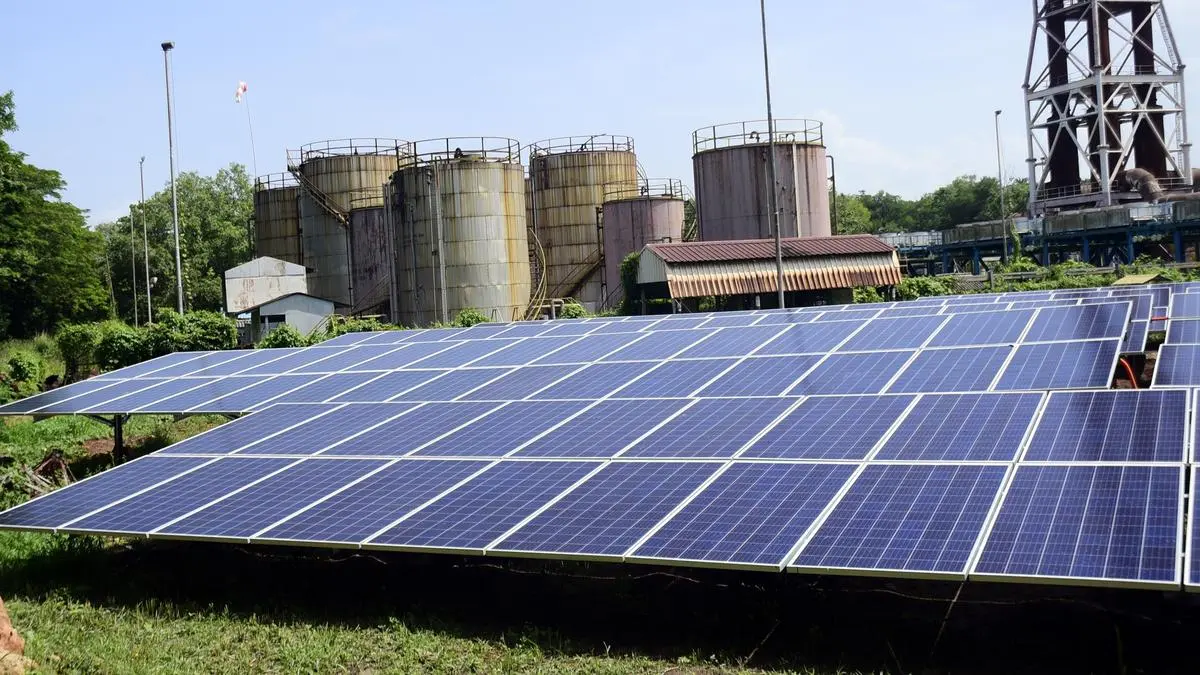
TARIFF SHOCKER. More takers for ‘solar-plus-battery’

TARIFF SHOCKER. More takers for ‘solar-plus-battery’ | Photo Credit: K Ragesh

For Coimbatore-based Natrinai Ventures, the Supreme Court’s August 2025 order directing electricity distribution companies (discoms) to liquidate their regulatory assets within four years came as a major boost. The IPO-bound company, which operates under the brand name NGE Green, plans to build 350 MW of solar capacity — 50 MW by September and the rest over the next three years — and sell power directly to consumers. The order strengthened the company’s confidence in the market.

In simple terms, liquidating regulatory assets means raising electricity tariffs. That, in turn, makes ‘solar-plus-battery’ solutions more attractive to consumers. The commercial and industrial (C&I) market is already growing rapidly, with estimates suggesting it could reach 80 GW by 2030.

Though the Supreme Court later relaxed its directive, giving discoms seven years instead of four to eliminate accumulated regulatory assets, the order has strengthened the case for open-access renewable energy.

Regulatory assets refer to costs incurred by discoms but not recovered through tariffs in a given period, leaving them to be recovered later. In effect, it is a way of postponing tariff increases.

Over time, such deferred costs have piled up to nearly ₹3 lakh crore across Indian discoms, with Tamil Nadu, Uttar Pradesh, Rajasthan and Delhi accounting for a significant share. The Supreme Court said tariffs must, as a “first principle”, reflect actual costs. It also cited Rule 23 of the Electricity Rules, whereby regulatory assets should not exceed 3 per cent of approved annual revenue requirements.

Following the order, ratings agency ICRA estimated discoms may need tariff hikes of 20-40 per cent to eliminate regulatory assets.

The apex court also suo motu directed the Appellate Tribunal for Electricity (APTEL) to monitor the implementation of its directives. Last month, APTEL pulled up the Delhi Electricity Regulatory Commission for delaying the liquidation of regulatory assets “for one reason or the other” and remarked that its conduct appeared “mala fide”.

Green opportunity

Discoms can eliminate regulatory assets either through tariff hikes or support from State governments; a combination of both appears likely. Either way, consumers — especially industrial users — are expected to face higher tariffs in the coming years.

The renewable energy industry sees opportunity in this shift. Eazhil Sudharman, Whole-time Director and CEO of Natrinai Ventures, says the company has already tied up with customers for the first 50 MW projects coming up by September, at tariffs of ₹4.20–4.60 a unit. After additional charges such as cross-subsidy levies, the effective tariff works out to be around ₹6.5 a unit — still attractive for many industrial consumers.

The ₹430-crore company expects improved realisations for future projects — a prospect that could support its planned ₹130-crore IPO.

Other industry executives share the optimism. “We are witnessing the end of the era of subsidised grid stability,” Vinay Pabba, CEO of Hyderabad-based Vibrant Energy, says. As legacy costs move from discom balance sheets to consumer bills through mandatory surcharges, the economics of renewable energy for the C&I sector become stronger, he reasons. Renewable power, he adds, is increasingly becoming “less of a procurement choice and more a long-term hedge”.

Ashwitha Tunga, policy analyst at the Winnipeg-based International Institute for Sustainable Development (IISD), calls the liquidation of regulatory assets a “welcome step” that is long overdue.

“Discoms have long struggled to raise electricity tariffs, leading to a sharp rise in electricity subsidies — reaching ₹2.4 lakh crore, or 1.3 per cent of real GDP, in FY25,” Tunga says over email. According to IISD estimates, between FY19 and FY25, discoms’ dependence on subsidies to cover operating costs increased in 23 of the 30 states and Union territories.

“Regular tariff revisions can help discoms attain financial viability while avoiding abrupt tariff shocks to consumers,” Tunga says, adding that disciplined tariff-setting practices would prevent future accumulation of regulatory assets.

More Like This

Published on May 11, 2026