
惯性聚合 高效追踪和阅读你感兴趣的博客、新闻、科技资讯
阅读原文 在惯性聚合中打开

推荐订阅源

C
CXSECURITY Database RSS Feed - CXSecurity.com
K
Kaspersky official blog
A
Arctic Wolf
Attack and Defense Labs
L
LINUX DO - 热门话题
N
News | PayPal Newsroom
cs.CV updates on arXiv.org
L
Lohrmann on Cybersecurity
PCI Perspectives
PCI Perspectives
cs.AI updates on arXiv.org
The Last Watchdog
The Last Watchdog
B
Blog RSS Feed
让小产品的独立变现更简单 - ezindie.com
W
WeLiveSecurity
Know Your Adversary
Know Your Adversary
博客园 - Franky
T
Tenable Blog
T
Tailwind CSS Blog
钛媒体:引领未来商业与生活新知
钛媒体:引领未来商业与生活新知
Help Net Security
Help Net Security
WordPress大学
WordPress大学
T
The Exploit Database - CXSecurity.com
www.infosecurity-magazine.com
博客园 - 司徒正美
阮一峰的网络日志
阮一峰的网络日志
D
Darknet – Hacking Tools, Hacker News & Cyber Security
H
Heimdal Security Blog
TaoSecurity Blog
TaoSecurity Blog
S
Security Affairs
J
Java Code Geeks
小众软件
小众软件
freeCodeCamp Programming Tutorials: Python, JavaScript, Git & More
Apple Machine Learning Research
NISL@THU
NISL@THU
O
OpenAI News
The Cloudflare Blog
月光博客
月光博客
Google Online Security Blog
V
V2EX
罗磊的独立博客
美团技术团队
博客园 - 三生石上(FineUI控件)
Security Latest
Security Latest
奇客Solidot–传递最新科技情报
奇客Solidot–传递最新科技情报
C
Cyber Attacks, Cyber Crime and Cyber Security
cs.CL updates on arXiv.org
Cyberwarzone
Cyberwarzone
L
LINUX DO - 最新话题
Hacker News - Newest:
Hacker News - Newest: "LLM"
大猫的无限游戏
大猫的无限游戏

Clean Tech News | The HinduBusinessLine

Solar self-reliance may cost India ₹30,000 cr this year No reply from CEA: CERC Utah bets on nuclear to power AI-driven data centre growth RE sector awaits easing of generation forecast norms Agastya Energy secures ₹4,000-cr loan from IREDA ‘Right of way’ issue is killing us: Wind industry RE projects: Build more, save ₹2.27 lakh cr Integrating climate finance into the banking regulatory framework GEF: The conservation kitty just shrank 36% The fresh wind turning Suzlon 2.0 turbines An e-dumper locator for safe disposal of electronic waste Smart meter rollout is impeded by its ambiguous status How protected are power plants from the risk of flooding? New coating steps up green hydrogen output, lowers cost India’s nuclear power ambitions face a tariff test Electrifying energy consumption India’s ambitions for nuclear energy face a tariff test How India’s ethanol hedge is paying back Why Tamil Nadu needs more verified clean power Wartsila’s fresh pitch to industry — grid stability The wait for atmanirbharta in pumped storage projects Liquidation of discoms’ regulatory assets will spur industrial use of renewable energy APTEL’s judgement is a wakeup call for discoms After a lull, why temperature spikes are likely to intensify in north India Power regulator’s nudge towards ‘market coupling’ Cruising towards Indian carbon market Renewable energy ministry approves pilot CfD scheme Renewable components supply chained to imports Despite PFBR going critical, India is still a long way from thorium utilisation Oil-starved industry looks to reignite heat pumps Key takeaways from CEA’s national power generation adequacy plan for the coming decade Storage, flexible usage and ‘virtual supply’ are key to taming peak power demand CERC settles dispute dating back a quarter century New NDC: As wars rage elsewhere, India must battle to green itself Can ‘district cooling’ temper peak power demand? Buzz in energy storage sector Electrifying effect of India Energy Stack What is slowing residential rooftop solar installations Indian solar sector hits third century International Energy Agency voices concern over rising electricity bills Well-intentioned, but politically fraught New concepts reflect NEP 2026’s modern thinking PM Surya Ghar: Where does India stand on the second anniversary of the scheme? NLC to add 650 MW of solar power capacity this year CCUS: An idea whose time has come, but at a price Why rigid control of power grid frequency should be a thing of the past Can ‘cooling-as-a-service’ fix the decarbonisation gap? Energy storage: From better to BESS Why Maharashtra’s solar pump scheme is grabbing attention globally Bids for ₹6,444 cr west-east RE transmission project Why VPPAs may not be a game-changer Shrinking gap in peak electricity demand Developers told to add BESS, shift to non-solar hours A watershed moment for battery storage capacity ‘ANEEL fuel fundamentally reshapes India’s thorium pathway’ A farmer’s fraught venture into solar generation Why the new nuclear legislation may not attract private investment Odisha’s green hydrogen pitch rides on its revenue surplus German firm Enerparc bags electricity trading licence The bigger, the better, right? Suzlon says not really India must capture carbon to unleash climate action India’s clean energy transition finds its tipping point in 2025 India faces 1.3 million transformer failures annually How floating solar can buoy up India’s green transition Rooftop solar installations gather speed; touch 22.5 GW All green talk, no greenback Mining silver and more from retired solar panels India’s NDC: To publish or not to publish COP: The rise of a new influential triad A Himalayan effort at climate change mitigation International meet on green hydrogen in New Delhi Climate action: A case of ‘a lot’ done to little avail Solar+battery vs new coal Why are so many transmission towers collapsing? Virtual PPAs, the next big thing in RE Tackling the black sheep of waste RE development in the time of data vacuum Powering the plough: What PM-KUSUM scheme must do to give a fillip to farmers Maharashtra overtakes Tamil Nadu in Renewable Energy capacity India’s non-fossil-fuel power capacity crosses 250-GW mark Non-fossil based power generation reaches 30% Hydrogen body urges refineries to tender for GH2 Blues of the global green hydrogen story A booster shot for the recycling sector Power regulator proposes tweaks to deviation settlement mechanism Global hydrogen demand up 2% in two years: Report How to accurately peg ‘additionality’ in carbon credits Adani to sell thermal power at ₹6.07 a kWhr Rossiya set to cleave a green sea route Green bonds: How to overcome the challenge of fading ‘greenium’
CERC sends out feelers for ‘capacity markets’
By M Ramesh · 2026-05-11 · via Clean Tech News | The HinduBusinessLine
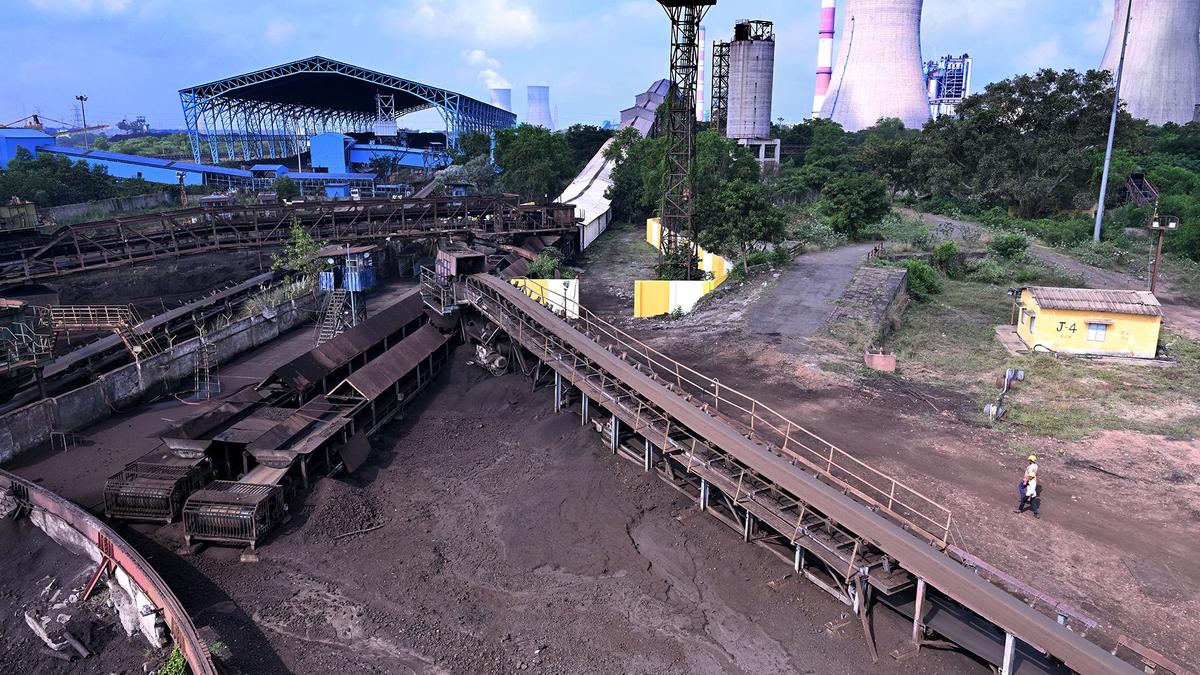
FLEXI ASSET. Thermal-green power combo for grid stability

FLEXI ASSET. Thermal-green power combo for grid stability | Photo Credit: JOTHI RAMALINGAM B

The National Electricity Plan (2026), scripted by the Ministry of Power, brought in several new concepts that reflect modern thinking. One of the concepts introduced is ‘capacity markets’.

The Central Electricity Regulatory Commission (CERC) has followed up with a ‘staff paper’ on the subject and put it out for public comments.

The concept of ‘capacity markets’ could be somewhat confusing in India because the country’s two-part tariff system already compensates generators through fixed capacity charges.

Capacity vs energy

Generators under long-term power purchase agreements (PPAs) are currently compensated through the two-part tariff comprising a fixed capacity charge and a variable energy charge. In other words, the tariff includes an assured payment for the power plant, regardless of whether it runs or not.

The ‘capacity market’ concept further breaks the two-part tariff into two. It seeks to make capacity itself a separately traded, competitively priced product. Developers put up capacities under ‘capacity markets’. They are not guaranteed recovery of the costs — they compete in the market. The lowest cost capacity gets business.

The ‘capacity market’ system tells generators that there is “no administratively assured payment for your capacity availability, so compete in the market and recover your costs — just as you do for your energy”.

Why now?

As renewable energy expands, the power system increasingly needs generators that may run infrequently but must be available at short notice — driving interest in capacity market mechanisms.

The staff paper says: “The central concern is that India’s power system is changing rapidly due to the growing share of renewable energy, especially solar and wind, whose output is intermittent. While India’s present market structure compensates generators mainly for the electricity they actually supply (“energy-only market”), the paper asks whether the country also needs a mechanism that pays generators simply for keeping dependable capacity available when required.”

The paper notes that renewable-heavy systems face periods when solar or wind generation suddenly falls, while demand remains high. Under such conditions, the grid needs sufficient despatchable or flexible resources — thermal plants, hydro stations, storage systems, gas plants and demand-response resources — to maintain reliability.

However, many of these assets may not remain financially viable if their revenues come only from selling electricity in spot markets, particularly during periods of low market-clearing prices caused by abundant renewable generation.

CERC, therefore, explores the concept of a ‘capacity market’, under which generators would receive payments not only for actual energy supplied but also maintaining available capacity. In effect, the system would compensate plants for being ready to supply power whenever needed. The staff paper stresses that the issue is not immediate shortage of installed capacity — India currently has surplus capacity in many regions — but the future adequacy and financial sustainability of reliable generation as the energy mix changes.

Pros and cons

The paper also outlines the possible advantages of such mechanisms in India. These include improving investment signals for flexible generation and storage, ensuring resource adequacy during peak demand periods, supporting grid reliability, and facilitating higher renewable penetration. Capacity markets could also encourage investment in battery storage and other balancing resources. On the other hand, critics argue that capacity payments can distort markets, increase the cost for consumers and lock in inefficient thermal assets longer than necessary.

Capacity markets are not about to invade India anytime soon, but they are making an appearance on the horizon.

More Like This

Published on May 11, 2026