
惯性聚合 高效追踪和阅读你感兴趣的博客、新闻、科技资讯
阅读原文 在惯性聚合中打开

推荐订阅源

U
Unit 42
C
Cybersecurity and Infrastructure Security Agency CISA
Exploit-DB.com RSS Feed
Know Your Adversary
Know Your Adversary
S
Securelist
I
Intezer
AWS News Blog
AWS News Blog
L
LINUX DO - 热门话题
P
Privacy International News Feed
Recent Announcements
cs.CL updates on arXiv.org
博客园 - 聂微东
Threat Intelligence Blog | Flashpoint
Attack and Defense Labs
N
News and Events Feed by Topic
The GitHub Blog
The GitHub Blog
C
Cyber Attacks, Cyber Crime and Cyber Security
Schneier on Security
N
Netflix TechBlog - Medium
爱范儿
爱范儿
B
Blog
CTFtime.org: upcoming CTF events
cs.CV updates on arXiv.org
C
CERT Recently Published Vulnerability Notes
Hacker News: Ask HN
Hacker News: Ask HN
Google DeepMind News
Engineering at Meta
Engineering at Meta
Blog — PlanetScale
Blog — PlanetScale
WordPress大学
WordPress大学
S
Secure Thoughts
K
Kaspersky official blog
N
News | PayPal Newsroom
O
OpenAI News
Last Week in AI
Last Week in AI
C
Check Point Blog
D
Darknet – Hacking Tools, Hacker News & Cyber Security
Cyberwarzone
Cyberwarzone
Application and Cybersecurity Blog
T
Tor Project blog
大猫的无限游戏
大猫的无限游戏
Vercel News
Vercel News
D
Docker
Hugging Face - Blog
Hugging Face - Blog
T
Threat Research - Cisco Blogs
Cisco Talos Blog
Cisco Talos Blog
The Register - Security
博客园 - 司徒正美
Martin Fowler
Martin Fowler
人人都是产品经理
人人都是产品经理
P
Palo Alto Networks Blog

Clean Tech News | The HinduBusinessLine

Solar self-reliance may cost India ₹30,000 cr this year No reply from CEA: CERC Utah bets on nuclear to power AI-driven data centre growth RE sector awaits easing of generation forecast norms Agastya Energy secures ₹4,000-cr loan from IREDA ‘Right of way’ issue is killing us: Wind industry RE projects: Build more, save ₹2.27 lakh cr Integrating climate finance into the banking regulatory framework GEF: The conservation kitty just shrank 36% The fresh wind turning Suzlon 2.0 turbines An e-dumper locator for safe disposal of electronic waste Smart meter rollout is impeded by its ambiguous status How protected are power plants from the risk of flooding? New coating steps up green hydrogen output, lowers cost India’s nuclear power ambitions face a tariff test Electrifying energy consumption India’s ambitions for nuclear energy face a tariff test How India’s ethanol hedge is paying back Why Tamil Nadu needs more verified clean power Wartsila’s fresh pitch to industry — grid stability The wait for atmanirbharta in pumped storage projects Liquidation of discoms’ regulatory assets will spur industrial use of renewable energy CERC sends out feelers for ‘capacity markets’ APTEL’s judgement is a wakeup call for discoms After a lull, why temperature spikes are likely to intensify in north India Power regulator’s nudge towards ‘market coupling’ Cruising towards Indian carbon market Renewable energy ministry approves pilot CfD scheme Renewable components supply chained to imports Despite PFBR going critical, India is still a long way from thorium utilisation Oil-starved industry looks to reignite heat pumps Key takeaways from CEA’s national power generation adequacy plan for the coming decade Storage, flexible usage and ‘virtual supply’ are key to taming peak power demand CERC settles dispute dating back a quarter century New NDC: As wars rage elsewhere, India must battle to green itself Can ‘district cooling’ temper peak power demand? Buzz in energy storage sector Electrifying effect of India Energy Stack What is slowing residential rooftop solar installations Indian solar sector hits third century International Energy Agency voices concern over rising electricity bills Well-intentioned, but politically fraught New concepts reflect NEP 2026’s modern thinking PM Surya Ghar: Where does India stand on the second anniversary of the scheme? NLC to add 650 MW of solar power capacity this year CCUS: An idea whose time has come, but at a price Why rigid control of power grid frequency should be a thing of the past Can ‘cooling-as-a-service’ fix the decarbonisation gap? Energy storage: From better to BESS Why Maharashtra’s solar pump scheme is grabbing attention globally Bids for ₹6,444 cr west-east RE transmission project Why VPPAs may not be a game-changer Shrinking gap in peak electricity demand Developers told to add BESS, shift to non-solar hours A watershed moment for battery storage capacity ‘ANEEL fuel fundamentally reshapes India’s thorium pathway’ A farmer’s fraught venture into solar generation Why the new nuclear legislation may not attract private investment Odisha’s green hydrogen pitch rides on its revenue surplus German firm Enerparc bags electricity trading licence The bigger, the better, right? Suzlon says not really India must capture carbon to unleash climate action India’s clean energy transition finds its tipping point in 2025 India faces 1.3 million transformer failures annually How floating solar can buoy up India’s green transition Rooftop solar installations gather speed; touch 22.5 GW All green talk, no greenback Mining silver and more from retired solar panels India’s NDC: To publish or not to publish COP: The rise of a new influential triad A Himalayan effort at climate change mitigation International meet on green hydrogen in New Delhi Climate action: A case of ‘a lot’ done to little avail Solar+battery vs new coal Why are so many transmission towers collapsing? Virtual PPAs, the next big thing in RE Tackling the black sheep of waste Powering the plough: What PM-KUSUM scheme must do to give a fillip to farmers Maharashtra overtakes Tamil Nadu in Renewable Energy capacity India’s non-fossil-fuel power capacity crosses 250-GW mark Non-fossil based power generation reaches 30% Hydrogen body urges refineries to tender for GH2 Blues of the global green hydrogen story A booster shot for the recycling sector Power regulator proposes tweaks to deviation settlement mechanism Global hydrogen demand up 2% in two years: Report How to accurately peg ‘additionality’ in carbon credits Adani to sell thermal power at ₹6.07 a kWhr Rossiya set to cleave a green sea route Green bonds: How to overcome the challenge of fading ‘greenium’
RE development in the time of data vacuum
By M Ramesh · 2025-10-13 · via Clean Tech News | The HinduBusinessLine
Climate change has made predictions of wind speed and solar irradiance, based on historical data, pointless

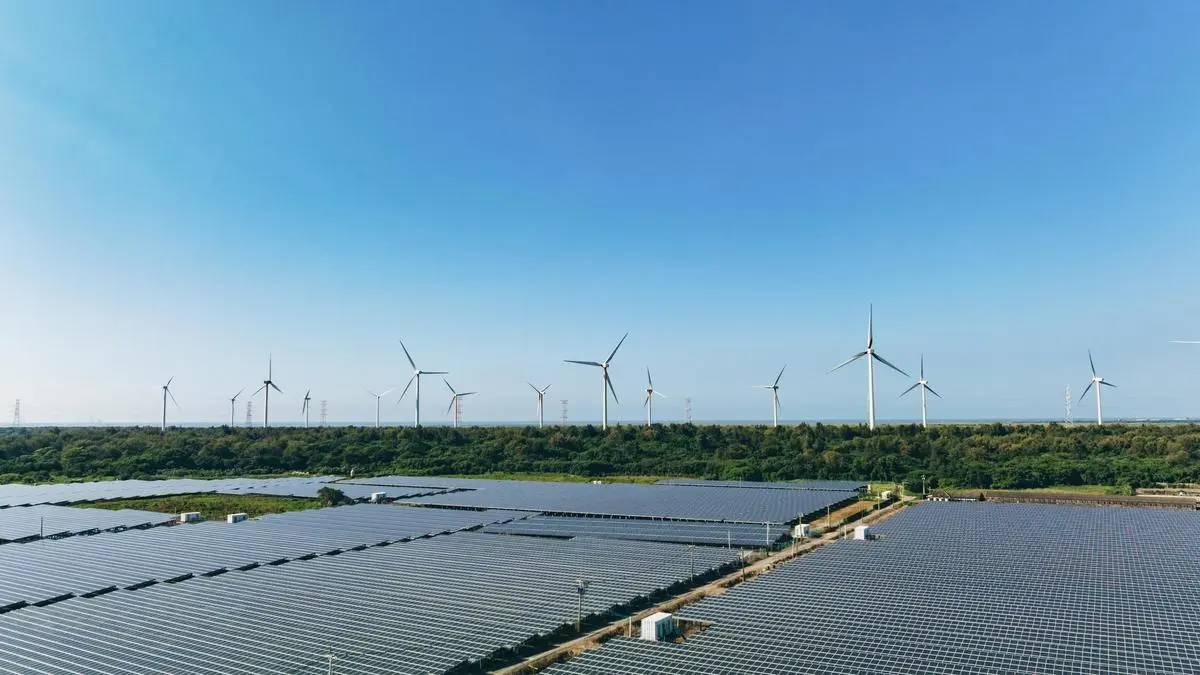
Climate change has made predictions of wind speed and solar irradiance, based on historical data, pointless | Photo Credit: Getty Images

India’s grand ambition to build up renewable energy capacity may stub its toe on a hidden factor – lack of enough data. 

There is little disagreement in the renewable energy industry on this point. You do need to know wind speeds at different heights and during different months to determine where to put up wind turbines; you do need to know how much sunshine the area you wish to put a solar plant on will receive in a year. If you say there isn’t enough of this data, you will see only nodding heads.

But when it comes to who should collect the data and how it should be made available, there is a sharp division in opinion. Should data collection be public funded? Should those who spend time and money in generating the data be forced to open the data box, even if for a fee?

The point about a lack of sufficient data to propel the industry towards its goals was recently highlighted by Vinay Pabba, CEO of Vibrant Energy, in his LinkedIn post, in which he described the problem as a “hidden flaw” in India’s clean energy boom. Pabba believes that India is trying to build its clean energy assets “on the foundation of guesswork, outdated information and proprietary secrets”, which, he says, is a “fundamental risk” to India’s energy security.

The data shortage is acute in the wind energy sector, as the industry is moving to less-known sites, with the previously identified windy sites already taken. Wind data is typically collected by turbine manufacturers (such as Suzlon, Envison, Inox); they provide the data only if an energy company promises to buy their machines. ‘My data only for my customers’ is indeed a fair point. But that doesn’t help the industry. Some energy companies (Independent Power Producers, or IPPs) too generate data, but only for themselves.

Wind data collection should ideally be done by the National Institute of Wind Energy (NIWE), but the body is not financially armed enough for the job. Putting up masts (of LiDAR) and collecting wind speed data for years is not a paying proposition; else, it would have attracted entrepreneurs and become a standalone service. Worse, the market is dynamic. NIWE has data up to 100 metres, but the industry has climbed higher — today’s turbines stand 140-160 metres tall. Extrapolating ‘100-metres’ data to 160 m is a giant punt.

The situation as regards solar energy is only a little better. “We continue to rely on foreign datasets for much of the energy yield analysis that underpins clean energy investments,” says Pabba, observing that that “financial models are built on outdated information.” 

Climate change

In any case, climate change has made predictions of wind speeds and solar irradiance based on historical data pointless. Rising global temperatures are disrupting long-established atmospheric circulation patterns, such as the jet streams and monsoon systems, leading to greater variability in wind intensity and direction.

Similarly, changes in cloud formation, aerosol concentrations, and humidity are altering the amount and consistency of sunlight reaching the Earth’s surface. As a result, regions once considered reliable for steady wind or solar power are experiencing unexpected fluctuations, challenging energy planners and grid operators. Traditional climate models, based on historical weather data, are proving less reliable in this shifting environment, underscoring the need for adaptive forecasting tools that can account for a rapidly changing climate.

“A mandatory open-source data repository is the answer,” says Pabba, adding that data is a “public good” and should be made available to all stakeholders for a “reasonable fee”. 

Not everybody agrees with Pabba. M P Ramesh, a wind industry expert and former Director of NIWE (then called Centre for Wind Energy Technology, or C-WET), says that asking data generators to put the data into the public domain is “like demanding to be allowed to copy in examinations”. He notes that resource information is a “painstakingly collected, high-risk activity” and not all information will be always useful. 

Pabba says that the CEA directive to share automatic weather station data is a positive step, Ramesh that the directive has nothing to do with energy yield analysis requirements. 

Disagreements among experts and stakeholders are natural, but the underlying message is that there needs to be data. It is time for either government bodies to do budget-supported data collection or a subsidy scheme to make data generation a viable, standalone entrepreneurial activity. India today has 52,681 MW of wind and 1,23,130 MW of solar capacity. The distance traversed is far smoother than the distance ahead. 

Published on October 13, 2025