





Taking Delhi’s BSES Rajdhani Power Ltd (BRPL) as a case study, The Energy Research Institute (TERI) think-tank has illustrated that solar-based electricity, in combination with battery storage, is cheaper than solar plus pumped storage, and “significantly” cheaper than new coal-fired power plants in meeting power demand for the whole day.
In a recent report, TERI projected the following range of costs per kWhr: Solar-plus-battery — ₹3.9-4.3; solar-plus-pumped storage ₹4.4-4.9; and new thermal ₹5.4-5.8.
These numbers assume that the cost of solar power generation is ₹2.5 a kWhr and the round-trip efficiencies of battery storage is at 85 per cent and pumped storage at 80 per cent.
Buyout price fixed at 105%
Designated consumers will soon have a third option to fulfil their ‘renewable consumption obligation’ (RCO). The first two options are: consuming self-generating or purchased renewable energy; and buying renewable energy certificates (REC) from the market. Now the government is working on a third option — ‘buyout’ — which simply entails paying a certain amount of money to the Bureau of Energy Efficiency. In September, the Ministry of Power had said that the Central Electricity Regulatory Commission would fix the buyout price.
The commission has now come up with a draft proposal for fixing the buyout price and put it up for public comments. It proposes that the buyout price could be 105 per cent of the weighted average price of RECs in the previous year. “By April 30 of every financial year up to 2029-30, the National Load Dispatch Centre (NLDC) shall publish the weighted average price of REC, the buyout price for the previous financial year,” says the commission. For 2024-25, it has proposed ₹245 per MWhr as the buyout price.
North-East’s pumped storage
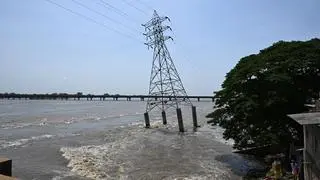
The Brahmaputra river basin can support pumped hydro projects (which store energy by keeping water at a height) of 11,130 MW, of which 3,720 MW — from five projects — can come up by 2035, according to the Central Electricity Authority’s ‘Master plan for evacuation of power from hydroelectric plants in the Brahmaputra basin’. Four of the projects are in the Kalang-Kopili basin in Assam, and the fifth on the Barak river in Tripura.
As reported earlier, the master plan says that the Brahmaputra basin holds potential to build 208 hydropower plants with total capacity of 65 GW.
More Like This


Published on October 27, 2025