


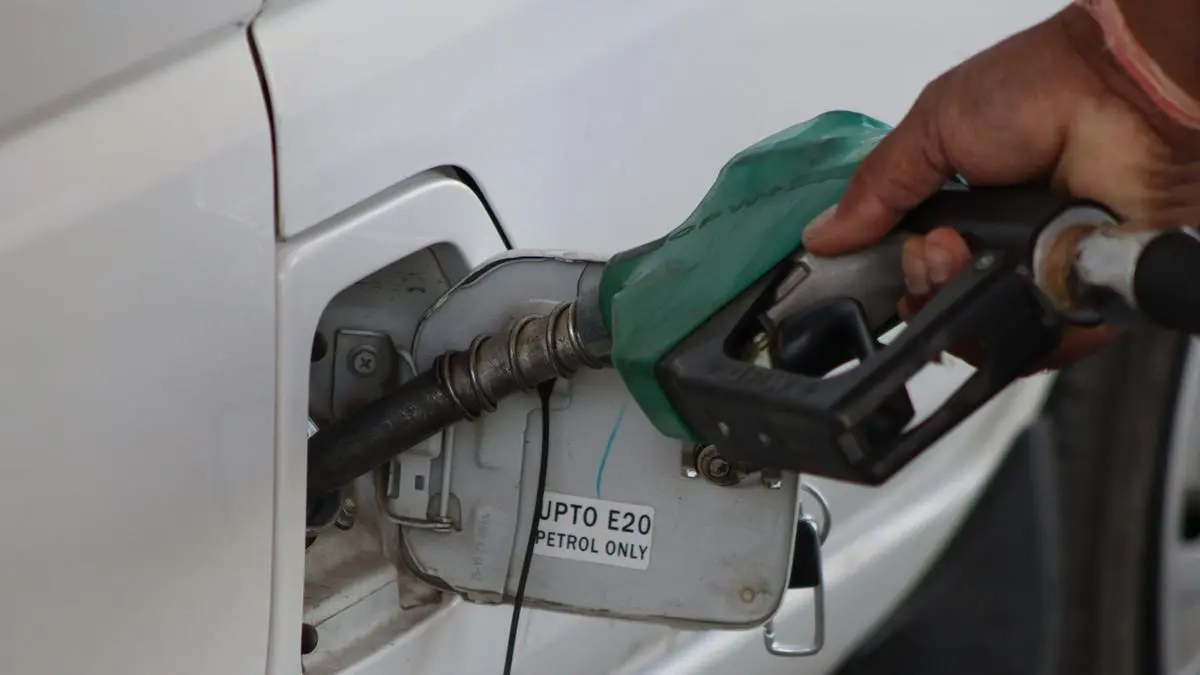
PERFECT MIX. India’s ethanol production currently exceeds the requirement for E20 blending | Photo Credit: Fahad Puthawala
India is preparing for E85 — petrol blended with 85 per cent ethanol — and even E100 fuels for flex-fuel vehicles that can run on any blend. This push looks prescient. As crude oil volatility and shortages returned with force in 2026, triggered by the Strait of Hormuz blockade and global supply disruptions, India found itself buffered by a policy conceived over two decades ago: the ethanol-blended petrol programme.
What began quietly in January 2003 as a modest initiative — with a 5 per cent blending target across nine states — barely registered in the public discourse. Even by 2014, the national blending average was just 1.53 per cent. But the groundwork had been laid steadily, through incremental policy support, distillery capacity creation, and a long-term view of energy transition.
The real shift came about in 2018. The National Policy on Biofuels redefined the programme’s scope, expanding ethanol feedstock beyond sugarcane molasses to include damaged food grains, surplus rice, maize, and agricultural residues. This diversification reduced reliance on water-intensive sugarcane and brought the grain-producing regions of north and central India into the ethanol economy, creating new income streams for farmers.
The scale-up that followed was dramatic. Ethanol blending increased near 20-fold from 380 million litres in 2013-14 to 7.07 billion litres in 2023-24. Blending levels climbed to 14.6 per cent in 2023-24, nearly 18 per cent by end-2024, and the targeted 20 per cent by March 2025 — five years ahead of schedule.
Today, India’s ethanol production exceeds the requirement for E20 blending. The surplus is not a problem but a strategic strength, ensuring readiness for higher blends such as E25, E30 or E40.
The next phase is already taking shape. The draft rules for E85 fuels are under preparation, alongside a push for flex-fuel vehicles (FFVs).
The CAFE III emission norms, expected from April 2027, are under review with proposals to treat FFVs on par with electric vehicles in emission credits.
This could accelerate their adoption and deepen ethanol’s role in the transport sector.
Beyond road transport, aviation is emerging as a new frontier for blended fuels. In April, the government amended aviation turbine fuel (ATF) regulations to include blended and synthetic fuels, effectively clearing the path for sustainable aviation fuel (SAF). Blending targets have been set at 1 per cent by 2027, 2 per cent by 2028 and 5 per cent by 2030 — marking ethanol’s entry into a high-value sector.
The foundation has been built, capacity exists, feedstock is diversified, and flex-fuel vehicles are on the horizon. What India’s ethanol programme now requires is continuity — the same patient, sustained commitment that built it.
(The writer is President, Grain Ethanol Manufacturers’ Association)
Published on May 11, 2026
此内容由惯性聚合(RSS阅读器)自动聚合整理,仅供阅读参考。 原文来自 — 版权归原作者所有。