

惯性聚合 高效追踪和阅读你感兴趣的博客、新闻、科技资讯
阅读原文 在惯性聚合中打开

推荐订阅源

T
The Exploit Database - CXSecurity.com
V
Vulnerabilities – Threatpost
Google DeepMind News
Attack and Defense Labs
Webroot Blog
Webroot Blog
cs.CV updates on arXiv.org
TaoSecurity Blog
TaoSecurity Blog
I
Intezer
Application and Cybersecurity Blog
N
News | PayPal Newsroom
S
Security Affairs
T
Tor Project blog
P
Proofpoint News Feed
Exploit-DB.com RSS Feed
S
Security @ Cisco Blogs
H
Heimdal Security Blog
Hacker News: Ask HN
Hacker News: Ask HN
Help Net Security
Help Net Security
U
Unit 42
云风的 BLOG
云风的 BLOG
The Hacker News
The Hacker News
Cisco Talos Blog
Cisco Talos Blog
量子位
F
Full Disclosure
cs.AI updates on arXiv.org
OSCHINA 社区最新新闻
OSCHINA 社区最新新闻
博客园 - 叶小钗
有赞技术团队
有赞技术团队
T
Troy Hunt's Blog
P
Privacy & Cybersecurity Law Blog
Forbes - Security
Forbes - Security
人人都是产品经理
人人都是产品经理
L
Lohrmann on Cybersecurity
Apple Machine Learning Research
Microsoft Security Blog
博客园 - Franky
腾讯CDC
AI
AI
Last Week in AI
Last Week in AI
Latest news
Latest news
Google Online Security Blog
N
Netflix TechBlog - Medium
Engineering at Meta
Engineering at Meta
GbyAI
GbyAI
让小产品的独立变现更简单 - ezindie.com
IT之家
IT之家
Martin Fowler
Martin Fowler
Blog — PlanetScale
Blog — PlanetScale
V2EX - 技术
V2EX - 技术
酷 壳 – CoolShell
酷 壳 – CoolShell

Health, Aviation, Automobiles, Entrepreneurs, India, Technology, Luxury | The HinduBusinessLine

How to retire financially secure APTEL’s judgement is a wakeup call for discoms For a partial exit via a secondary, timing and context matter After a lull, why temperature spikes are likely to intensify in north India JAL insolvency sees corporate titans cross swords Putting planet earth on livestream We channel savings to build infra: NaBFID chief Rajkiran Rai Power regulator’s nudge towards ‘market coupling’ Cruising towards Indian carbon market Backing India’s next phase of industrial growth Wealth-tech Sherpas for financial goals New hope at HOEC GST reform is sweet news for Perfetti Van Melle India Faired Play Yamaha's Aerox EC-06: Off the mark Lenovo Legion 5 review: Slim profile, serious gaming muscle The ultra-quick marathon runner Inside India’s GLP-1 rush Stalling the silent spread of TB cases Meditation, play and staying curious Towards a malaria-free future Don’t hide unfavourable clinical trial results: FDA Countries take more ownership of immunisation Medical supply chain leaks: Where does the buck stop? Feature-rich, bass-heavy Comfortingly familiar? India credit funds shrug off US blues What an Oracle foretells about jobs and careers in the AI era Less engaged workforce Renewable energy ministry approves pilot CfD scheme Banking on deposit tokens and tokenisation Renewable components supply chained to imports Strengthening the hands of agentic AI Voice AI: The chatter-bots speaking up for India Should founders cash in while the firm is still shaky? Biotech firm takes the battle to metastasis TVS Motor bikes into global third spot Building Lalit hotels with emotion Oil-starved industry looks to reignite heat pumps Eclectic Force Tax Benefits An antidote for battery anxiety Ring in the future Stand with science for universal wellbeing Wearable tech: Health monitors on the go The uncomfortable conversations over end-of-life decisions USEPA labels microplastics, pharmaceuticals as contaminants How medical myths go viral at deadly speed Gym sessions, yoga and occasional return to rollerblading Australia looks for improved ways to regulate sunscreens EC To Like The OG Returns Nothing Phone (4a) Pro review: For the love of metal Apple Inc. Turns 50 on April 1: A look back at its journey Key takeaways from CEA’s national power generation adequacy plan for the coming decade Storage, flexible usage and ‘virtual supply’ are key to taming peak power demand Insuring the gift of longevity with dignity Lupin goes for bigger bites of innovation Does greater online penetration destroy profitability? L’affaire HDFC: The curious case of a resignation CERC settles dispute dating back a quarter century From 200 hotels to 500: Radisson’s blueprint for growth in India New NDC: As wars rage elsewhere, India must battle to green itself AI talent transformation at LTM Judging and backing early winners Startups now deliver healthcare too How D2C firms must adapt to find buyers in the AI era Armatrix’s robots slither into dangerous industrial nooks Show and Tell Plush Point Xiaomi Pad 8. Solid performance meets productivity MacBook Neo. Entry-level laptop done right Slower pace of reduction in child mortality India’s silent newborn crisis Small daily habits, no quick fixes TB endgame: Yes, we can Alternatives to animal testing in drug development The pothole ‘miracle’ that wasn’t ‘Special 301’ report, in a time of strife Sound Majority Skoda Kushaq Facelift: Game of Thrones in SUV market iPhone 17e. All the iPhone you need? Samsung Galaxy S26 Ultra: Samsung hits peak Android, yet again Marine insurance’s added cost of war Ikea’s DIY plans for India Can ‘district cooling’ temper peak power demand? How should CEOs respond to the West Asian crisis Buzz in energy storage sector Electrifying effect of India Energy Stack Women-led commerce Finding a niche in air, water and carbon The Pygmalion effect on cricket and work! What is slowing residential rooftop solar installations ‘Ability to protect innovations is key’ Democratising cross-border payments The AI tsunami that is engulfing D2C startups Patenting for plastic circularity Ready to Raid On a Charge The Honda Shine 100 DX review: Light work
Despite PFBR going critical, India is still a long way from thorium utilisation
By M Ramesh · 2026-04-12 · via Health, Aviation, Automobiles, Entrepreneurs, India, Technology, Luxury | The HinduBusinessLine
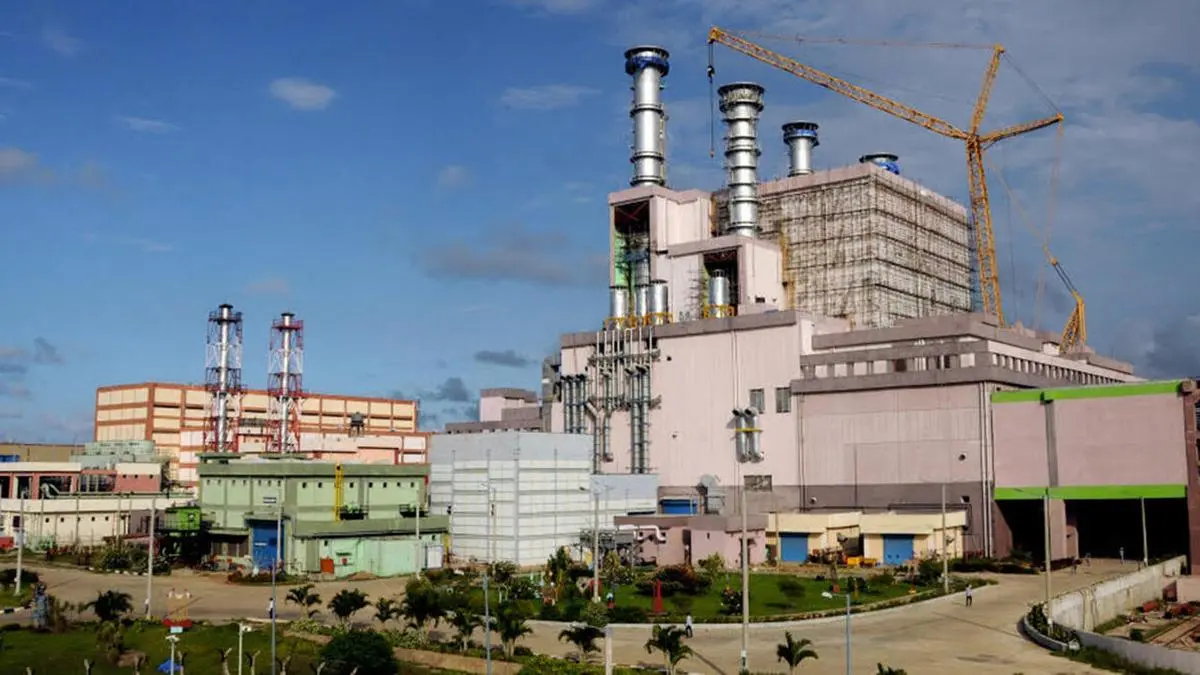
ATOMIC OPTION. The prototype fast-breeder reactor at Kalpakkam, which went critical recently, paving the way for thorium use in energy production

ATOMIC OPTION. The prototype fast-breeder reactor at Kalpakkam, which went critical recently, paving the way for thorium use in energy production

The deliriously joyful reaction of the social media commentariat to the news of the 500 MWe prototype fast-breeder reactor (PFBR) going critical is not without basis. It is certainly a significant milestone in India’s energy history. However, it is useful to temper the frenzy with some hard facts.

Indeed, PFBR paves the way for India to use thorium for energy production. India has a fourth of the world’s thorium reserves. Estimates vary — from the most optimistic 1.07 million tonnes (according to the government) to 518,000 “extractable” tonnes (according to Bhabha Atomic Research Centre).

Now, here is a telling data: a tonne of thorium (after it is converted into nuclear fuel uranium-233) can — conservatively speaking — provide as much energy as 3 million tonnes of coal. So, even at BARC’s estimate, India is sitting on thorium resources equivalent to 1.3–1.5 trillion tonnes of coal, which is a little more than all the coal reserves discovered in the world till today.

What this means is, long after West Asia has run out of oil, India could be lounging on the energy throne, producing clean, cheap power.

Social media has intuited this promise — that explains the delirium.

The ifs and buts

For sure, nuclear energy powered by a fleet of breeder reactors will play a big part in India’s quest for ‘net zero’ by 2070.

However, there are two points of note in all this. The first is that a commercial thorium reactor is likely three to four decades away.

India took 22 years to build the PFBR. While the next fast-breeder reactors may not take as much time from start to finish, the start line is still at least a decade away.

After all, the PFBR is still a demonstrator. As Dr Anil Kakodkar, India’s pre-eminent nuclear scientist and former chairman of Atomic Energy Commission, put it, you have to “do to learn”. Learning on the hoof is inherently riddled with surprises. The PFBR needs to be stabilised first. It will take 12-18 months to start pumping electricity into the grid, but those running the plant would still need to observe and absorb operational nuances, which is time-consuming.

Secondly, the first few reactors are likely to be more oriented towards producing (breeding) plutonium-239 rather than converting thorium into U-233.

Theoretically both can be done simultaneously, but there is a trade-off, as U-233 production will reduce Pu-239 breeding. The need is to first build enough stocks of Pu-239 before starting in-situ production of U-233.

So even after the first few breeder reactors come up — after over a decade, if done quickly — getting into the thorium cycle is farther away. By then, there is a distinct possibility that nuclear fusion may have emerged as a better alternative — investors are already betting on it.

Moreover, we cannot really get carried away by the fact that India is only the third country — after Russia and China — to have a fast-breeder reactor. Russia, with two operating reactors — BN 600 and BN 800 — and another under construction (BN 1200) is a master in this technology; China is only slightly ahead of India.

It is not as if India succeeded where other countries failed. France, Japan and the US dabbled in breeder reactors but gave up, not because they could not do it but realised they did not need it.

You don’t need to break your head over hard-to-build, difficult-to-run breeder reactors if you have enough uranium, though Russia has chosen to do that.

India went down this path because it has thorium; breeders are the quickest route to get to it.

Building an indigenous breeder reactor is creditable, but not evidence that India has succeeded where others failed.

More Like This

Published on April 13, 2026