惯性聚合 高效追踪和阅读你感兴趣的博客、新闻、科技资讯
阅读原文 在惯性聚合中打开

推荐订阅源

奇客Solidot–传递最新科技情报
奇客Solidot–传递最新科技情报
cs.AI updates on arXiv.org
大猫的无限游戏
大猫的无限游戏
Apple Machine Learning Research
T
Tailwind CSS Blog
人人都是产品经理
人人都是产品经理
博客园 - Franky
阮一峰的网络日志
阮一峰的网络日志
腾讯CDC
小众软件
小众软件
钛媒体:引领未来商业与生活新知
钛媒体:引领未来商业与生活新知
WordPress大学
WordPress大学
博客园 - 叶小钗
博客园 - 司徒正美
博客园 - 三生石上(FineUI控件)
博客园 - 【当耐特】
有赞技术团队
有赞技术团队
让小产品的独立变现更简单 - ezindie.com
V
Visual Studio Blog
J
Java Code Geeks
OSCHINA 社区最新新闻
OSCHINA 社区最新新闻
月光博客
月光博客
IT之家
IT之家
freeCodeCamp Programming Tutorials: Python, JavaScript, Git & More
博客园_首页
爱范儿
爱范儿
罗磊的独立博客
雷峰网
雷峰网
量子位
D
Darknet – Hacking Tools, Hacker News & Cyber Security
Hugging Face - Blog
Hugging Face - Blog
Cyberwarzone
Cyberwarzone
G
GRAHAM CLULEY
宝玉的分享
宝玉的分享
P
Privacy International News Feed
S
Schneier on Security
W
WeLiveSecurity
H
Heimdal Security Blog
I
Intezer
Jina AI
Jina AI
酷 壳 – CoolShell
酷 壳 – CoolShell
博客园 - 聂微东
美团技术团队
N
News | PayPal Newsroom
T
The Exploit Database - CXSecurity.com
Exploit-DB.com RSS Feed
aimingoo的专栏
aimingoo的专栏
S
SegmentFault 最新的问题
Project Zero
Project Zero
cs.CV updates on arXiv.org

Health, Aviation, Automobiles, Entrepreneurs, India, Technology, Luxury | The HinduBusinessLine

How to retire financially secure APTEL’s judgement is a wakeup call for discoms For a partial exit via a secondary, timing and context matter After a lull, why temperature spikes are likely to intensify in north India JAL insolvency sees corporate titans cross swords Putting planet earth on livestream We channel savings to build infra: NaBFID chief Rajkiran Rai Power regulator’s nudge towards ‘market coupling’ Cruising towards Indian carbon market Backing India’s next phase of industrial growth Wealth-tech Sherpas for financial goals New hope at HOEC GST reform is sweet news for Perfetti Van Melle India Faired Play Yamaha's Aerox EC-06: Off the mark Lenovo Legion 5 review: Slim profile, serious gaming muscle The ultra-quick marathon runner Inside India’s GLP-1 rush Stalling the silent spread of TB cases Meditation, play and staying curious Towards a malaria-free future Don’t hide unfavourable clinical trial results: FDA Countries take more ownership of immunisation Medical supply chain leaks: Where does the buck stop? Feature-rich, bass-heavy Comfortingly familiar? India credit funds shrug off US blues What an Oracle foretells about jobs and careers in the AI era Less engaged workforce Renewable energy ministry approves pilot CfD scheme Banking on deposit tokens and tokenisation Renewable components supply chained to imports Strengthening the hands of agentic AI Voice AI: The chatter-bots speaking up for India Should founders cash in while the firm is still shaky? Biotech firm takes the battle to metastasis TVS Motor bikes into global third spot Building Lalit hotels with emotion Despite PFBR going critical, India is still a long way from thorium utilisation Oil-starved industry looks to reignite heat pumps Eclectic Force Tax Benefits An antidote for battery anxiety Ring in the future Stand with science for universal wellbeing Wearable tech: Health monitors on the go The uncomfortable conversations over end-of-life decisions USEPA labels microplastics, pharmaceuticals as contaminants How medical myths go viral at deadly speed Gym sessions, yoga and occasional return to rollerblading Australia looks for improved ways to regulate sunscreens EC To Like The OG Returns Nothing Phone (4a) Pro review: For the love of metal Apple Inc. Turns 50 on April 1: A look back at its journey Key takeaways from CEA’s national power generation adequacy plan for the coming decade Storage, flexible usage and ‘virtual supply’ are key to taming peak power demand Insuring the gift of longevity with dignity Lupin goes for bigger bites of innovation Does greater online penetration destroy profitability? L’affaire HDFC: The curious case of a resignation CERC settles dispute dating back a quarter century From 200 hotels to 500: Radisson’s blueprint for growth in India New NDC: As wars rage elsewhere, India must battle to green itself AI talent transformation at LTM Judging and backing early winners How D2C firms must adapt to find buyers in the AI era Armatrix’s robots slither into dangerous industrial nooks Show and Tell Plush Point Xiaomi Pad 8. Solid performance meets productivity MacBook Neo. Entry-level laptop done right Slower pace of reduction in child mortality India’s silent newborn crisis Small daily habits, no quick fixes TB endgame: Yes, we can Alternatives to animal testing in drug development The pothole ‘miracle’ that wasn’t ‘Special 301’ report, in a time of strife Sound Majority Skoda Kushaq Facelift: Game of Thrones in SUV market iPhone 17e. All the iPhone you need? Samsung Galaxy S26 Ultra: Samsung hits peak Android, yet again Marine insurance’s added cost of war Ikea’s DIY plans for India Can ‘district cooling’ temper peak power demand? How should CEOs respond to the West Asian crisis Buzz in energy storage sector Electrifying effect of India Energy Stack Women-led commerce Finding a niche in air, water and carbon The Pygmalion effect on cricket and work! What is slowing residential rooftop solar installations ‘Ability to protect innovations is key’ Democratising cross-border payments The AI tsunami that is engulfing D2C startups Patenting for plastic circularity Ready to Raid On a Charge The Honda Shine 100 DX review: Light work
Startups now deliver healthcare too
2026-03-29 · via Health, Aviation, Automobiles, Entrepreneurs, India, Technology, Luxury | The HinduBusinessLine

Anyone who has walked into a hospital in India knows the drill: moving from one counter to another, navigating multiple floors for diagnostic tests and investigations, and generally struggling to find one’s way around the place... and all while being unwell too.

A new crop of healthcare startups aim to find a cure for this.

“You can’t change how care is delivered unless you actually deliver the care,” says Varun Dubey, founder of SuperHealth, explaining the broader shift that is underway in India’s health-tech ecosystem.

No longer content with just building discovery platforms or digital layers, startups are venturing into the business of healthcare delivery itself.

In a country where access to quality secondary and tertiary medical care remains uneven, particularly outside large cities, the startups view the gaps not as a challenge but an opportunity.
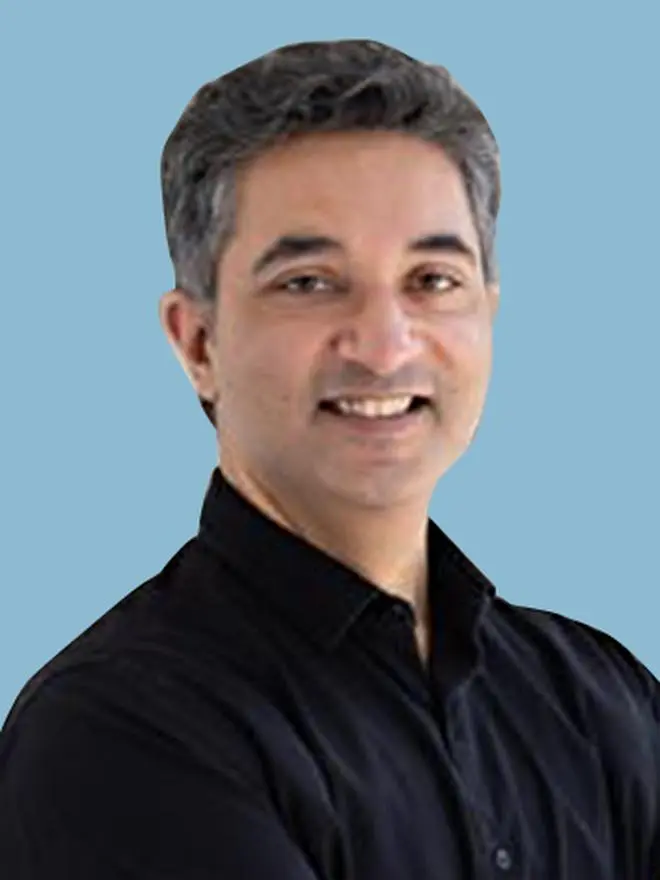
Varun Dubey, Founder-CEO, SuperHealth

Varun Dubey, Founder-CEO, SuperHealth

According to Tracxn, healthcare providers in India have attracted $3.76 billion in funding since 2019. Investments peaked at $760 million in 2021, before moderating in subsequent years. In 2025, the sector raised $602 million, a 15 per cent drop from $709 million in 2024.

Where that capital is flowing to, and where it is not, is shaping the next phase of innovation.

“Significant capital is already flowing into hospital infrastructure, particularly in urban markets. What remains under-built are scalable formats such as single-speciality networks, distributed chronic-care pathways, and tech-enabled coordination models that can expand access without replicating heavy capex,” says Dr Pankaj Jethwani, Managing Partner at W Health Ventures.

This is where many new-age startups see a place for themselves.

“In a capital-intensive and regulated sector like healthcare, startups can still carve out real advantages in the right white spaces by staying asset-light and deeply patient-focused from day one,” Jethwani adds.
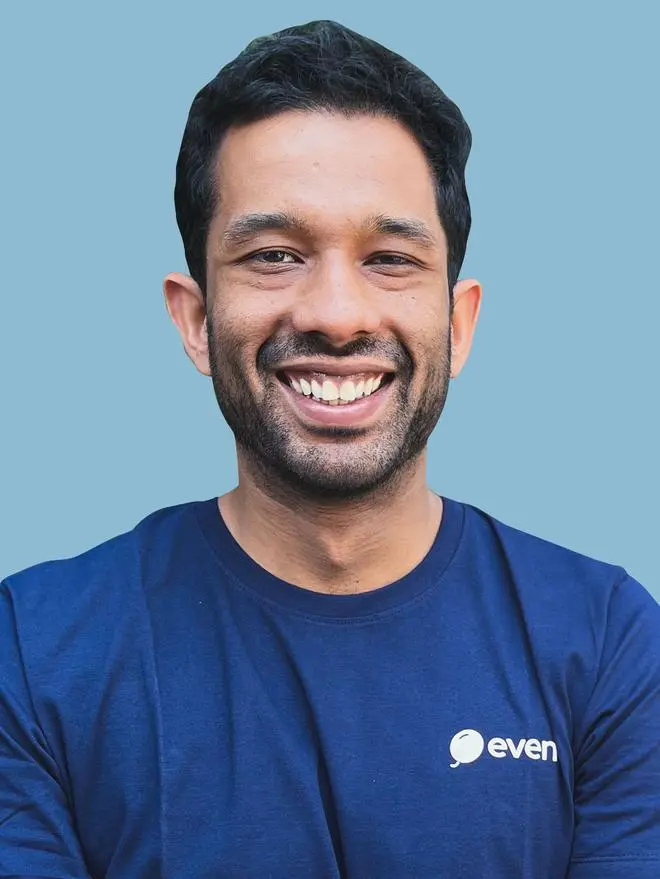
Mayank Banerjee, Co-founder, Even Healthcare

Mayank Banerjee, Co-founder, Even Healthcare

“What’s particularly interesting is seeing teams bring in talent and thinking from outside healthcare, and applying ideas from other industries to build differentiated models, especially in single-speciality and clinic-led setups,” he says.

The earlier wave of health-tech startups focused on aggregation or convenience. The current generation is redesigning how healthcare is delivered, priced, and experienced. Even Healthcare, for instance, integrates insurance with care delivery, with a focus on continuous preventive care.

“We bundle insurance membership with an end-to-end, full-stack healthcare platform,” says co-founder Mayank Banerjee. “That means everything from digital primary care to physical infrastructure. We currently operate two hospitals and expect to have six or seven by the end of the year.”

The next phase of expansion is focused on under-served tier-2 and tier-3 cities such as Agra, Nagpur, and Indore, he says.

The startup is betting on an asset-light model to keep costs under control.

“We spend about ₹40 lakh per bed because we don’t buy the underlying land... we lease it,” Banerjee explains. “We aim to deliver a high-quality experience, but we’re not trying to be a luxury hospital.”

Others in the ecosystem are rethinking different parts of the value chain. SuperHealth is focused on the economics of hospital infrastructure itself. By redesigning layouts, optimising operations, and embedding technology into care delivery, it aims to significantly reduce costs without compromising quality.

Asset-heavy venture

Among the earlier entrants in this space, Pristyn Care, which offers surgical services to partner hospitals, is redoing its model as the market matures.

The company, which has raised $187 million from investors across seven rounds, is moving towards building and operating its own hospitals, says co-founder Dr Vaibhav Kapoor.

It is also sharpening its focus on the under-penetrated secondary-care segment, where consolidation is inevitable as individual doctors or smaller hospitals struggle to operate independently, says Kapoor.

“Just like food delivery or e-commerce, healthcare will also consolidate into a few large players over time,” he says. “Smaller hospitals will increasingly partner with, or become part of larger chains.”

Hospital owners view this as a practical trade-off. “They continue practising, remain owners, but don’t have to deal with the operational headaches,” Kapoor says.

Pristyn Care targets around ₹1,000 crore revenue over the next two years, with EBITDA margins of 15–20 per cent. Along the way, it has made several course corrections.

“We’ve made mistakes — expanding too fast, over-hiring, and not being efficient enough. Those are things we’ve corrected now,” Kapoor says.

Unlike asset-light startups, healthcare delivery demands tight control over operations, working capital, and talent. “Large hospital chains manage cash flows and working capital extremely well; that’s something startups have to learn quickly,” Kapoor adds.

Funding market

India remains among the top global markets for healthcare startup funding, even as overall venture capital flows tighten.

“Major white spaces for hospital and clinic startups are in tier-2 and tier-3 markets,” says Neha Singh, co-founder of Tracxn. “These regions remain underfunded despite strong demand.”

She adds that areas such as chronic care, mental health, and rural primary care networks also remain under-explored. The growing number of funding deals in smaller centres such as Coimbatore, Thrissur, and Patna, however, point to a change in thinking.

More Like This

Urupong

BROTHERS IN ARMS. Armatrix co-founders (from left) Vishrant
Dave, Prateesh Awasthi, and Ayush Ranjan

Amit Chand, Founder of BYT Capital

Published on March 30, 2026