



惯性聚合 高效追踪和阅读你感兴趣的博客、新闻、科技资讯
阅读原文 在惯性聚合中打开

推荐订阅源

Google DeepMind News
P
Proofpoint News Feed
S
Schneier on Security
D
Darknet – Hacking Tools, Hacker News & Cyber Security
T
The Exploit Database - CXSecurity.com
B
Blog RSS Feed
G
GRAHAM CLULEY
Microsoft Azure Blog
Know Your Adversary
Know Your Adversary
N
Netflix TechBlog - Medium
A
Arctic Wolf
W
WeLiveSecurity
Cyber Security Advisories - MS-ISAC
T
The Blog of Author Tim Ferriss
AWS News Blog
AWS News Blog
Engineering at Meta
Engineering at Meta
T
Threatpost
博客园 - 叶小钗
G
Google Developers Blog
U
Unit 42
Latest news
Latest news
Cyberwarzone
Cyberwarzone
N
News and Events Feed by Topic
Simon Willison's Weblog
Hacker News: Ask HN
Hacker News: Ask HN
MongoDB | Blog
MongoDB | Blog
H
Hacker News: Front Page
F
Fortinet All Blogs
T
Tailwind CSS Blog
The Register - Security
Apple Machine Learning Research
C
CXSECURITY Database RSS Feed - CXSecurity.com
H
Heimdal Security Blog
A
About on SuperTechFans
Threat Intelligence Blog | Flashpoint
K
KPMG report finds enterprise disconnect between AI and its ROI | CIO
C
CERT Recently Published Vulnerability Notes
cs.AI updates on arXiv.org
N
News and Events Feed by Topic
Application and Cybersecurity Blog
CTFtime.org: upcoming CTF events
Schneier on Security
Y
Y Combinator Blog
V
Visual Studio Blog
GbyAI
GbyAI
Forbes - Security
Forbes - Security
www.infosecurity-magazine.com
N
News | PayPal Newsroom
P
Proofpoint News Feed
T
Threat Research - Cisco Blogs

Health, Aviation, Automobiles, Entrepreneurs, India, Technology, Luxury | The HinduBusinessLine

How to retire financially secure APTEL’s judgement is a wakeup call for discoms For a partial exit via a secondary, timing and context matter After a lull, why temperature spikes are likely to intensify in north India JAL insolvency sees corporate titans cross swords Putting planet earth on livestream We channel savings to build infra: NaBFID chief Rajkiran Rai Power regulator’s nudge towards ‘market coupling’ Cruising towards Indian carbon market Backing India’s next phase of industrial growth New hope at HOEC GST reform is sweet news for Perfetti Van Melle India Faired Play Yamaha's Aerox EC-06: Off the mark Lenovo Legion 5 review: Slim profile, serious gaming muscle The ultra-quick marathon runner Inside India’s GLP-1 rush Stalling the silent spread of TB cases Meditation, play and staying curious Towards a malaria-free future Don’t hide unfavourable clinical trial results: FDA Countries take more ownership of immunisation Medical supply chain leaks: Where does the buck stop? Feature-rich, bass-heavy Comfortingly familiar? India credit funds shrug off US blues What an Oracle foretells about jobs and careers in the AI era Less engaged workforce Renewable energy ministry approves pilot CfD scheme Banking on deposit tokens and tokenisation Renewable components supply chained to imports Strengthening the hands of agentic AI Voice AI: The chatter-bots speaking up for India Should founders cash in while the firm is still shaky? Biotech firm takes the battle to metastasis TVS Motor bikes into global third spot Building Lalit hotels with emotion Despite PFBR going critical, India is still a long way from thorium utilisation Oil-starved industry looks to reignite heat pumps Eclectic Force Tax Benefits An antidote for battery anxiety Ring in the future Stand with science for universal wellbeing Wearable tech: Health monitors on the go The uncomfortable conversations over end-of-life decisions USEPA labels microplastics, pharmaceuticals as contaminants How medical myths go viral at deadly speed Gym sessions, yoga and occasional return to rollerblading Australia looks for improved ways to regulate sunscreens EC To Like The OG Returns Nothing Phone (4a) Pro review: For the love of metal Apple Inc. Turns 50 on April 1: A look back at its journey Key takeaways from CEA’s national power generation adequacy plan for the coming decade Storage, flexible usage and ‘virtual supply’ are key to taming peak power demand Insuring the gift of longevity with dignity Lupin goes for bigger bites of innovation Does greater online penetration destroy profitability? L’affaire HDFC: The curious case of a resignation CERC settles dispute dating back a quarter century From 200 hotels to 500: Radisson’s blueprint for growth in India New NDC: As wars rage elsewhere, India must battle to green itself AI talent transformation at LTM Judging and backing early winners Startups now deliver healthcare too How D2C firms must adapt to find buyers in the AI era Armatrix’s robots slither into dangerous industrial nooks Show and Tell Plush Point Xiaomi Pad 8. Solid performance meets productivity MacBook Neo. Entry-level laptop done right Slower pace of reduction in child mortality India’s silent newborn crisis Small daily habits, no quick fixes TB endgame: Yes, we can Alternatives to animal testing in drug development The pothole ‘miracle’ that wasn’t ‘Special 301’ report, in a time of strife Sound Majority Skoda Kushaq Facelift: Game of Thrones in SUV market iPhone 17e. All the iPhone you need? Samsung Galaxy S26 Ultra: Samsung hits peak Android, yet again Marine insurance’s added cost of war Ikea’s DIY plans for India Can ‘district cooling’ temper peak power demand? How should CEOs respond to the West Asian crisis Buzz in energy storage sector Electrifying effect of India Energy Stack Women-led commerce Finding a niche in air, water and carbon The Pygmalion effect on cricket and work! What is slowing residential rooftop solar installations ‘Ability to protect innovations is key’ Democratising cross-border payments The AI tsunami that is engulfing D2C startups Patenting for plastic circularity Ready to Raid On a Charge The Honda Shine 100 DX review: Light work
Electrifying energy consumption
By M Ramesh · 2026-05-25 · via Health, Aviation, Automobiles, Entrepreneurs, India, Technology, Luxury | The HinduBusinessLine
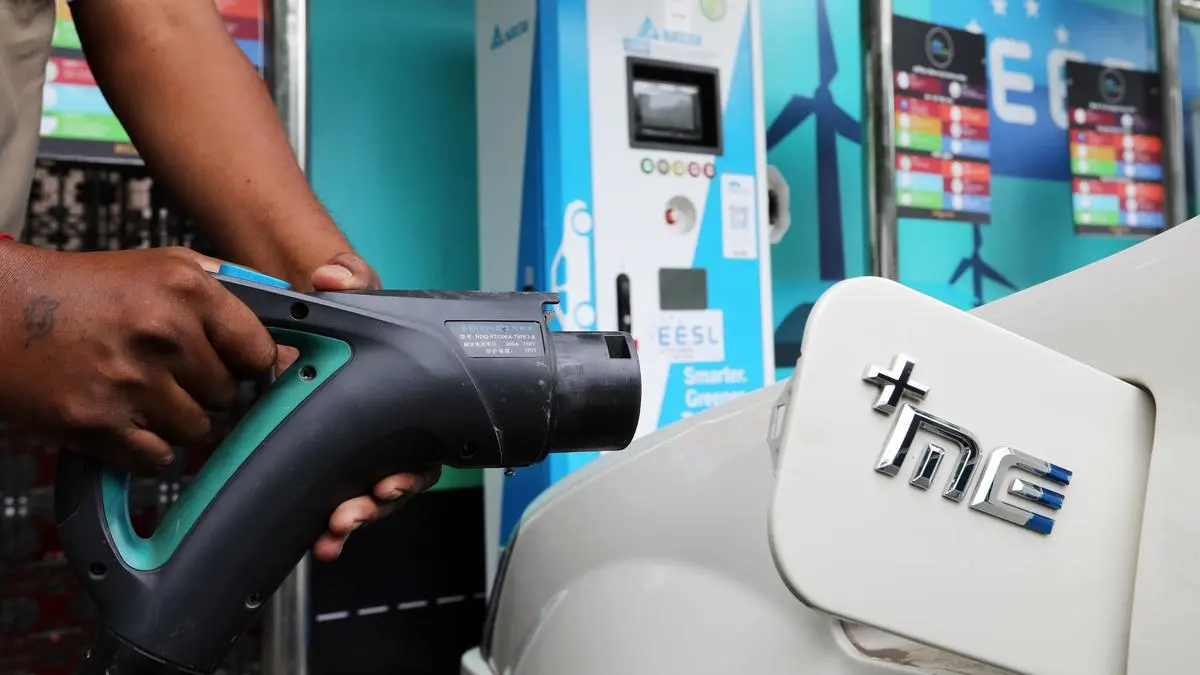
PLUG AND PLAY. Adequate charging infrastructure can hasten the electrification of the transport sector

PLUG AND PLAY. Adequate charging infrastructure can hasten the electrification of the transport sector | Photo Credit: T. Narayan

In 2024-25, India’s energy supply stood at 9,32,816 kilotonnes of oil equivalent (domestic production and imports); the energy consumed was 6,08,578 KToe, according to Energy Statistics India. This means 35 per cent of total primary energy supply (TPES) was taken away by conversion and system losses.

The number, which was the same the previous year too, is indeed high but not shocking. It is comparable to most countries. The main reason for the loss in India is thermal power, where a good 60-65 per cent of energy contained in coal is lost during conversion into electricity.

Energy lost is money lost.

There is, however, considerable scope for loss reduction.

The first option is to use higher efficiency boiler-turbine systems for thermal power plants. The second is to reduce dependence on coal-based electricity, which is happening. Today, 28 per cent of the electricity that flows in India’s grid comes from non-fossil fuels. Indeed, the country would need to build around 80 GW of new coal power plants, but the share of thermal power in the electricity mix can be expected to fall.

All of this will help reduce the gap between the primary energy supply and final energy consumption, but only a little — unless the share of electricity in the total final consumption (TFC) of energy increases substantially. Today it is just 23 per cent. This means 77 per cent of energy is consumed as molecules and not electrons. Increasing the share of renewable energy and nuclear can improve energy security, while dependence on imported molecules leaves the country vulnerable — as the current Strait of Hormuz experience illustrates.

Vinay Pabba, CEO, Vibrant Energy, notes in his LinkedIn post that “until we change that, no amount of solar and other RE capacity will buy us security”.

So, the task before energy planners is to first increase the share of electricity in TFC while reducing the share of coal and oil in TPES.

Boosting electricity

Much of India’s industrial energy demand is still met through direct combustion of coal, furnace oil and diesel for process heat.

In 2024-25, industry used 1,72,369 Ktoe of energy directly from coal. A substantial part of it can be used more efficiently if electricity is used instead of coal for applications such as industrial heating. Many electric end-use technologies are significantly more energy-efficient than direct fuel combustion. Take heat pumps, for example. A coal boiler may convert 100 units of energy in coal into roughly 80 units of useful heat. But if the same coal is first converted into electricity to run a heat pump, the system can deliver even more useful heat because heat pumps move ambient heat rather than generate all heat directly. Burning coal that holds, say, 100 kWhr of energy can produce 80 kWhr of heat energy (conversion into heat energy is more efficient than conversion into electricity); comparatively, the same coal when converted into electricity to run a heat pump can give 120 kWhr of heat, because of the high coefficient of performance (CoP) of heat pumps.

Experts, therefore, argue that policy must focus explicitly on industrial electrification. This would initially shift energy demand toward the power sector but, over time, allows cleaner generation sources to decarbonise a much larger share of the economy.

Pabba suggests mandating electric boilers for low-temperature (below 150 degrees C) industrial heating applications — a segment that accounts for a significant share of industrial heat demand. He also calls for phased replacement schedules for diesel and fuel-oil boilers, restrictions on new coal-fired industrial boilers in metros, and a redesign of India’s ‘Perform, Achieve and Trade’ (PAT) scheme to push industries toward fuel switching rather than merely incremental efficiency gains.

The transport sector offers another pathway to electrification — one that is perhaps easier than industry. Oil products account for 49 per cent of TCS (2,42,386 Ktoe out of 6,08,578 Ktoe). If the charging infrastructure can be quickly built, then a substantial share of vehicles can move from oil to electricity. Here, Pabba argues that direct bans and mandates catalyse the process faster than India’s current approach of subsidies.

The hurdles

Raising electricity in the overall energy mix will face political headwinds. Increasing the share of electricity necessarily means keeping its cost low. But in a country where industry is asked to pay for free or low-cost supply to underprivileged communities, lowering industrial tariffs is politically fraught.

The draft New Electricity Policy 2026, developed by the Ministry of Power in January, speaks against “relentless cross-subsidy”. Therein lies some hope for the electrification of energy.

Published on May 25, 2026