


惯性聚合 高效追踪和阅读你感兴趣的博客、新闻、科技资讯
阅读原文 在惯性聚合中打开

推荐订阅源

S
Schneier on Security
The Register - Security
月光博客
月光博客
freeCodeCamp Programming Tutorials: Python, JavaScript, Git & More
OSCHINA 社区最新新闻
OSCHINA 社区最新新闻
The GitHub Blog
The GitHub Blog
博客园 - 司徒正美
罗磊的独立博客
U
Unit 42
S
SegmentFault 最新的问题
Y
Y Combinator Blog
博客园_首页
Hugging Face - Blog
Hugging Face - Blog
J
Java Code Geeks
Schneier on Security
Know Your Adversary
Know Your Adversary
C
Check Point Blog
Cyber Security Advisories - MS-ISAC
Simon Willison's Weblog
V
Vulnerabilities – Threatpost
让小产品的独立变现更简单 - ezindie.com
阮一峰的网络日志
阮一峰的网络日志
The Hacker News
The Hacker News
博客园 - 叶小钗
C
Cybersecurity and Infrastructure Security Agency CISA
Spread Privacy
Spread Privacy
L
LINUX DO - 热门话题
T
The Exploit Database - CXSecurity.com
P
Palo Alto Networks Blog
cs.CL updates on arXiv.org
Latest news
Latest news
L
Lohrmann on Cybersecurity
A
About on SuperTechFans
L
LangChain Blog
Stack Overflow Blog
Stack Overflow Blog
S
Securelist
A
Arctic Wolf
D
Darknet – Hacking Tools, Hacker News & Cyber Security
T
Threatpost
Scott Helme
Scott Helme
博客园 - 聂微东
博客园 - 【当耐特】
T
Tenable Blog
I
Intezer
D
DataBreaches.Net
B
Blog RSS Feed
Security Latest
Security Latest
C
Cisco Blogs
T
Tor Project blog
N
Netflix TechBlog - Medium

Business Tech News: Latest Updates on Innovations, Startups, and Market Trends | The HinduBusinessLine

Geo-engineering against climate change ZincGel vs Li-ion battery Why the energy sector isn’t AI-ready yet IT services giant TCS takes an AI-led avatar IIT-M revives forgotten route to industrial wastewater treatment IIT-Kanpur-incubated start-up develops unique battery technology Two faces of water Why the made-in-India ePlane is unique Moving satellite data at laser speed Longer-lasting zinc battery How simulation tech can ready robots for the real world DAE commissions world’s first nuclear heat-based copper-chlorine hydrogen plant DAE commissions world’s first nuclear heat-based copper-chlorine hydrogen plant Subterranean forest of fungi Using sound waves to bypass charge-based circuits AI aides to decode Indian law How the US funding cut impacts cancer research The time to deploy thorium is now The protein-peptide bonds that heal IIT-Kanpur hosts India’s first DORIS beacon How plants summon help Fishing out fake news using a deep-learning neural network IIT-Madras sets up testing tank for ships, submarines Dentistry’s prehistoric drill With AI, science is borderless How ‘spent’ graphite breathes new life into fuel cell Coal gas can yield clean hydrogen at $1.25 a kg Light, compact antennas IMD launches pilot weather forecast within 1 km radius in UP, national roll out in 2-3 years Nationwide ban soon on Paraquat herbicide over toxicity concerns, health risks ParvAI: ‘Windows to the soul’ and workplace safety Why agreeable AI is a liability in competitive markets Using lasers to punch holes in cell walls When the grid becomes an all-knowing data system Micro-mining for critical rare earth minerals Half the capex, less carbon: The molten magic inside Tata Steel’s HIsarna bet Cosmic aid for miners Efficient brakes and EV range India contributes ₹745 crore to multi-country ITER Big budgets, slow science: BARC under-spends on R&D Artemis-2: Hurtling moon-ward on an epochal mission Power supply lessons for AI Why nuclear fusion is gaining funding Defence research stays underfunded Micro attacks on sewer lines Turning the ubiquitous optical fibre into a sensor The PRAGYA tokamak Mind-reading tech No exam is too hard for AI? Carnot battery: Carbon dioxide as ideal ‘working fluid’ On a leash of light On a wing and an AI-powered tool How do ‘natural polypills’ work? AI tool for capturing and managing hospital records How sea microbes can protect agri fields Why India should choose to build not just powerful, but also governable AI Flaring and quaking Qualcomm has an Edge in India Soil testing of rhizosphere CMFRI achieves captive breeding of threatened mangrove clam No erasures RDI scheme could be operationalised this year IIT-M’s ramjet shell is an engineering marvel Sun-powered supercapacitor 10 years on, NALCO yet to start gallium extraction project Budget doubles allocation for nuclear research to ₹2,410 cr Underwater water Recent successes in science-led atmanirbharta Electric mobility may take wing in the not-too-distant future Eco-friendly semiconductors Twinning prayers and AI at mega temple festival Solar cells of efficiencies above 30% A lesson from Germany on infrastructure maintenance Fabled city in the high mountains Optimising bioreactor design Sensing UV-C in femtoseconds ISRO to kick off 2026 with launch of Earth Observation Satellite Thriving in extremes Indo-Lankan leg-up for S&T Using AI to better assess cyclone damage War on drug resistance goes undersea Big, bad business of junk food Rosatom’s mini variant of small modular reactor Clear thinking on pranayama Can GenAI be a responsible teaching assistant? Pharma PLI fetches ₹26,832 cr sales ‘Scripting’ ideal AI output Honeywell’s technology may bring biomass to the centre stage India-made human-like robot Scorched by 163-year drought NTT’s quantum leap into near sci-fi realm A reality check on AI’s negotiation skills Salinity-proof epoxy coating for marine installations Heat from small-scale solar units could accelerate India’s net-zero transition Cross-species transplantation is at a regulatory crossroads Nature, the ultimate climate warrior Breakthrough in desalination technology, using carbon ‘flowers’ Epidemiology-ML collab decodes India’s struggles with air quality
Indian material for magnet making
By M Ramesh · 2026-05-04 · via Business Tech News: Latest Updates on Innovations, Startups, and Market Trends | The HinduBusinessLine
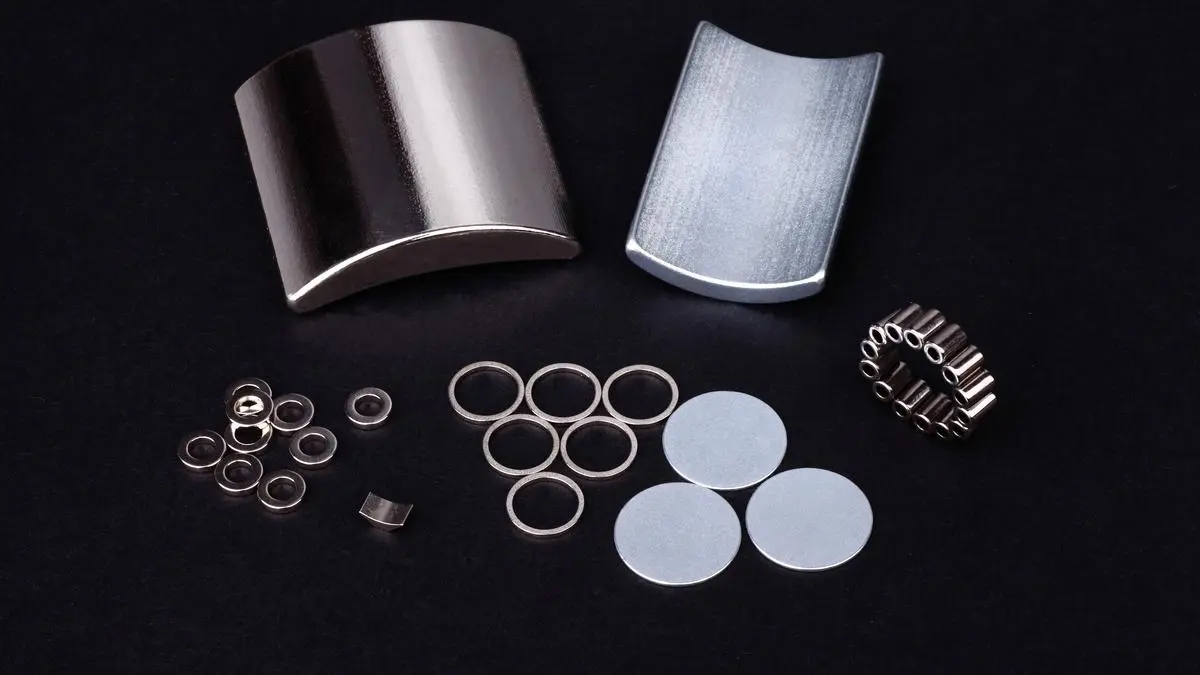
UNCOMMON ATTRACTION. The powerful neodymium-iron-boron magnets are made of expensive rare earths

UNCOMMON ATTRACTION. The powerful neodymium-iron-boron magnets are made of expensive rare earths | Photo Credit: xiao zhou

Can India achieve magnet independence? The honest answer is, no — at least, not anytime soon. However, it can reduce its dependence on other countries, especially China, for its magnet requirement.

A few steps have been taken in the recent past. In November 2025, the government approved a ₹7,280 crore scheme to promote the manufacture of sintered rare earth permanent magnets in India. The scheme is ambitious — it seeks to create in the country an annual manufacturing capacity for 10,000 tonnes of magnets.

Today, India consumes about 6,000 tonnes, almost all of it met by imports. Consumption is expected to double by 2030.

The public-funded Bhabha Atomic Research Centre (BARC) recently stated that is has developed technology for producing rare earth alloy powders “directly from inexpensive oxides, at much lower temperatures”, thereby slashing costs.

Meanwhile, technology for converting RE alloys into magnets “is available with the Defence Metallurgical Research Laboratory, Hyderabad”, according to a government press release.

Now, there’s a suggestion from Dr Raghavan Gopalan, veritably the “magnet man of India”, who recently retired as Director of the International Advanced Research Centre for Powder Metallurgy and New Materials (ARCI), a government research laboratory based in Hyderabad.
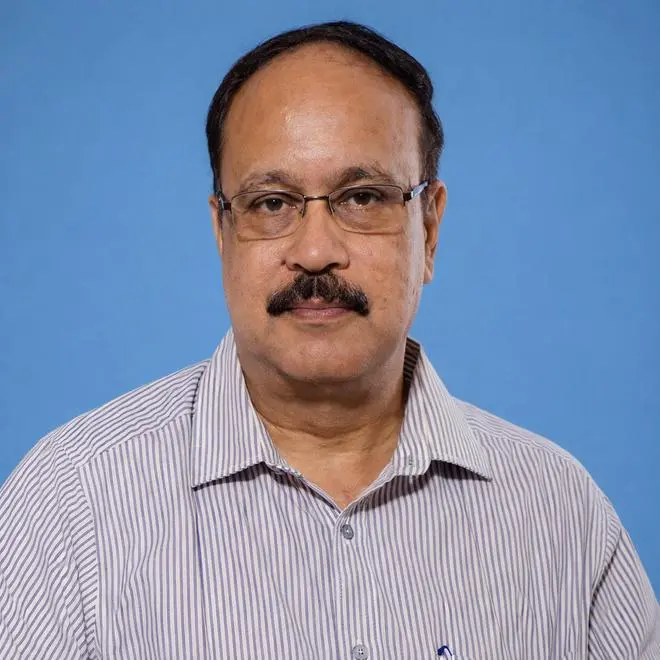
Raghavan Gopalan, former director of ARCI

Raghavan Gopalan, former director of ARCI

Gopalan had earlier told businessline that India could reduce its import dependence for magnets by using one rare earth mineral abundantly available within its shores — cerium. Most high-performance permanent magnets today are made from neodymium-iron-boron (NdFeB), often using a mix of neodymium and praseodymium — all of which are relatively scarce and expensive rare earths.

Cerium-based magnets are essentially a modified version, where a part of the neodymium-praseodymium content is replaced with cerium — the most abundant and cheapest rare earth element. The resulting magnet is significantly cheaper, but somewhat lower in performance. India has about 2.5 million tonnes of cerium in the monazite sands found abundantly in its southern peninsular coast.

Gopalan said cerium magnets “sit between” bonded and sintered magnets. They do not match the strength of the top-end sintered NdFeB magnets used in electric vehicles or wind turbines, but can compete with or outperform lower-end bonded magnets in many applications. This makes them suitable for mass-market uses such as two-wheelers, appliances, pumps and industrial motors.

Alloy optimisation

The challenge is technical. Cerium tends to weaken magnetic properties. Research efforts, including in India, are focused on optimising alloy composition and microstructure to minimise performance loss while retaining the cost advantage.

For India, the attraction is strategic. Cerium makes up a large share of the country’s rare earth resources but has limited high-value uses. Developing cerium-based magnets could allow India to build a domestic magnet industry at scale — reducing import dependence while putting an underutilised resource to work.

Gopalan said cerium magnets could work well in applications that do not see high temperatures, such as small motors in electric vehicles. This “middle-ground” positioning is important because much of India’s magnet demand does not require top-end performance. In electric two-wheelers, for instance, motors typically operate at lower power densities and temperatures than in passenger cars, making them more tolerant to modest reductions in magnetic strength.

Similarly, appliances such as air-conditioners, washing machines and refrigerators, and industrial equipment like pumps, fans and compressors prioritise cost, reliability and scale over peak efficiency.

Cerium-based magnets could offer a viable substitute for both imported NdFeB magnets and lower-performance bonded magnets. Slightly larger magnets or minor motor redesigns can often compensate for lower magnetic strength without affecting end-use performance.

Gopalan is now in Japan as part of the Indo-Japan LOTUS initiative, which supports graduate students and post-doctoral researchers in India to travel to Japan for research projects under Japanese experts. He intends to initiate a ‘rare earth magnet collaboration’ between the two countries.

More Like This

Published on May 4, 2026