


The last of the restrictions imposed during the pandemic will come to an end with the removal of the airfare cap on domestic airlines from August 31.
This should pave the way for airlines to regain most of the lost ground. According to various estimates, domestic airlines have suffered losses of around $4.1 billion in 2021-22 and are expected to reach the pre-pandemic level by the end of FY2024.
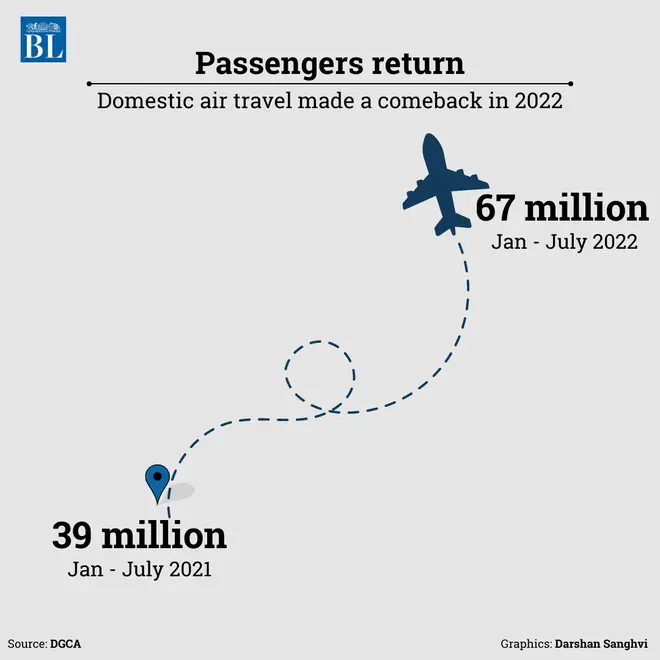
But what are the building blocks that the airlines should put together to recover from the worst crisis the airlines have suffered? Here are a few key areas domestic airlines should focus on.
1. Return on invested capital
It is the amount of money a company makes above the average cost it pays for its debt and equity capital. According to the airline analyst, Pankaj Narayan Pandit, IndiGo and Tata Group airlines are in a safe place compared to others. While IndiGo has paid-off most of its debt, Vistara, AirAsia India and Air India are better placed because the parent Tata Sons is well-capitalised.
2. Revenue Management
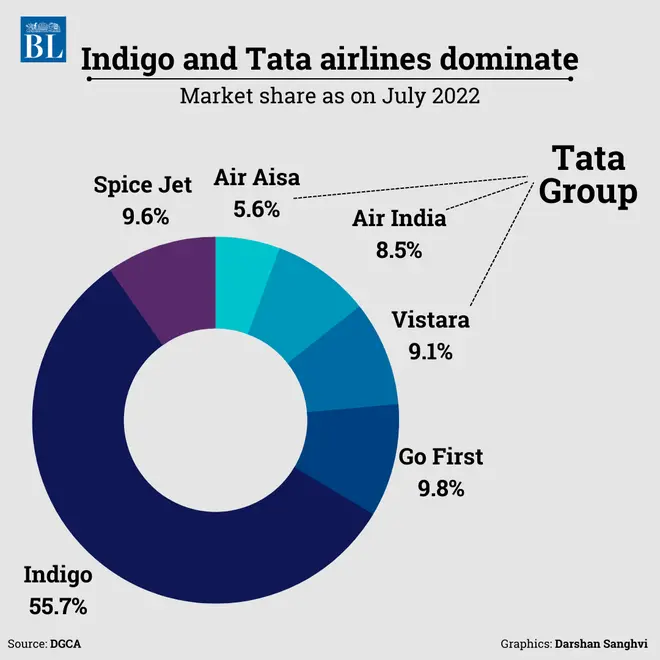
The two critical parameters of revenue management are ‘stifle’ and ‘spill’. In aviation, spill refers to passengers being turned away from a flight because demand has exceeded capacity. Pandit, who runs the airline consultancy firm Plusmetrix Business Solutions, said the airfares are pretty high, even at the lower end of the airfare cap. But such a scenario should play out only when the demand outstrips supply. Otherwise, it will end up stifling the flights. He pointed out that during the last few months, Air India has been increasing its airfares; on occasions, they are even higher than IndiGo. With such high fares and probably for reasons such as reduction in capacity, Air India’s market share has reduced to 7.5 per cent from 14.9 in January-June. Added to this, the possibility of cannibalisation among the Tata Group’s portfolio of airlines cannot be ruled out. “Reckless increase in fares will only kill whatever demand there is in the market. It would be unrealistic for the airlines to recover losses incurred during the last two years within six months,” a former director with Air India said. Hence, he observed, domestic airlines need to increase airfares gradually and only when demand exceeds supply.
3. The Four Cs: Calendar, Clock, Capacity and Cost.
The calendar here refers to a particular year’s seasonality of traffic (year-wise seasonality). During the peak season, the airlines should hold capacity and not offer all of them at lower fares, which is when revenue management kicks in.
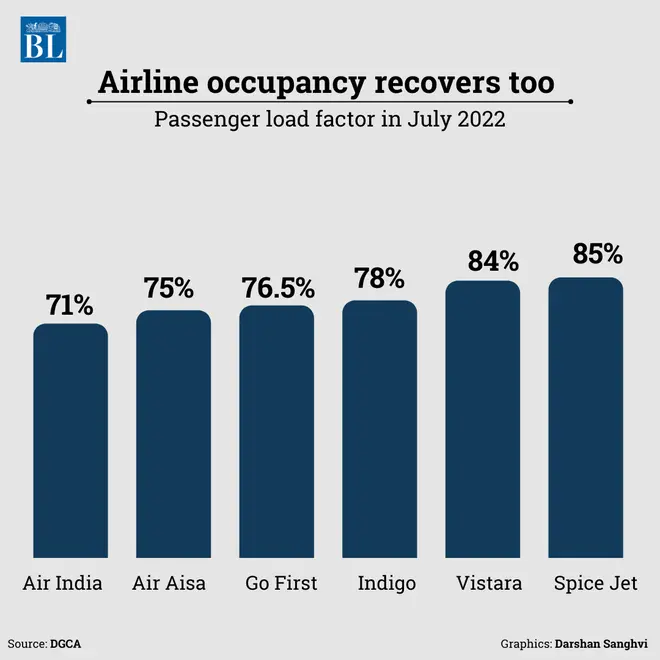
Clock: The 7 AM and 9 AM slots (day-wise seasonality) at airports are the most sought after by airlines. Therefore, the airlines must make the most of it and maximise aircraft utilisation because an aircraft sitting on the ground can be an expensive water asset.
Capacity: The airlines should be careful in deploying capacity on specific routes. There is no point in deploying a 200-seater aircraft when the demand, even at its peak, is not more than half of that.
Cost: The airlines should be able to select the correct aircraft type with the proper configuration. Some analysts now believe that the Cost per Available Seat Kilometer (CASK) parameter doesn’t always yield the right results because of changing costs. According to Steve Saxon and Mathieu Weber of the global consulting firm McKinsey & Company, CASK neither gives companies deep insight into their costs nor identifies concrete levers to reduce them. The only real way for airlines to learn how cost differentials add up is to build a bottom-up view of their cost buckets’ unit costs, volumes, and productivity, the co-authors, said in the paper, “A better approach to airline costs.
4. Constructive collaboration
The airlines should work along with the Government to solve their problems. For example, they should negotiate with various states to lower excise duty on aviation turbine fuel for domestic flights. As a first step, the airlines have succeeded in getting the Government’s nod on exempting them from paying 11 per cent basic excise duty on ATF for refuelling aircraft for international flights.
5. Reputation management: The airlines should not only manage the airline’s reputation among the passengers but also internally. Dissatisfied employees can completely derail the airline’s revenues or bleed it to such an extent that turning it around might become extremely difficult later.
Post-pandemic, most domestic airlines are fighting for survival even as financial institutions watch from the sidelines on the measures they are taking to turn around. Those that will survive will be the ones who deploy best business practices in running their operations and not resort to short-term measures.
Published on August 21, 2022
此内容由惯性聚合(RSS阅读器)自动聚合整理,仅供阅读参考。 原文来自 — 版权归原作者所有。