







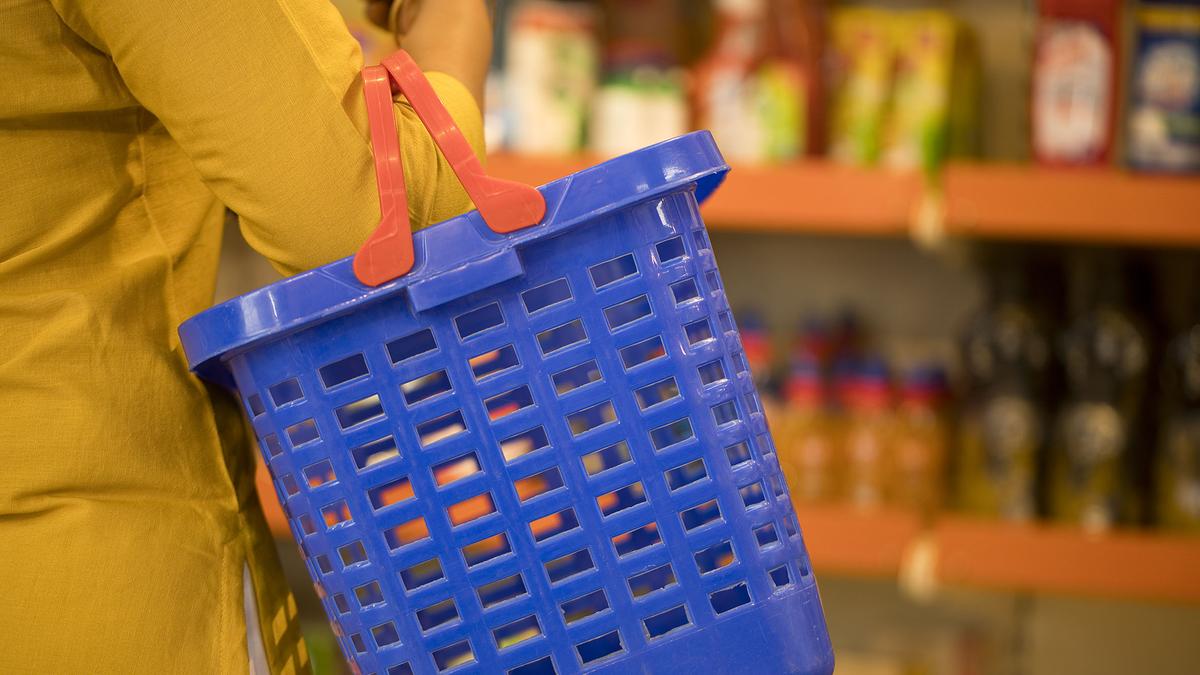
STOCK TAKING. Agile logistics help keep shortages away | Photo Credit: triloks
The ancient Tamil adage “Thennai maraththil thel kottinaal, panai maraththil neri kattum” (when a scorpion stings a coconut tree, a swelling appears on a palmyra tree) aptly captures the interconnected nature of events. The supply chain disruptions roiling a large part of the world today exemplify this.
Diet Coke, sold only in aluminium cans, is feeling the pinch in India. The Strait of Hormuz blockade has prevented the cans from reaching Indian factories, affecting production and supply. Ditto several alcoholic and other non-alcoholic beverage brands dependent on overseas supply of can-grade aluminium.
This is not the first time a supply disruption has affected brands on shelves. In 2024, during the Red Sea crisis, Tesla and Volvo reportedly halted production in Europe due to delays in component deliveries.
The Black Sea blockade in 2022 affected the supply of semiconductor-grade neon gas, critical in chip manufacturing.
A literal blockade occurred in 2021 when a container vessel remained stuck in the Suez Canal route for six days.
History shows that such trade disruptions push economies to search for alternatives — new routes and even new industries. The fall of Constantinople in the 15th century disrupted the old Asia-Europe trade route and was one of the reasons that forced European powers to look for new sea routes to India and beyond in the East. Centuries later, Napoleon Bonaparte’s blockade of British trade led to sugar shortages in Europe, prompting the development of beet sugar as a substitute.
In today’s globalised world, there are useful lessons in how some companies prepared for, or responded to such shocks.
When the 2011 massive earthquake in Japan disrupted the supply lines of Toyota, the automobile giant mapped 6,800 critical components and their choke points across suppliers, as part of its RESCUE (REinforce Supply Chain Under Emergency) system.
Another key decision was to maintain buffer stocks for non-substitutable parts such as semiconductor chips, for which the just-in-time rule may not be applicable. This system kept Toyota afloat even during the Covid-19 lockdowns when other automobile companies suffered. These scenarios echo the ideas set out in the 2004 paper by Martin Christopher and Helen Peck on resilient supply chains, warning that excessive lean practices increase risk and advocating buffer stocks for critical components.
Nokia offers a classic case of supply-chain recovery. In 2000, a fire accident damaged inventory and disrupted the “clean room” operations at the Royal Philips electronics plant in New Mexico, which supplied semiconductor chips to Nokia and Ericsson.
A Nokia supply manager noted the drop in inbound stock levels and alerted the organisation. When Philips said recovery would take about a week, Nokia started tracking the inventory of five critical components daily, instead of once a week. After knowing that full recovery at Philips would take several weeks, impacting the production of nearly four million handsets, the Nokia team quickly moved to source three components from new suppliers in the US and Japan, and expanded the inventory from the Philips plants in the Netherlands and China.
Nokia’s lightning response was honed on lessons learned from an earlier disruption in 1995.
Ericsson, on the other hand, lacked similar agility in information flow and was forced to postpone critical new product launches, resulting in heavy loss of revenue and brand visibility.
Globally, companies are working on strategies such as vertical integration, supply base diversification, agile logistics, end-to-end supply chain mapping and modelling, and product redesign and R&D to better prepare for supply disruptions.
Coca-Cola, the manufacturer of Diet Coke, is reportedly banking on “format flexibility” to tide over the current crisis — it is moving from aluminium cans to glass bottles in a limited way to avoid a market supply crunch during the peak summer season.
It is imperative for businesses to continuously study risks such as blockades to build short- and medium-term resilience.
Managers need not wait until shelves empty out to diagnose the risk. Two questions can reveal much of the danger. Can we replace it, make it, pack it or ship it another way? And will customers notice or care if we cannot? When both answers are unfavourable, a supply-chain disruption quickly becomes a brand crisis.
In an interconnected world, supply-chain resilience is not only an operations capability but also a marketing safeguard.

R Sathyanarayanan, Sundram Fasteners Associate Professor of Marketing, IFMR Graduate School of Business at Krea University
(The writer is Sundram Fasteners Associate Professor of Marketing, IFMR Graduate School of Business at Krea University)
Published on June 1, 2026
此内容由惯性聚合(RSS阅读器)自动聚合整理,仅供阅读参考。 原文来自 — 版权归原作者所有。