

惯性聚合 高效追踪和阅读你感兴趣的博客、新闻、科技资讯
阅读原文 在惯性聚合中打开

推荐订阅源

Martin Fowler
Martin Fowler
OSCHINA 社区最新新闻
OSCHINA 社区最新新闻
T
Troy Hunt's Blog
Latest news
Latest news
Vercel News
Vercel News
S
SegmentFault 最新的问题
V
Vulnerabilities – Threatpost
博客园 - Franky
P
Privacy International News Feed
A
Arctic Wolf
T
The Blog of Author Tim Ferriss
S
Schneier on Security
T
The Exploit Database - CXSecurity.com
P
Palo Alto Networks Blog
T
Tor Project blog
Jina AI
Jina AI
GbyAI
GbyAI
The Hacker News
The Hacker News
博客园 - 叶小钗
Google DeepMind News
T
Threatpost
C
CERT Recently Published Vulnerability Notes
P
Proofpoint News Feed
Scott Helme
Scott Helme
WordPress大学
WordPress大学
www.infosecurity-magazine.com
Microsoft Azure Blog
CTFtime.org: upcoming CTF events
博客园 - 司徒正美
A
About on SuperTechFans
Recorded Future
Recorded Future
爱范儿
爱范儿
L
LangChain Blog
V
V2EX
C
Cybersecurity and Infrastructure Security Agency CISA
The Cloudflare Blog
阮一峰的网络日志
阮一峰的网络日志
K
Kaspersky official blog
Webroot Blog
Webroot Blog
Security Archives - TechRepublic
D
DataBreaches.Net
宝玉的分享
宝玉的分享
Google Online Security Blog
C
Cisco Blogs
L
Lohrmann on Cybersecurity
Help Net Security
Help Net Security
AWS News Blog
AWS News Blog
M
MIT News - Artificial intelligence
奇客Solidot–传递最新科技情报
奇客Solidot–传递最新科技情报
G
GRAHAM CLULEY

BusinessLine Editorial Opinion & Analyses | The HinduBusinessLine

Fund of options No marks Net ambiguity Crushing problem Fiscal dividend Editorial. Power equation Editorial. Reforming schools Editorial. Taking charge Editorial. Coal comfort Editorial. Future shock Editorial. Beyond the ballot Editorial. Halfway house Precious saving Failing the test Poison in the food Editorial. Austere times Bond truths Editorial. Creditable step Editorial. Stardom to statecraft Editorial. Worthy proposal Editorial. Gold rush Editorial. Power shift Editorial. Costly remedy The real turnout Challenge of Mythos Fuel for thought Anchoring trade Cover point Editorial. Job well done Editorial. Misreading markets Editorial. Major undercurrents Labour pangs Editorial. Snooping around Editorial. Process deficit Prepare the ground Clear the smoke SIP with caution Cyber insecurity Pressure point Plastic concerns Editorial. Fair deal Editorial. Wait and watch Cease and desist Editorial. Nuclear milestone Editorial. Freebies unplugged Editorial. Sweeping powers Editorial. Knotty regulations Up in the air Challenging year Existential crisis Bond blues Editorial. Hard choices Editorial. Commercial pitch Editorial. Weighty matter Editorial. Micro management Editorial. Selling strategy Editorial. Plane truths Demographic fixation Editorial. Resignation and after Feedstock facts Course correction Scenario planning Electric kitchens Editorial. Tariff war 2.0 Editorial. Dry run Editorial. China positive Editorial. Ethanol drive Editorial. Safety Net Editorial. Ides of March Stress management Editorial. Reforms vindicated Editorial. Hard times Categorisation challenges Optimal bandwidth Strong base Editorial. Fresh pain REIT moves Editorial. Last mile finance Editorial. Rhetoric to reality Editorial. Critical alliance Intelligent summit Tricky pitch Capital move Spectrum redefined Realty check Hefty penalty needed for mis-selling financial products TCS, Infosys, HCL Tech, Wipro: IT’s opaque Editorial. InvIT with care Rafale buy a watershed in defence upgrade efforts Creditable move Freedom from toxicity India Inc. manages to overcome adversity in Q3 Editorial. At a crossroads Trade reset Editorial. Staying the course CPI overhaul will result in contemporary inflation numbers Tariff cheer 16th Finance panel formula awards ‘efficient’ States Better options ahead Editorial. Change and continuity
Bad policy
2026-05-01 · via BusinessLine Editorial Opinion & Analyses | The HinduBusinessLine
The Centre’s resolve to not burden the common man with higher fuel prices is laudable but it flies against the reality of the markets

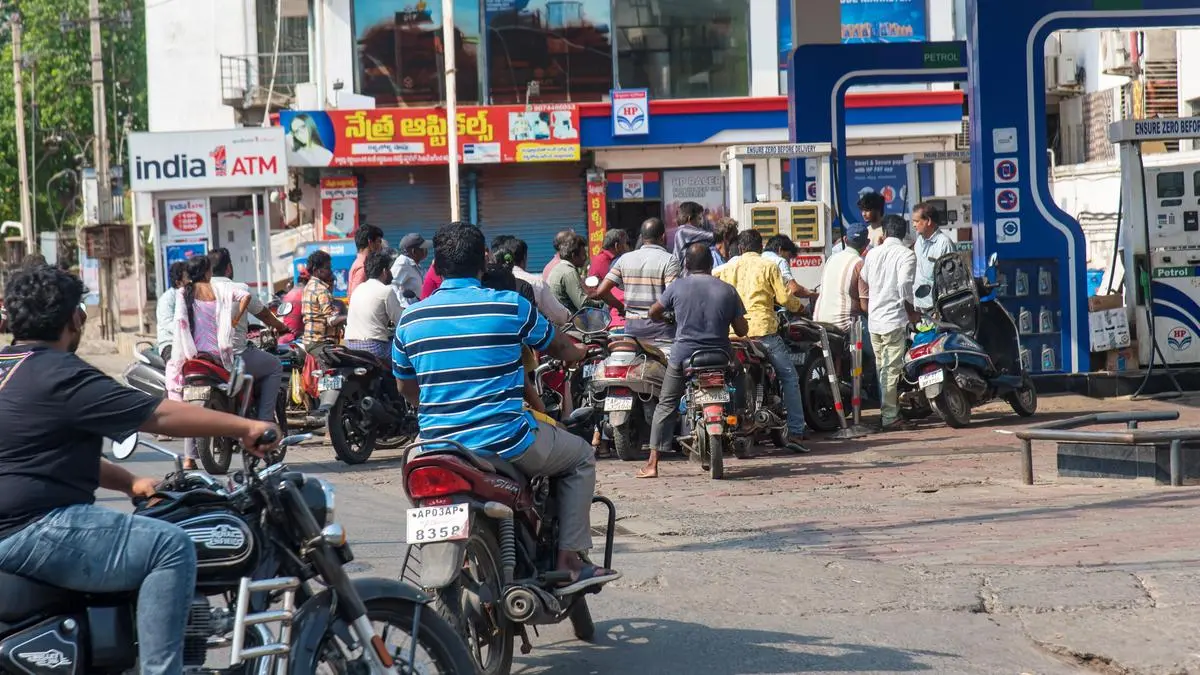
The Centre’s resolve to not burden the common man with higher fuel prices is laudable but it flies against the reality of the markets | Photo Credit: KOMMURI SRINIVAS

The Centre increased commercial liquefied petroleum gas (LPG) prices by a massive 50 per cent or by ₹993 per 19 kg cylinder on Friday. What it did not do though was increase retail prices of domestic LPG, petrol and diesel, as was widely expected. With crude oil prices soaring over the last two months due to the Gulf war, the expectation was that fuel prices would be raised once the Assembly elections were over. But the Centre has preferred status quo for now. That’s bad policy.

India’s crude oil basket, a mix of different varieties of crude that the country sources, rose from $71 a barrel on February 28 when the war began, to $112 a barrel on May 1, with a high of $146 a barrel in mid-March. The international traded price of petrol (FOB), which was an average of $75.28 a barrel in February rose to $127.49 in April. Yet, petrol (and diesel) prices have remained unchanged in India; elsewhere in the world, they have become expensive, reflecting prevailing market prices. This is a puzzling policy stance. The Centre’s resolve to not burden the common man with higher fuel prices is laudable but it flies against the reality of the markets. For a country that is 87 per cent dependent on imported crude oil, it is impossible to buffer the consumer from rising import costs forever. If costlier crude is not reflected in retail product prices, who’s bearing the burden? The Centre absorbed some of it by cutting excise duty on petrol and diesel in late March, but that is insignificant when compared with the increase in sourcing costs.

The oil marketing companies — Indian Oil, Bharat Petroleum and Hindustan Petroleum — are acting as sponges soaking up the higher prices but the sponges, though strong, will begin to fray sooner than later because the losses they’re soaking up are more than what they can handle. A recent ICRA report put the under-recoveries on LPG alone at ₹80,000 crore in FY27. The reality is that oil prices are unlikely to retrace their steps over the next few months. The Centre should accordingly plan for an equitable sharing of burden between oil companies, consumers and itself. It is poor policy to burden just one stakeholder. As even a freshman economics student would know, fuel demand is quite price elastic, and consumers need to feel the pinch of higher prices if demand is to be managed. The “protection” of consumers now will come back to haunt the Centre as demand remains unaffected, increasing the subsidy burden and straining the fisc, not to speak of the impact on the already beleaguered rupee.

Political compulsions are obviously behind the decision to hold retail prices, which is understandable. But good politics does not always sit well with good economics. The NDA government missed more than one opportunity to free prices (and be relieved of the political baggage) when oil prices touched lows several times in the last decade. If consumers had tasted low prices then, they would understand higher prices now when they are peaking. There is surely a lesson here for the future as the oil price cycle will surely turn again once the war ends.

Published on May 1, 2026