
惯性聚合 高效追踪和阅读你感兴趣的博客、新闻、科技资讯
阅读原文 在惯性聚合中打开

推荐订阅源

Threat Intelligence Blog | Flashpoint
爱范儿
爱范儿
H
Help Net Security
Last Week in AI
Last Week in AI
The Cloudflare Blog
博客园 - 三生石上(FineUI控件)
小众软件
小众软件
IT之家
IT之家
aimingoo的专栏
aimingoo的专栏
大猫的无限游戏
大猫的无限游戏
Jina AI
Jina AI
Google DeepMind News
B
Blog
C
Check Point Blog
T
Tailwind CSS Blog
云风的 BLOG
云风的 BLOG
D
Docker
Recent Announcements
Vercel News
Vercel News
博客园 - 聂微东
阮一峰的网络日志
阮一峰的网络日志
MyScale Blog
MyScale Blog
The GitHub Blog
The GitHub Blog
Stack Overflow Blog
Stack Overflow Blog
雷峰网
雷峰网
人人都是产品经理
人人都是产品经理
月光博客
月光博客
F
Fortinet All Blogs
Blog — PlanetScale
Blog — PlanetScale
B
Blog RSS Feed
The Register - Security
V
Visual Studio Blog
F
Full Disclosure
Hugging Face - Blog
Hugging Face - Blog
T
Threat Research - Cisco Blogs
Latest news
Latest news
PCI Perspectives
PCI Perspectives
Cisco Talos Blog
Cisco Talos Blog
博客园 - Franky
D
DataBreaches.Net
A
Arctic Wolf
OSCHINA 社区最新新闻
OSCHINA 社区最新新闻
奇客Solidot–传递最新科技情报
奇客Solidot–传递最新科技情报
G
Google Developers Blog
P
Palo Alto Networks Blog
Engineering at Meta
Engineering at Meta
Microsoft Azure Blog
T
Tenable Blog
L
LINUX DO - 热门话题
Spread Privacy
Spread Privacy

BusinessLine Editorial Opinion & Analyses | The HinduBusinessLine

Fund of options No marks Net ambiguity Crushing problem Fiscal dividend Editorial. Power equation Editorial. Reforming schools Editorial. Taking charge Editorial. Coal comfort Editorial. Future shock Editorial. Beyond the ballot Editorial. Halfway house Precious saving Failing the test Poison in the food Editorial. Austere times Bond truths Editorial. Creditable step Editorial. Stardom to statecraft Editorial. Worthy proposal Editorial. Gold rush Editorial. Power shift Editorial. Costly remedy Bad policy The real turnout Challenge of Mythos Fuel for thought Anchoring trade Cover point Editorial. Job well done Editorial. Misreading markets Editorial. Major undercurrents Editorial. Snooping around Editorial. Process deficit Prepare the ground Clear the smoke SIP with caution Cyber insecurity Pressure point Plastic concerns Editorial. Fair deal Editorial. Wait and watch Cease and desist Editorial. Nuclear milestone Editorial. Freebies unplugged Editorial. Sweeping powers Editorial. Knotty regulations Up in the air Challenging year Existential crisis Bond blues Editorial. Hard choices Editorial. Commercial pitch Editorial. Weighty matter Editorial. Micro management Editorial. Selling strategy Editorial. Plane truths Demographic fixation Editorial. Resignation and after Feedstock facts Course correction Scenario planning Electric kitchens Editorial. Tariff war 2.0 Editorial. Dry run Editorial. China positive Editorial. Ethanol drive Editorial. Safety Net Editorial. Ides of March Stress management Editorial. Reforms vindicated Editorial. Hard times Categorisation challenges Optimal bandwidth Strong base Editorial. Fresh pain REIT moves Editorial. Last mile finance Editorial. Rhetoric to reality Editorial. Critical alliance Intelligent summit Tricky pitch Capital move Spectrum redefined Realty check Hefty penalty needed for mis-selling financial products TCS, Infosys, HCL Tech, Wipro: IT’s opaque Editorial. InvIT with care Rafale buy a watershed in defence upgrade efforts Creditable move Freedom from toxicity India Inc. manages to overcome adversity in Q3 Editorial. At a crossroads Trade reset Editorial. Staying the course CPI overhaul will result in contemporary inflation numbers Tariff cheer 16th Finance panel formula awards ‘efficient’ States Better options ahead Editorial. Change and continuity
Labour pangs
2026-04-21 · via BusinessLine Editorial Opinion & Analyses | The HinduBusinessLine
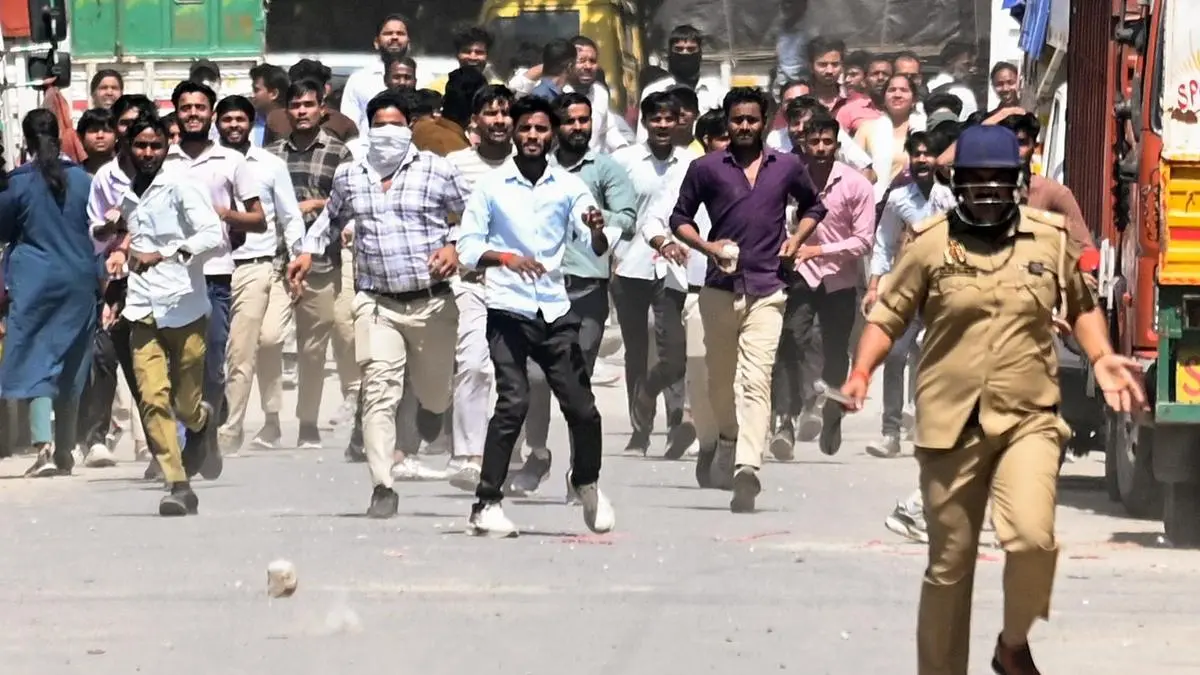
A large segment of workers in industrial belts operates without formal, written agreements, leaving them outside the ambit of statutory benefits and with little clarity on their rights

A large segment of workers in industrial belts operates without formal, written agreements, leaving them outside the ambit of statutory benefits and with little clarity on their rights | Photo Credit: ANI

The recent labour unrest in Noida is a reminder that a significant part of India’s workforce rests on a fragile foundation: low wages and weak labour protections. The unrest is not an isolated flashpoint, but a symptom of deep structural gaps in wage-setting and employment practices.

At the heart of the issue lies India’s minimum wage framework. The Centre last set the national floor wage in 2017 at ₹176 per day, a level that has seen little meaningful revision even as living costs have risen sharply. A review cycle of up to five years under the Code on Wages, 2019 is too slow for an economy where prices adjust far more frequently. While a Variable Dearness Allowance (VDA), tied to the Consumer Price Index, is built into the framework, it cannot compensate for an inadequately set base wage or infrequent revisions. In contrast, countries such as Brazil have institutionalised regular revisions linked to inflation and broader economic indicators. Delayed revisions in India could turn the minimum wage into a lagging indicator rather than a proactive policy tool. The recent trigger for unrest underscores this reactive approach. In neighbouring Haryana, minimum wages saw a sharp increase amid labour unrest in industrial belts such as Manesar. The Uttar Pradesh government has since announced an interim 21 per cent increase for workers in Noida and Ghaziabad. While these moves may offer temporary relief, they highlight an uncomfortable reality: wage adjustments in India are often driven by agitation rather than anticipation. Policymakers must revise wages based on credible data on inflation, consumption and living standards.

Equally pressing is the widespread use of contract labour. A large segment of workers in industrial belts operates without formal, written agreements, leaving them outside the ambit of statutory benefits and with little clarity on their rights. The Occupational Safety, Health and Working Conditions Code, 2020 seeks to streamline regulation and mandates registration of establishments and contractors. However, it stops short of requiring universal written contracts for workers. Moreover, by raising the threshold for applicability to establishments with 50 or more contract workers, it allows a large number of small enterprises to remain outside stricter oversight. Formal registration cannot substitute for enforceable, transparent employment relationships.

Sustainable growth demands a more balanced approach — one that recognises labour not merely as a cost to be minimised, but as a stakeholder in value creation. The Periodic Labour Force Survey points out that over half of regular wage and salaried workers in non-agricultural sectors have no written contract or social security benefits — in other words, the prevalence of informality in the formal sector. This applies to the Noida region — and is likely to act as a periodic trigger for unrest, unless both policies as well as attitudes towards labour undergo a shift.

Published on April 21, 2026