



惯性聚合 高效追踪和阅读你感兴趣的博客、新闻、科技资讯
阅读原文 在惯性聚合中打开

推荐订阅源

L
LINUX DO - 最新话题
C
Cyber Attacks, Cyber Crime and Cyber Security
G
GRAHAM CLULEY
T
Tenable Blog
T
Threatpost
C
CXSECURITY Database RSS Feed - CXSecurity.com
I
Intezer
cs.CL updates on arXiv.org
D
Darknet – Hacking Tools, Hacker News & Cyber Security
K
Kaspersky official blog
Security Latest
Security Latest
P
Privacy & Cybersecurity Law Blog
Google Online Security Blog
SecWiki News
SecWiki News
P
Palo Alto Networks Blog
TaoSecurity Blog
TaoSecurity Blog
Webroot Blog
Webroot Blog
Spread Privacy
Spread Privacy
O
OpenAI News
The Last Watchdog
The Last Watchdog
P
Proofpoint News Feed
C
Check Point Blog
cs.CV updates on arXiv.org
人人都是产品经理
人人都是产品经理
S
Security @ Cisco Blogs
Scott Helme
Scott Helme
OSCHINA 社区最新新闻
OSCHINA 社区最新新闻
cs.AI updates on arXiv.org
月光博客
月光博客
S
Securelist
酷 壳 – CoolShell
酷 壳 – CoolShell
V
V2EX
T
Troy Hunt's Blog
W
WeLiveSecurity
GbyAI
GbyAI
N
News | PayPal Newsroom
Y
Y Combinator Blog
C
Cisco Blogs
H
Help Net Security
The GitHub Blog
The GitHub Blog
Threat Intelligence Blog | Flashpoint
博客园 - 【当耐特】
Jina AI
Jina AI
MongoDB | Blog
MongoDB | Blog
P
Proofpoint News Feed
让小产品的独立变现更简单 - ezindie.com
CTFtime.org: upcoming CTF events
云风的 BLOG
云风的 BLOG
小众软件
小众软件
N
News and Events Feed by Topic

BusinessLine Editorial Opinion & Analyses | The HinduBusinessLine

Fund of options No marks Net ambiguity Crushing problem Fiscal dividend Editorial. Reforming schools Editorial. Taking charge Editorial. Coal comfort Editorial. Future shock Editorial. Beyond the ballot Editorial. Halfway house Precious saving Failing the test Poison in the food Editorial. Austere times Bond truths Editorial. Creditable step Editorial. Stardom to statecraft Editorial. Worthy proposal Editorial. Gold rush Editorial. Power shift Editorial. Costly remedy Bad policy The real turnout Challenge of Mythos Fuel for thought Anchoring trade Cover point Editorial. Job well done Editorial. Misreading markets Editorial. Major undercurrents Labour pangs Editorial. Snooping around Editorial. Process deficit Prepare the ground Clear the smoke SIP with caution Cyber insecurity Pressure point Plastic concerns Editorial. Fair deal Editorial. Wait and watch Cease and desist Editorial. Nuclear milestone Editorial. Freebies unplugged Editorial. Sweeping powers Editorial. Knotty regulations Up in the air Challenging year Existential crisis Bond blues Editorial. Hard choices Editorial. Commercial pitch Editorial. Weighty matter Editorial. Micro management Editorial. Selling strategy Editorial. Plane truths Demographic fixation Editorial. Resignation and after Feedstock facts Course correction Scenario planning Electric kitchens Editorial. Tariff war 2.0 Editorial. Dry run Editorial. China positive Editorial. Ethanol drive Editorial. Safety Net Editorial. Ides of March Stress management Editorial. Reforms vindicated Editorial. Hard times Categorisation challenges Optimal bandwidth Strong base Editorial. Fresh pain REIT moves Editorial. Last mile finance Editorial. Rhetoric to reality Editorial. Critical alliance Intelligent summit Tricky pitch Capital move Spectrum redefined Realty check Hefty penalty needed for mis-selling financial products TCS, Infosys, HCL Tech, Wipro: IT’s opaque Editorial. InvIT with care Rafale buy a watershed in defence upgrade efforts Creditable move Freedom from toxicity India Inc. manages to overcome adversity in Q3 Editorial. At a crossroads Trade reset Editorial. Staying the course CPI overhaul will result in contemporary inflation numbers Tariff cheer 16th Finance panel formula awards ‘efficient’ States Better options ahead Editorial. Change and continuity
Editorial. Power equation
2026-05-23 · via BusinessLine Editorial Opinion & Analyses | The HinduBusinessLine
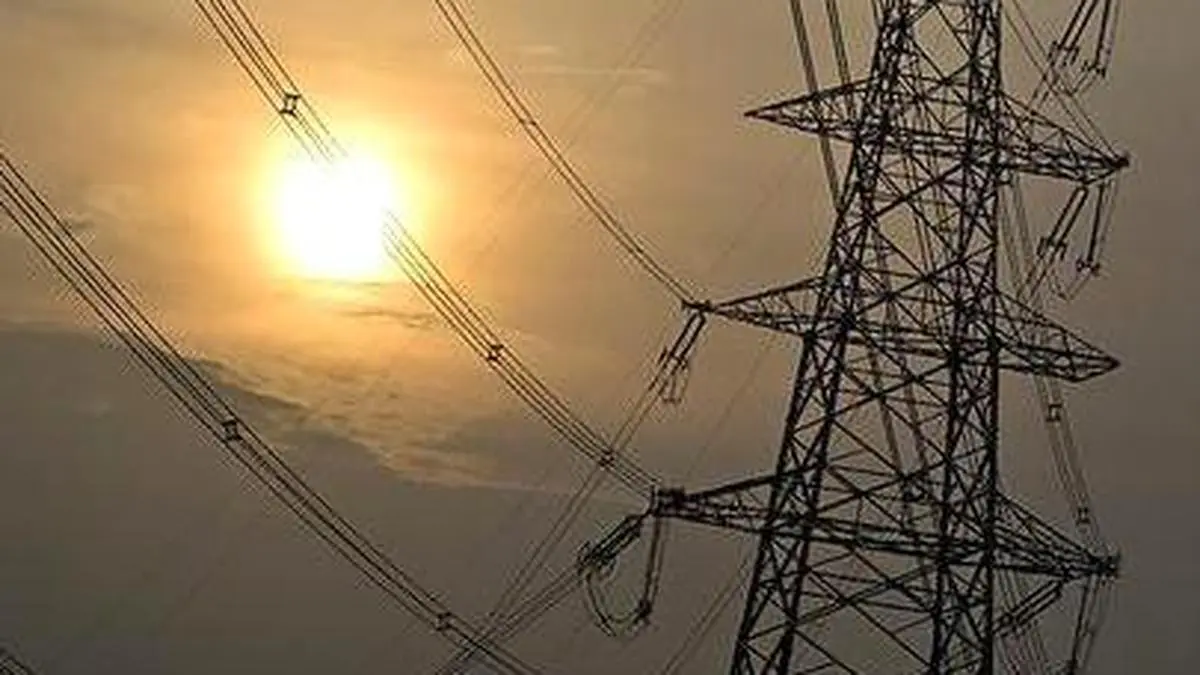
Power: Managing the summer demand

Power: Managing the summer demand | Photo Credit: th-online Administrator

We are in the midst of a searing summer — and peak power demand (which lasts for a brief duration in a day) — is breaking new records. On May 21, this touched 270 GW at about 3 pm. The power requirement ebbs as evening sets in, and climbs again after sundown, when home ACs come to life, touching about 250 GW. It is during this second spike that the power system is really stretched, leading to occasional outages — since about 150 GW of solar capacity is out of reckoning. A deficit between rising demand and assured supplies is met largely by captive generators supplying on the spot market, and at prices as high as ₹10 a unit — the limit set by law. However, rising power demand is now being met with less fuss — when compared with the alarming regional blackouts of yesteryears.

It is interesting that while thermal power accounts for 70 per cent of electricity generated over the course of any given day, this dips to 60 per cent or less between noon and 2 pm in summer when peak demand soars; here, solar power pitches in with 30 per cent. In the evening hours, other sources such as hydel, gas, wind, nuclear and storage comprise 30 per cent of units generated — with hydel and gas being able to ramp power output more quickly than any source. During the day, much more solar power is generated than the grid can absorb, while thermal power cannot be ‘backed down’ quickly to adjust for this supply. Under electricity rules, thermal power output cannot be backed down below a point. This is because it affects costs of operations, creates maintenance issues; above all, it takes more time than hydel or gas, for thermal power to be ramped up when needed.

However, China has re-engineered its thermal power plants, allowing them to ‘flex’ capacity to accommodate renewables supply. This may be worth looking at as an option, since it needs to be seen against solar power forgone. However, the impact on PPAs needs to be worked out. In view of the rising role of solar in the energy mix, the role of battery storage in capturing excess daytime output can hardly be overstated. This push makes sense because grid infrastructure is unable to keep pace with rising capacity in renewables. The National Electricity Plan 2023 projects a requirement of 208 GwH of battery storage energy systems by 2030. The Centre has announced a number of incentives. According to analysts, tendered battery storage capacity stands at 90 GW today, up from about 7GW eight years ago. To meet future power needs, the power generated must be stored and used efficiently. This is all the more because a renewables dominated system cannot operate at much more than 50 per cent installed capacity, as it is weather-dependent. In this context, a push for nuclear could play a role in plugging future power deficits.

Looking ahead this year, the prospect of a weak monsoon could prolong a period of high demand in September and October, even as hydel and gas supplies remain constrained. The Centre should be prepared for such a situation.

Published on May 22, 2026