




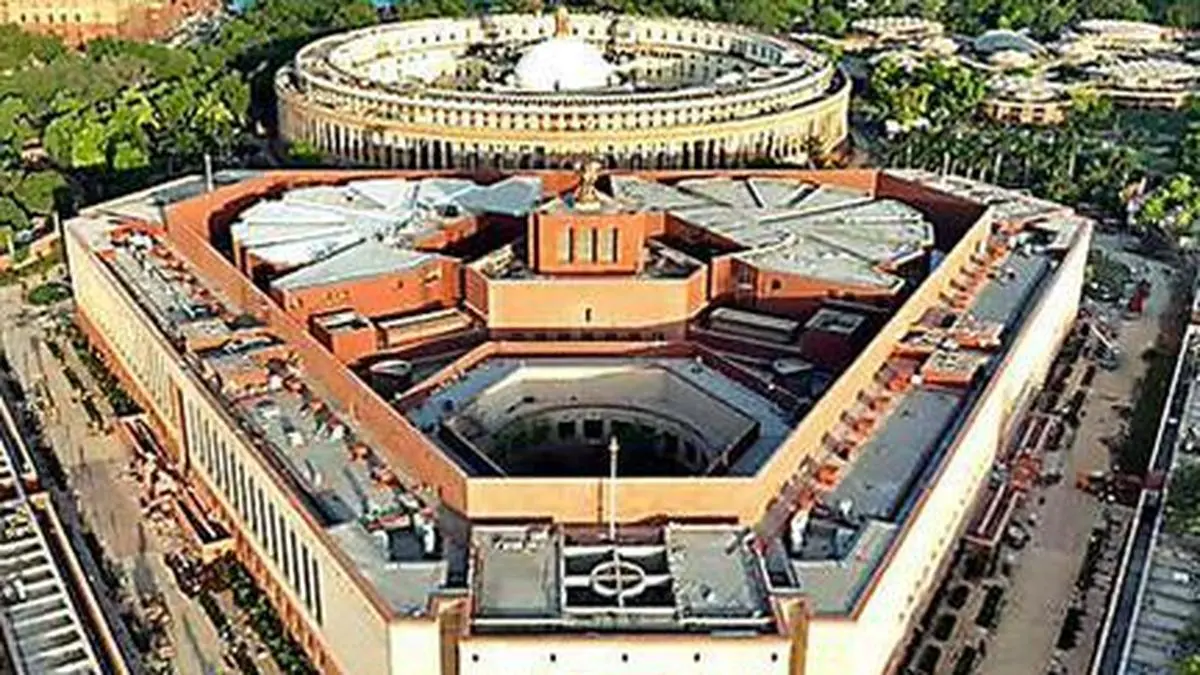
The proposed Constitution (131st Amendment) Bill, 2026, seeks to expand the Lok Sabha to a maximum of 850 seats while enabling delimitation without waiting for a new census. | Photo Credit: ANI
The proposed Constitution (One Hundred and Thirty-first Amendment) Bill, 2026, which seeks to expand the strength of the Lok Sabha from 543 to a maximum of 850 seats, marks a fundamental shift in India’s electoral framework by decoupling seat expansion and women’s reservation from the rigid requirement of waiting for a fresh decennial census.
The move effectively replaces a “census-first” model, where seat redistribution automatically followed a new census, with a “delimitation-first” approach, under which a Delimitation Commission can redraw constituencies using the most recent census figures that Parliament chooses to notify. In practical terms, this means that seat redistribution may proceed without waiting for the next full census cycle.
The timing of Parliament’s special session, convened amid crucial Assembly elections in West Bengal and Tamil Nadu, has drawn sharp political reactions. Tamil Nadu Chief Minister MK Stalin issued a strong warning on Tuesday against any delimitation exercise that could dilute the representation of southern States.
“If anything is done that harm Tamil Nadu, or that disproportionately enhances the political power of northern states, we in Tamil Nadu will not remain silent,” he said.
P Wilson, Rajya Sabha MP from DMK and senior advocate, pointed out that between 1971 and 2026, in Tamil Nadu and Kerala, population has grown 188 per cent and 170 per cent, whereas in Bihar, Rajasthan and Uttar Pradesh it is 314 per cent, 325 per cent and 290 per cent respectively. “If the proposed delimitation is based on population, 4 northern states will get 324 seats, while 5 South Indian states will have just 165 seats,” he said.
At the heart of the Bill are amendments to Articles 82 and 170, which remove the earlier clause mandating that readjustment of seats take place only “upon the completion of the first census taken after 2026”. Instead, the amendments empower a Delimitation Commission to redraw constituencies based on the most recent published census figures that Parliament considers appropriate, effectively clearing the legal path to rely on 2011 Census data.
This shift to a delimitation-driven framework is also the mechanism through which the Bill proposes a substantial expansion of Parliament. By amending Article 81, the legislation raises the maximum strength of the Lok Sabha to 850 members, up to 815 from States and 35 from Union Territories, representing roughly a 50 per cent increase in seats.
The expansion is intended to accommodate demographic changes and ensure that the implementation of the 33 per cent reservation for women does not reduce the number of seats currently available to general candidates.
For purposes of representation, the Bill also redefines “population” across multiple constitutional provisions, including Articles 55 and 170, to mean figures from a census determined by Parliament. This provision allows the government to bypass delays caused by the postponed 2021 Census and proceed with the redrawing of electoral boundaries.
Published on April 14, 2026
此内容由惯性聚合(RSS阅读器)自动聚合整理,仅供阅读参考。 原文来自 — 版权归原作者所有。