



惯性聚合 高效追踪和阅读你感兴趣的博客、新闻、科技资讯
阅读原文 在惯性聚合中打开

推荐订阅源

V2EX - 技术
V2EX - 技术
P
Privacy International News Feed
Security Latest
Security Latest
H
Hacker News: Front Page
T
Tenable Blog
The Hacker News
The Hacker News
Threat Intelligence Blog | Flashpoint
S
Security @ Cisco Blogs
Project Zero
Project Zero
O
OpenAI News
AI
AI
Spread Privacy
Spread Privacy
C
CERT Recently Published Vulnerability Notes
The Last Watchdog
The Last Watchdog
G
GRAHAM CLULEY
cs.CL updates on arXiv.org
Scott Helme
Scott Helme
Application and Cybersecurity Blog
cs.CV updates on arXiv.org
C
CXSECURITY Database RSS Feed - CXSecurity.com
NISL@THU
NISL@THU
A
Arctic Wolf
T
Threat Research - Cisco Blogs
PCI Perspectives
PCI Perspectives
N
News and Events Feed by Topic
C
Cyber Attacks, Cyber Crime and Cyber Security
C
Cybersecurity and Infrastructure Security Agency CISA
Simon Willison's Weblog
cs.AI updates on arXiv.org
Know Your Adversary
Know Your Adversary
Google Online Security Blog
罗磊的独立博客
L
LINUX DO - 最新话题
U
Unit 42
S
Security Affairs
有赞技术团队
有赞技术团队
WordPress大学
WordPress大学
博客园 - 【当耐特】
T
The Exploit Database - CXSecurity.com
S
Schneier on Security
月光博客
月光博客
Engineering at Meta
Engineering at Meta
腾讯CDC
F
Full Disclosure
Cyberwarzone
Cyberwarzone
S
SegmentFault 最新的问题
Recorded Future
Recorded Future
K
KPMG report finds enterprise disconnect between AI and its ROI | CIO
博客园 - 司徒正美
The Cloudflare Blog

Opinion, Editorial, Views, Columnists, Columns | The HinduBusinessLine

Rupee can’t be defended from just one side Railways’ performance Why not have a women-only party? Labour pangs Pak’s peculiar comeback on the global stage Letters to Editor India has jobs, but it needs better ones Cross-border insolvency laws and trade A major health challenge Editorial. Snooping around Letters to the Editor dated April 20, 2026 All you want to know about the women’s reservation and delimitation bills fiasco Editorial. Process deficit Letters to the Editor dated April 19, 2026 WPI effect on new GDP series The tragic reality of police brutality India’s AI value paradox Prepare the ground India-Korea economic ties poised to strengthen Nari Shakti Bill — a missed opportunity Natural farming should become mainstream policy Insights from new GDP data Strategies to enhance fertilizer security Pathway to maritime insurance sovereignty Why the GoP’s jittery Clear the smoke Aiding piped gas push Stocks are the least over-priced asset in India Is TCS harassment case tip of the iceberg? SIP with caution Global gold ETFs post worst-ever $12 billion monthly outflow: WGC How India is funding Silicon Valley’s rise Cyber insecurity Continuity via status quo Iran war, a boon for the BRICS Assessing the easing of provisioning norms by RBI Iran war, a test for India’s economic resilience Iran war’s impact on India’s farm output and food inflation Economic competence in judiciary Pressure point India moving up the pharma value chain NFRA’s statutory leap Finance capital in time of war How West-Asia war could reshape the AI race When signals diverge: Reading the Nifty-Gold ratio Mohali’s miracle boys Plastic concerns Nice countries come last Lawyers matter more than ever for corporates Odisha central to our aluminium ambitions Editorial. Fair deal Editorial. Wait and watch Letters to the Editor dated April 10, 2026 Unfortunate fallout of cyber crime investigations Letters to the Editor dated April 9, 2026 Will the uneasy truce hold? Charting an intellectually honest way of forecasting RBI plumps for caution amidst uncertainty Large corporates and the sustainability transition of MSMEs MPC positive, despite strong headwinds Cease and desist Together, let us empower our Nari Shakti An AI model that’s too risky NPS funds consistency check: what 10-year rolling returns reveal Editorial. Nuclear milestone Letters to the Editor dated April 7, 2026 Packaging woes China’s perennial industrial policy Sensex has fallen on account of global forces India’s strategic defiance at the WTO meet Freebies will hit Tamil Nadu’s fiscal health Close the backdoor in tobacco FDI policy Is EU’s CBAM discriminatory? Editorial. Freebies unplugged Letters to the Editor dated April 6, 2026 Projecting growth is not easy Improving safety in Indian aviation Amendments to FCRA India’s outreach to Angola will contain energy risk Oil shocks and the rupee: The tricky 100s Sensex at 40: Secrets behind long-term wealth in markets Editorial. Sweeping powers India’s next social protection is care, not cash In West Asia, it is advantage China Is awarding Trump a Nobel Prize the best bet for peace? Editorial. Knotty regulations Letters to the Editor dated April 3, 2026 Time to push for rupee internationalisation Up in the air Time for industry to lead economic resilience Allied healthcare needs attention What holds back investor participation? Still no endgame in sight Challenging year What happens when CAD rises Reorienting farm research Telecom infra must rest on strong fibre network A severe test for monetary policy India’s chance in supply chain reset Bengaluru’s housing market is growing but affordability is shrinking
Anchoring trade
2026-04-27 · via Opinion, Editorial, Views, Columnists, Columns | The HinduBusinessLine
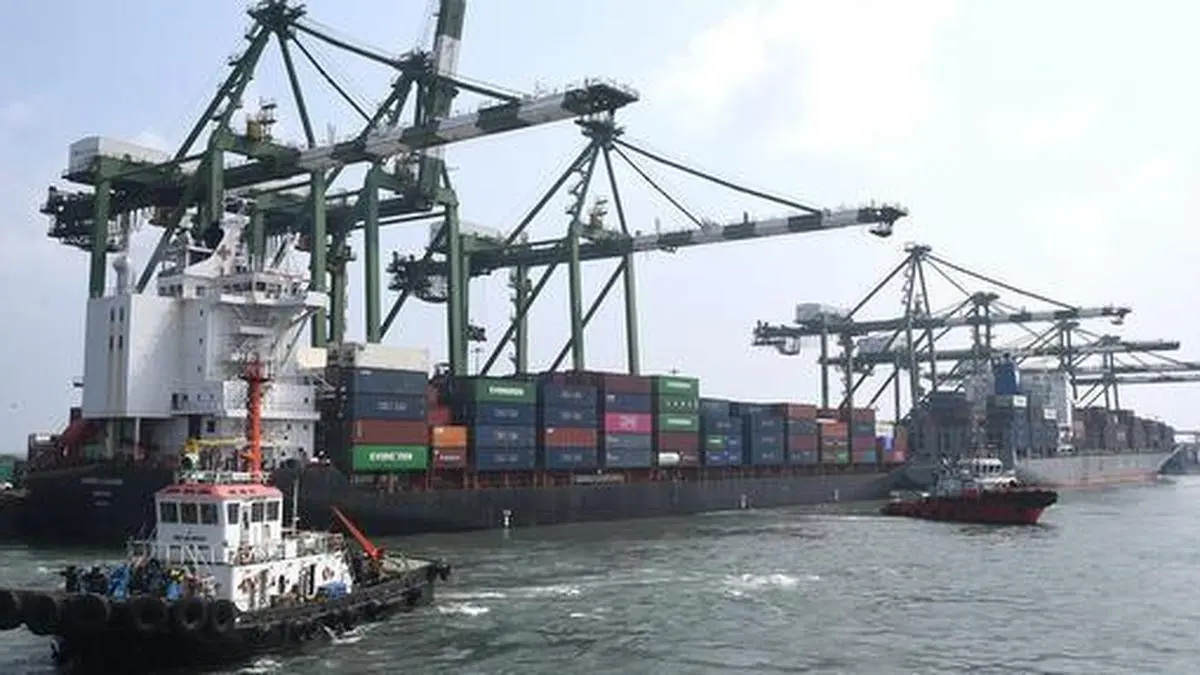
The Centre has not acted a moment too late in introducing the Bharat Maritime Insurance Pool as a strategic response to deal with geo-political stress on the high seas. 

The Centre has not acted a moment too late in introducing the Bharat Maritime Insurance Pool as a strategic response to deal with geo-political stress on the high seas.  | Photo Credit: JOTHI RAMALINGAM B

The Iran war has exposed a major frailty in our export-import ecosystem. About 70 per cent of India’s exports and imports by value move by sea (amounting to $800-850 billion), and these consignments and vessels are almost wholly insured overseas. A group of 13 international clubs based in Europe and US control global ‘protection and indemnity’ insurance, and in times of sanctions or war the cost of this cover either rises astronomically, or is withdrawn altogether. As a result, Indian exports and import consignments of about $10 billion are probably stranded now.

The situation would have been less dire, had the insurers been Indian. Our insurers could have responded on India’s own terms to the Gulf crisis — or for that matter to any sanctioned country (such as Russia) or entity. Therefore, the Centre has not acted a moment too late in introducing the Bharat Maritime Insurance (BMI) Pool as a strategic response to deal with geo-political stress on the high seas. The BMI sends out a strategic message that India seeks to secure its trade flows from the crossfire of sanctions or conflict. It has three elements — a ₹950 crore ($100 million) war-risk fund that will be managed by GIC Re, with contributions from public sector insurers and oil companies; a $300 million industry claims pool to be used to ease the trade finance crisis for exporters and importers whose consignments and payments are stranded; and finally, a $1.2 billion sovereign guarantee as a long term corpus, possibly to back up war-risk claims if they exceed, say, $100 million, besides funding crises in trade finance. Over the next two decades, BMI can potentially evolve on the lines of P&I pools created by Japan and China.

To place this effort in perspective,India’s foreign exchange outflow on account of maritime insurance is $350-500 million annually, given that insurance costs are about 0.7 per cent of the value of the freight in normal times. This figure has likely risen since 2022 on account of geo-political disruptions. BMI would not just reduce this outgo, but also bring down business uncertainty. However, for the BMI to gather momentum, it needs to wean away shippers and businesses from Western P&I clubs by offering attractive rates. Since insurance works on defraying costs and risks, it needs a wide customer base. However, Indian shippers account for barely 1 per cent of global shipping capacity and 1.5 per cent of the world’s registered vessels, or about 1,500 ships. This does not make for a large pool. India must emerge as a hub for registering ships.

The Centre has been promoting GIFT City for maritime financing and leasing. Shipbuilding itself has received a boost. An Indian P&I model can gain momentum if shippers can create insurance cooperatives, as in Japan; the corpus will rise with membership. This, however, is not readily permissible under current regulations. Indeed, atmanirbharta in marine insurance is a long voyage; the reliance on global pools will not go away overnight.

Published on April 27, 2026