
惯性聚合 高效追踪和阅读你感兴趣的博客、新闻、科技资讯
阅读原文 在惯性聚合中打开

推荐订阅源

F
Full Disclosure
Latest news
Latest news
P
Privacy International News Feed
T
Tenable Blog
Schneier on Security
O
OpenAI News
K
Kaspersky official blog
Exploit-DB.com RSS Feed
C
Cisco Blogs
L
LangChain Blog
H
Help Net Security
W
WeLiveSecurity
V
Vulnerabilities – Threatpost
C
Cyber Attacks, Cyber Crime and Cyber Security
AWS News Blog
AWS News Blog
博客园 - 叶小钗
cs.AI updates on arXiv.org
罗磊的独立博客
C
Check Point Blog
Engineering at Meta
Engineering at Meta
J
Java Code Geeks
Stack Overflow Blog
Stack Overflow Blog
雷峰网
雷峰网
MongoDB | Blog
MongoDB | Blog
C
Cybersecurity and Infrastructure Security Agency CISA
P
Privacy & Cybersecurity Law Blog
Apple Machine Learning Research
博客园 - 【当耐特】
V2EX - 技术
V2EX - 技术
Spread Privacy
Spread Privacy
博客园 - Franky
T
Threatpost
T
Tor Project blog
P
Proofpoint News Feed
D
DataBreaches.Net
钛媒体:引领未来商业与生活新知
钛媒体:引领未来商业与生活新知
H
Heimdal Security Blog
NISL@THU
NISL@THU
大猫的无限游戏
大猫的无限游戏
Microsoft Security Blog
Know Your Adversary
Know Your Adversary
I
Intezer
T
Tailwind CSS Blog
Cyber Security Advisories - MS-ISAC
美团技术团队
博客园 - 聂微东
T
Threat Research - Cisco Blogs
PCI Perspectives
PCI Perspectives
The Hacker News
The Hacker News
B
Blog RSS Feed

Opinion, Editorial, Views, Columnists, Columns | The HinduBusinessLine

Rupee can’t be defended from just one side Railways’ performance Why not have a women-only party? Labour pangs Pak’s peculiar comeback on the global stage Letters to Editor India has jobs, but it needs better ones Cross-border insolvency laws and trade A major health challenge Editorial. Snooping around Letters to the Editor dated April 20, 2026 All you want to know about the women’s reservation and delimitation bills fiasco Editorial. Process deficit Letters to the Editor dated April 19, 2026 WPI effect on new GDP series The tragic reality of police brutality India’s AI value paradox Prepare the ground India-Korea economic ties poised to strengthen Nari Shakti Bill — a missed opportunity Natural farming should become mainstream policy Insights from new GDP data Strategies to enhance fertilizer security Pathway to maritime insurance sovereignty Why the GoP’s jittery Clear the smoke Aiding piped gas push Stocks are the least over-priced asset in India Is TCS harassment case tip of the iceberg? SIP with caution Global gold ETFs post worst-ever $12 billion monthly outflow: WGC How India is funding Silicon Valley’s rise Cyber insecurity Continuity via status quo Iran war, a boon for the BRICS Assessing the easing of provisioning norms by RBI Iran war, a test for India’s economic resilience Iran war’s impact on India’s farm output and food inflation Economic competence in judiciary Pressure point India moving up the pharma value chain NFRA’s statutory leap Finance capital in time of war How West-Asia war could reshape the AI race When signals diverge: Reading the Nifty-Gold ratio Mohali’s miracle boys Plastic concerns Nice countries come last Lawyers matter more than ever for corporates Odisha central to our aluminium ambitions Editorial. Fair deal Editorial. Wait and watch Letters to the Editor dated April 10, 2026 Unfortunate fallout of cyber crime investigations Letters to the Editor dated April 9, 2026 Will the uneasy truce hold? Charting an intellectually honest way of forecasting RBI plumps for caution amidst uncertainty Large corporates and the sustainability transition of MSMEs MPC positive, despite strong headwinds Cease and desist Together, let us empower our Nari Shakti An AI model that’s too risky NPS funds consistency check: what 10-year rolling returns reveal Editorial. Nuclear milestone Letters to the Editor dated April 7, 2026 Packaging woes China’s perennial industrial policy Sensex has fallen on account of global forces India’s strategic defiance at the WTO meet Freebies will hit Tamil Nadu’s fiscal health Close the backdoor in tobacco FDI policy Is EU’s CBAM discriminatory? Editorial. Freebies unplugged Letters to the Editor dated April 6, 2026 Projecting growth is not easy Improving safety in Indian aviation Amendments to FCRA India’s outreach to Angola will contain energy risk Oil shocks and the rupee: The tricky 100s Sensex at 40: Secrets behind long-term wealth in markets Editorial. Sweeping powers India’s next social protection is care, not cash In West Asia, it is advantage China Is awarding Trump a Nobel Prize the best bet for peace? Editorial. Knotty regulations Letters to the Editor dated April 3, 2026 Time to push for rupee internationalisation Up in the air Time for industry to lead economic resilience Allied healthcare needs attention What holds back investor participation? Still no endgame in sight Challenging year What happens when CAD rises Reorienting farm research Telecom infra must rest on strong fibre network A severe test for monetary policy India’s chance in supply chain reset Bengaluru’s housing market is growing but affordability is shrinking
Tata Sons — should it be listed or remain unlisted?
By B Muthuraman · 2026-05-29 · via Opinion, Editorial, Views, Columnists, Columns | The HinduBusinessLine
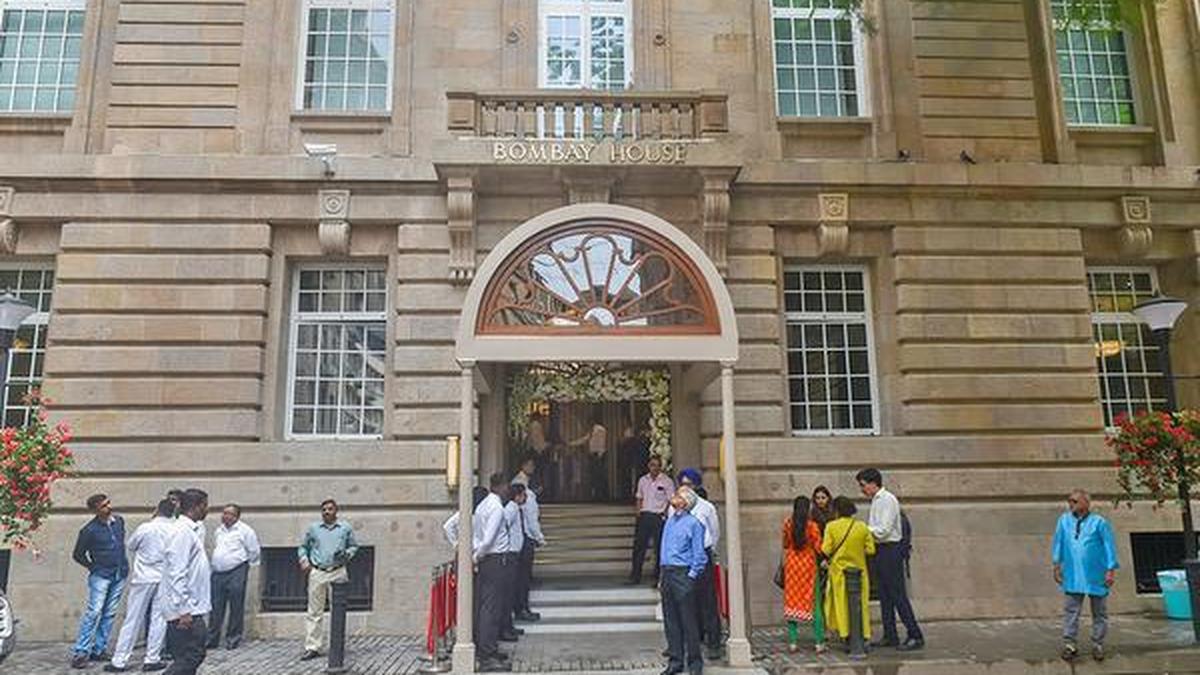
The Tata Group and Tata Sons evolved over more than 165 years with the belief that business must contribute not only to economic growth but also to the larger well-being of society

The Tata Group and Tata Sons evolved over more than 165 years with the belief that business must contribute not only to economic growth but also to the larger well-being of society | Photo Credit: PTI

There has recently been considerable discussion on whether Tata Sons should remain unlisted or seek a public listing. The issue naturally evokes differing views because it is not merely a financial or regulatory question; it also touches upon the history, philosophy and institutional character of one of India’s most respected business groups.

From a financial and market perspective, there are understandable arguments in favour of listing. A listed structure can potentially enhance transparency, improve liquidity, broaden ownership participation and enable shareholders to realise market value more fully. These are important considerations and deserve serious attention.

At the same time, the issue perhaps requires a broader reflection on the role and purpose of industrial enterprises in society.

The Tata Group and Tata Sons evolved over more than 165 years with the belief that business must contribute not only to economic growth but also to the larger well-being of society. Financial performance and operational excellence were always regarded as essential, but as part of a wider institutional purpose that included employees, communities and national development.

Over time, this philosophy became deeply embedded in the culture and decision-making processes of the Tata Group. Long before corporate social responsibility became a formal expectation, the Group had consciously attempted to balance commercial success with wider societal responsibilities.

During my nearly fifty years with Tata Steel and the Tata Group, I witnessed several decisions where broader societal and national considerations were weighed alongside financial outcomes. In many cases, the long-term institutional and societal value of such decisions may not have been immediately visible through conventional financial measures alone.

It is in this context that concerns arise regarding the possible listing of Tata Sons. Public markets, by their nature, bring greater scrutiny, accountability and shareholder expectations. While these can strengthen governance and transparency, they can also create pressures towards shorter-term performance priorities and narrower financial benchmarks.

Institutions such as Tata Sons have historically had the ability to take a wider and longer-term view — balancing commercial objectives with national priorities, societal obligations and institution-building. In a developing country such as India, where business institutions continue to play a critical role in social and economic transformation, this ability has particular significance.

Meaningful coexistence

India needs credible and responsible industrial institutions that can serve not merely as successful business enterprises, but also as examples of balanced and purposeful capitalism. The Tata Group has, over generations, attempted to demonstrate that business success and societal responsibility can coexist in a meaningful way.

Preserving the present structure of Tata Sons would, in my opinion, best protect this philosophy and allow it to continue serving as a guiding influence for Indian industry and society at large.

The writer is former Vice Chairman, Tata Steel

Published on May 29, 2026