


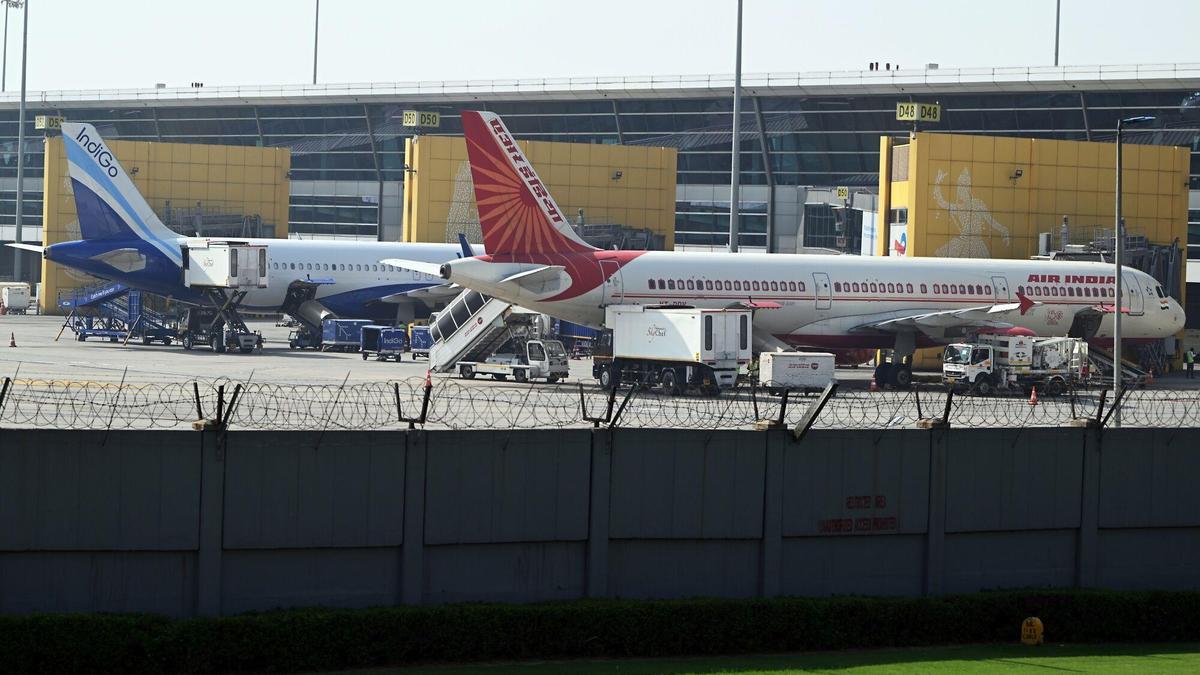
Passengers are likely to benefit from smoother processing and reduced waiting times | Photo Credit: PRAKASH SINGH
The conversion of Pier C at Terminal 3 (T3) of Indira Gandhi International Airport from domestic to international operations has been completed, sources told businessline, adding that the move is aimed at positioning Delhi as a larger global aviation hub amid rising outbound and transit traffic.
Accordingly, the development comes at a time when Indian airports are witnessing sustained growth in international passenger volumes.
Speaking to businessline, sources said the facility, developed by Delhi International Airport Limited (DIAL), is currently awaiting regulatory approvals.
Once operational, the converted pier is expected to significantly augment international passenger handling capacity at Terminal 3, which already manages the bulk of overseas traffic.
The move is expected to provide airlines with additional flexibility in scheduling international services.
As per sources, the shift reflects a structural rebalancing of terminal infrastructure in favour of international travel demand, helping airlines add more long-haul routes and improve slot availability as global connectivity from Delhi expands.
It also aligns with broader efforts to enhance the airport’s competitiveness among major global transit hubs, sources said.
The converted Pier C, sources said, is expected to increase T3’s international passenger handling capacity from around two crore to 3.2 crore passengers annually.
Resultantly, the conversion will ease congestion during peak travel periods amid rising global connectivity and increasing international operations by Indian carriers.
Meanwhile, passengers are likely to benefit from smoother processing and reduced waiting times.
Besides, the development aligns with the steady rise in international-to-international transfers and growing outbound travel from India.
This trend, sources said has been driven by increasing disposable incomes and expanding airline networks.
Furthermore, sources said that it will strengthen Delhi’s position as a key aviation gateway while supporting airlines in optimising route networks and improving turnaround efficiencies.
As part of the transition, domestic operations earlier handled at Pier C were shifted to Terminal 2 (T2) to optimise terminal utilisation and improve passenger flow.
The redistribution of traffic, sources said has been planned to ensure balanced usage of terminal infrastructure.
Last year, DIAL reopened the upgraded T2 to enhance capacity and operational efficiency. The refurbishment was undertaken to accommodate redistributed domestic traffic, with improved passenger amenities and streamlined check-in processes.
Following the upgrade, airline operations were reallocated, with carriers such as IndiGo and Air India operating a significant number of daily domestic flights from the refurbished terminal, enabling better utilisation of infrastructure.
Additionally, sources added that the Pier C conversion is part of a wider strategy to develop Delhi Airport into a hub, integrating domestic and international traffic to facilitate seamless passenger transfers, supported by coordinated scheduling, strong regional connectivity, and efficient ground access.
At present, India does not have a designated global hub airport, resulting in a large share of outbound international passengers transiting through hubs in West Asia and Southeast Asia.
Published on April 21, 2026
此内容由惯性聚合(RSS阅读器)自动聚合整理,仅供阅读参考。 原文来自 — 版权归原作者所有。