


惯性聚合 高效追踪和阅读你感兴趣的博客、新闻、科技资讯
阅读原文 在惯性聚合中打开

推荐订阅源

G
Google Developers Blog
博客园 - 三生石上(FineUI控件)
OSCHINA 社区最新新闻
OSCHINA 社区最新新闻
MongoDB | Blog
MongoDB | Blog
小众软件
小众软件
Y
Y Combinator Blog
博客园 - 聂微东
Google DeepMind News
D
Docker
罗磊的独立博客
Microsoft Security Blog
D
DataBreaches.Net
B
Blog
Vercel News
Vercel News
Recent Announcements
GbyAI
GbyAI
阮一峰的网络日志
阮一峰的网络日志
T
The Blog of Author Tim Ferriss
H
Hackread – Cybersecurity News, Data Breaches, AI and More
P
Proofpoint News Feed
酷 壳 – CoolShell
酷 壳 – CoolShell
freeCodeCamp Programming Tutorials: Python, JavaScript, Git & More
Microsoft Azure Blog
宝玉的分享
宝玉的分享

Commodity Market, Commodities News Today | The HinduBusinessLine

Basmati exporters urge govt to suspend ₹83/tonne levy amid delayed payment, shrinking margin India could limit sulphur exports as supplies tighten, sources say India turns to US, Oman, Nigeria for LNG imports in March as Qatar, UAE supplies dry up China resumes buying broken rice from India Silver Price Today April 16: Latest rates in Delhi, Mumbai, Kolkata, Chennai & Bengaluru Gold rate today April 16: Gold rates up in Mumbai, Delhi, Chennai, Kolkata, Ahmedabad & Bengaluru Indian LNG importers scoop up spot shipments after prices recede Limelight Lab Grown Diamonds targets tier 2-cities with 25 stores in Q1 Crude oil futures edge up despite hopes of US-Iran ceasefire extension ‘Iran war oil shock as disruptive as Covid’ Iran war brings US close to net crude exporter for first time since World War II NAAS suggests govt to consider one-time licensing for imported horticulture hybrids India targets cocoa self-sufficiency by 2040 with national mission and reforms Why is Gold rate surges past $4,850 & Silver crossing $80? Crude unlikely to return to pre-war levels soon; India's import bill may rise $70 billion annually: Report US shuts down Iran’s maritime trade despite optimism for more talks Brent crude edges up ahead of fresh US-Iran talks Global fertilizer supply crunch tightens farm economics Crude oil prices fall for a second day on expectations US-Iran talks may resume Madhya Pradesh CM says basmati rice from the State is exported to 47 nations Russian crude oil imports rebound in March as PSU refiners lift record volumes Oil prices hit record high in March as refiners try to replace West Asian grades: IEA India’s gems and jewellery exports plunge 35% in March on weak demand Inflows into gold ETFs turn positive in past fortnight India’s Russian oil imports surge to €5.3 billion in March on higher volumes Russia restricts helium exports as global supply tightens amid Middle East tensions India’s oil security under pressure as West Asia crisis exposes import dependence risks Fuel price freeze: ₹18/litre loss on petrol, ₹35 on diesel Iran oil hoard at sea shields China’s refiners from US blockade Oil declines as US, Iran weigh more talks; US blockade of shipping to and from Iranian ports in place
Draft CAFE-3 Norms: Govt eases penalties, focuses on carb...
By S Ronendra Singh · 2026-04-12 · via Commodity Market, Commodities News Today | The HinduBusinessLine
As per the draft, OEMs are permitted to offset any debit balance accumulated in their passbooks through the purchase of credits from the Bureau of Energy Efficiency (BEE).

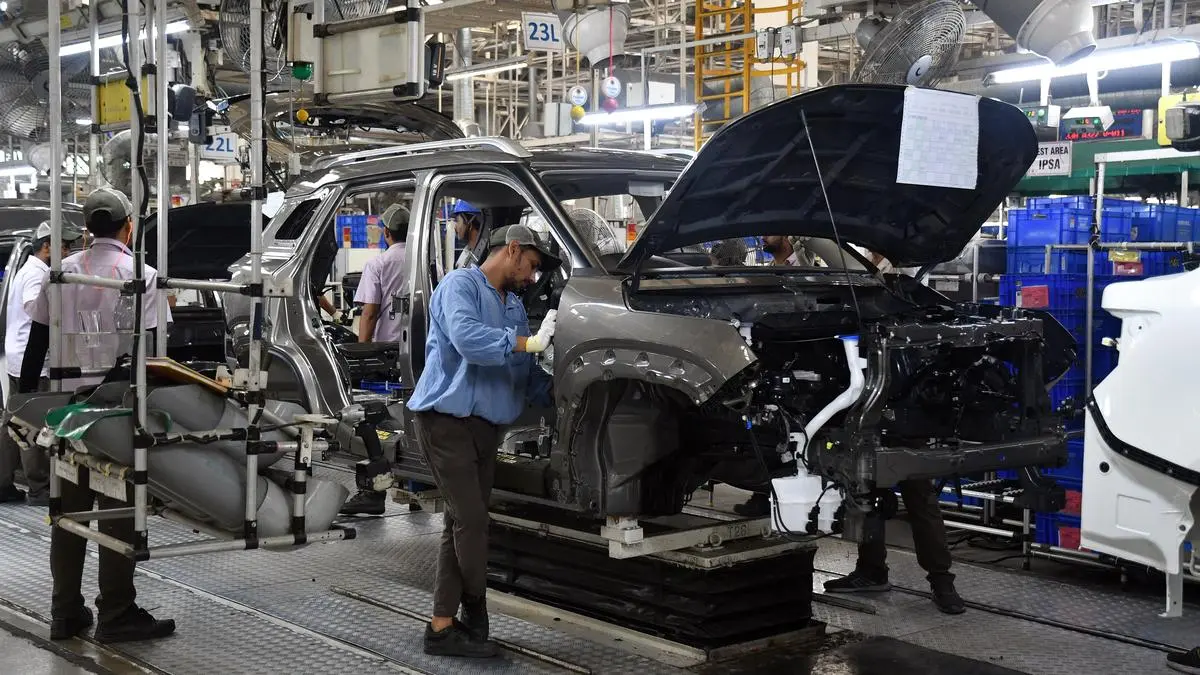
As per the draft, OEMs are permitted to offset any debit balance accumulated in their passbooks through the purchase of credits from the Bureau of Energy Efficiency (BEE). | Photo Credit: KAMAL NARANG

The government has proposed a more flexible compliance framework under the draft Corporate Average Fuel Efficiency-3 (CAFE-3) norms, easing penalty norms and allowing automakers to trade carbon credits to meet emission targets, sources told businessline.

The revised framework shifts the focus away from the earlier small-car versus large-vehicle debate and instead prioritises reducing overall fleet emissions. The objective is to push original equipment manufacturers (OEMs) to produce vehicles with lower CO₂ emissions while accelerating adoption of electric vehicles (EVs), hybrids, and alternative fuels such as biofuels, in line with India’s net-zero target for 2070.

The five-year plan for CAFE-3 norms will kick in from April 2027 and will cover the financial years 2027-28 to 2031-32.

Key feature

A key feature of the draft norms is the introduction of a market-based compliance mechanism. Automakers that exceed emission reduction targets will be allowed to trade surplus carbon credits with manufacturers that fall short, subject to mutually agreed terms.

Under the draft, the outcome of such credit trading must be completed and reported to the designated agency responsible for monitoring compliance.

For instance, manufacturers that overachieve emission targets could monetise surplus credits by transferring them to companies struggling to meet prescribed limits, thereby reducing compliance costs across the industry. The move signals a shift toward flexibility-driven regulation, aimed at securing industry buy-in while maintaining pressure on manufacturers to progressively reduce fleet emissions.

When calculating the weighted average CO2 of an OEM, clean vehicles such as electric vehicles (EVs), hybrids, plug-in hybrids, flex-fuel or flex-fuel hybrid vehicles, are assigned higher weightage. When a lower CO2 car is given higher weightage, it helps reducing overall weighted average CO2 of an OEM, thereby benefitting the OEM.

As per the draft, OEMs are permitted to offset any debit balance accumulated in their passbooks through the purchase of credits from the Bureau of Energy Efficiency (BEE).

“The price per gram of CO₂/km of such credits shall be as prescribed for each reporting period — FY28–₹2,500; FY29–₹3,000; FY30–₹3,500; FY31–₹.4,000; and FY32–₹4,500,” it stated.

For performance assessment, the annual average of actual fuel consumption for OEM would be calculated on the Modified Indian Driving Cycle (MIDC), a laboratory-based chassis dynamometer test cycle used to certify fuel efficiency and emissions for passenger vehicles, similar to the New European Driving Cycle (NEDC).

“The government has addressed the automobile industry’s grievances, shifting focus from penalising manufacturers to incentivising a greener transition. This latest draft prioritises the promotion of low-emission vehicles, including EVs, hybrids, and biofuels, as a core strategy to meet India’s 2070 carbon-neutral target,” said an automobile expert.

Published on April 12, 2026