



惯性聚合 高效追踪和阅读你感兴趣的博客、新闻、科技资讯
阅读原文 在惯性聚合中打开

推荐订阅源

N
News and Events Feed by Topic
Malwarebytes
Malwarebytes
Threat Intelligence Blog | Flashpoint
C
Cybersecurity and Infrastructure Security Agency CISA
F
Future of Privacy Forum
C
Cisco Blogs
T
The Exploit Database - CXSecurity.com
A
Arctic Wolf
S
Securelist
K
Kaspersky official blog
S
Schneier on Security
T
ThreatConnect
T
Tenable Blog
Spread Privacy
Spread Privacy
T
True Tiger Recordings
AWS News Blog
AWS News Blog
F
Fox-IT International blog
量子位
T
Threatpost
V
Vulnerabilities – Threatpost
C
CERT Recently Published Vulnerability Notes
Cisco Talos Blog
Cisco Talos Blog
GbyAI
GbyAI
宝玉的分享
宝玉的分享
腾讯CDC
G
Google Developers Blog
aimingoo的专栏
aimingoo的专栏
Cyberwarzone
Cyberwarzone
有赞技术团队
有赞技术团队
S
SegmentFault 最新的问题
OSCHINA 社区最新新闻
OSCHINA 社区最新新闻
V
Visual Studio Blog
U
Unit 42
雷峰网
雷峰网
cs.CV updates on arXiv.org
Simon Willison's Weblog
O
OpenAI News
freeCodeCamp Programming Tutorials: Python, JavaScript, Git & More
The GitHub Blog
The GitHub Blog
The Register - Security
MyScale Blog
MyScale Blog
小众软件
小众软件
A
About on SuperTechFans
Last Week in AI
Last Week in AI
Y
Y Combinator Blog
博客园 - 三生石上(FineUI控件)
美团技术团队
Google Online Security Blog
P
Proofpoint News Feed
MongoDB | Blog
MongoDB | Blog

Business News Today: Latest Business News, Finance News

Early to spot the winnable ideas Electrifying energy consumption India can count on me, says Trump Govt allocates 8,606 tonnes of raw sugar exports to the US Gold, silver likely to remain rangebound as US-Iran negotiations near key stage: Analysts Andhra Pradesh bans toxic weedicide paraquat for 60 days An unhealthy workforce cannot deliver growth Fiscal dividend Below the Line Chennai Airport undertakes enhanced screening amid Ebola concerns BJP candidate Debangshu Panda wins Bengal’s Falta Assembly re-poll by over 1 lakh vote margin, Trinamool’s Jahangir Khan slips to fourth position MoD to issue RFP for 5th-Gen AMCA manufacturing by month-end Rossell pins growth hopes on semiconductor ramp-up, adds US customers Industry body urges UP, Maharashtra to reconsider recent directives to ban non-subsidised fertilizers US has emerged as strong energy partner; India will continue to buy from multiple sources: Jaishankar Oil marketing companies seek incentives for sustainable aviation fuel, see no delays in adoption AI-polished resumes force recruiters to rethink hiring filters Rubio gives reminder of India’s $500 bn US goods purchase intent Karnataka hikes minimum wages by 60%; Bengaluru workers to get at least ₹23,376 a month Rubio says US visa changes 'not India-specific,' part of global migration overhaul; praises Indian investment in US Crude above $100 could trigger earnings downgrade cycle: SMC Global CEO Ebola virus: AP to screen passengers arriving from affected countries at airports Insist on Tata Sons’ time-bound listing: InGovern tells RBI AI smart glasses gain momentum globally, but India’s adoption may take time Mixed trend in mandi prices of Rabi crops Corporate India’s crisis economics rewrites B-School hiring; variable pay jumps to 40% killing old MBA formula Toyota says Brazil’s customer-first formula shows India how to make E-100 Work PMO tells Ministries to find ways to save fuel, forex amid West Asia crisis How Ebola is turning into a public health emergency, needing international efforts RSM US India plans to expand its office space in India; sees huge prospects Karnataka hikes minimum wages by 60%; Bengaluru workers to get at least ₹23,376 a month Oil marketing companies seek incentives for sustainable aviation fuel, see no delays in adoption Knowledge Realty Trust to invest ₹700 crore to build 1.4 million sq ft office space in Bengaluru Delivery costs in Asia-Pacific rises by 19% amid fuel pressure: FarEye report ICAI to set up advanced forensic lab for small, medium practitioners Signature Global aims to almost double revenue in FY27 to ₹5,000 crore: Chairman Developments related to US-Iran negotiations, oil prices to dictate sentiment in markets: Analysts States hold fuel VAT rates, see up to 58% rise in sales tax revenue Royal Enfield says production normalising after temporary disruptions at Cheyyar Project Sprint helps IndianOil save ₹2,200 cr in FY26 as West Asia Conflict singes margins Heatwave sparks surge in ice cream, beverage, AC sales Rubio says US visa changes 'not India-specific,' part of global migration overhaul; praises Indian investment in US Delhi CM Rekha Gupta approves mega projects worth over ₹1,000 crore under 'Mission Yamuna' Ganga Expressway to cut freight time, unlock ₹30,000 cr annual savings on logistics Overseas travel spending by Indians falls to $1.09 billion in March Chhatrapati Sambhajinagar residence of Cockroach Janata Party founder Dipke given police protection Telangana: 16 dead due to heatstroke; govt announces ₹4 lakh ex-gratia RInfra Q4 net profit falls to ₹918 cr; company appoints Vijesh Babu Thota as CEO Govt expands fuel dispenser verification to cover hydrogen, clean fuels amid energy transition Studds Accessories profit grows 6% to ₹21.1 cr in Q4 India, US are strategic allies, can work together in western hemisphere: Rubio Delhi Red Fort blast: NIA chargesheet reveals abuse of AI platform for ‘terror engineering’ CBSE to issues refunds to students overcharged due to glitches in class 12 post-result process ‘Centre cracked down on Cockroach Janta Party after IB warning on possible unrest’ Cement makers expect 7-8% growth in FY27 despite West Asia headwinds EAM Jaishankar holds delegation-level talks with US State Secry Marco Rubio at Hyderabad House Potential MoU between Iran and US includes end of war and Iran oil sanctions waiver Cement demand recovery, price hikes eyed in June as costs weigh on margins: Report Bernstein says Adani overhang easing after US developments; execution strength remains intact Fuel austerity clouds demand outlook; India's annual product growth forecast cut 40% India should now focus on FTA implementation, utilisation by exporters: Experts Andhra CM to launch 38 industrial parks at MSME Growth Summit in Vijayawada LIC emerges as highest profit-making financial company in Jan-Mar quarter Coal India plans syngas projects near gas-based power, DRI and fertilizer units as gas supply tightens Govt in 'advanced stage of consultation' on industry's demand for cotton import duty removal: Official Gold offered at ₹450/g to Indian consumers after import duty hike Mcap of 6 of top-10 most valued firms surges by ₹74,111 cr; Reliance biggest winner IRFC to raise ECB loan worth $2 billion to finance large infra projects Retail fuel price hike 'inevitable' if global oil pressures persist: BPCL's Director HR LNG tanker exits Hormuz for India for first time since war began Centre advises citizens to avoid non-essential travel to Ebola-affected regions Axios says proposed US-Iran deal involves opening strait during 60-day ceasefire extension Suspect dead after approaching White House checkpoint with weapon, says US Secret Service WHO declares Ebola outbreak 'public health emergency' of international concern Britain's navy prepares to clear mines in Strait of Hormuz while waiting for peace deal Scorching days, restless nights: Heatwave tightens grip across parts of India China to send astronaut on year-long space mission as it targets 2030 moon landing US military conducts first drill over Caracas since Maduro capture Trump says Iran deal and Strait of Hormuz reopening largely negotiated US Secret Service shoots suspect near White House; two critically injured SpaceX IPO and the Big Bang Bubble Global crude steel output falls 1.9% in April Medanta: What Should Investors Do? Sensex, Midcap, Smallcap, Sectors: What they don’t tell you about mutual fund SIPs Surat-based Anupam Rasayan India to acquire upto 74.2 per cent in Bliss GVS Pharma Should investors buy HDFC Bank now? Why This Nifty 50-Midcap-Smallcap Mix Crushes the Nifty 500 SpaceX and the Big Bang IPO bubble Tax Query: Is Withdrawal from NPS Tier II Equity Fund Taxable as LTCG? Who Am I? May 24, 2026 Telangana Cabinet clears new life sciences policy 2026-30 Nifty 50’s long-term historical performance reassures to FPIs ‘don’t write me off just yet’ NTPC Q4 net profit grows 34% to ₹10,615 cr Trump says he might make decision on latest Iran draft agreement by Sunday, Axios reports TechD Cybersecurity Q4 profit jumps 67%, revenue rises to ₹53 cr in FY26 Qatar Holding sells over 48 lakh shares of Adani Energy Solutions for ₹643 crore Simply Put: Interest Coverage Ratio Pack peace of mind for foreign trips F&O Strategy: Long strangle on HPCL F&O Tracker: Firm resistance
Creating semicon dependency?
2026-05-24 · via Business News Today: Latest Business News, Finance News

India is pouring concrete in Odisha, but the rules for what goes inside those factories are redrafted in Washington. While the recent inauguration of domestic packaging facilities is a legitimate win for job creation, celebration is justified but complacency is not. While bilateral frameworks like the Initiative on Critical and Emerging Technology (iCET) are sold to Indian institutional investors as a triumph, the numbers tell a harsher story.

In February, Washington imposed a uniform 10 per cent tariff. In March, the USTR launched aggressive Section 301 investigations into industrial capacities across 16 economies. These are not accidents of diplomacy. They are the new baseline of American trade policy, which is growing highly protectionist. India is building the physical hardware for the future, but the US holds the rules for how that hardware can be used. We are building a house on a rented foundation.

New Delhi suffers from the assumption of linear progress. Policymakers believe geopolitical alignment with the US guarantees technology transfers, which fuels manufacturing, ending in export dominance.

This ignores how modern supply chains actually work. Trade policy today is a highly volatile market. If a domestic facility’s viability can be erased overnight by a sudden pivot in foreign export controls, it is not an independent Indian asset. It is a leveraged project dependent on external permission.

The packaging trap

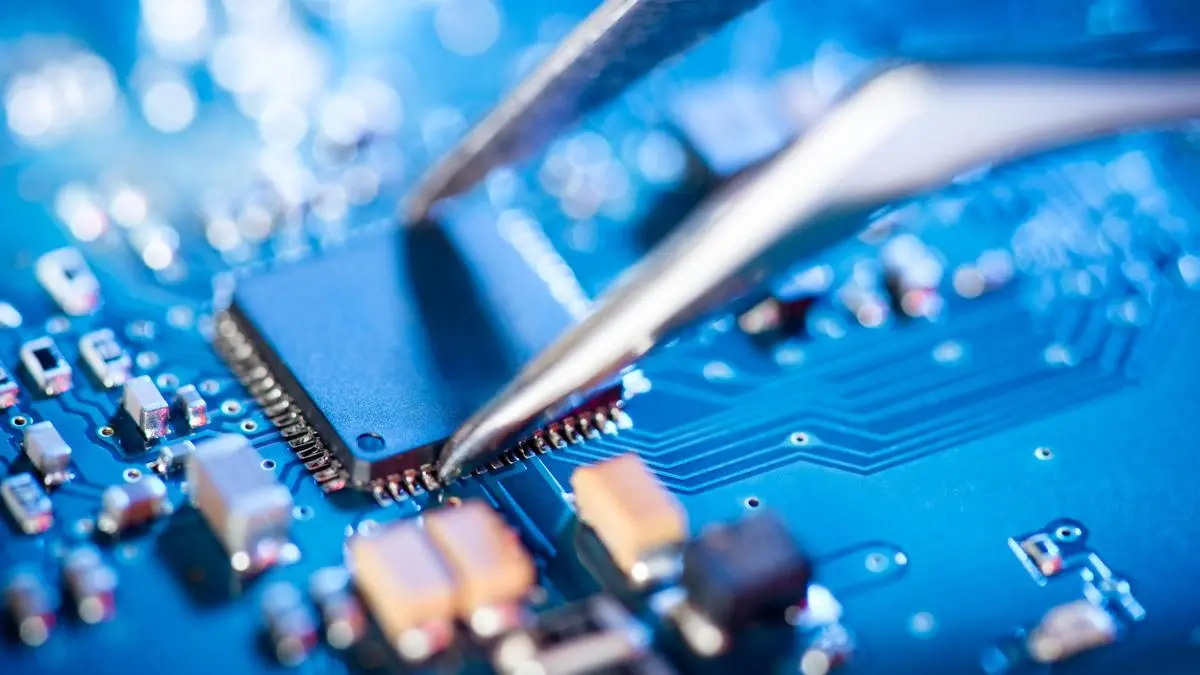
Washington’s playbook in the Indo-Pacific is economically rational: onshore the high-margin, intellectually rigorous work of chip design and AI research, and outsource the lower-margin, ecologically demanding labour of assembly, testing, and packaging (ATP) to partner nations.

Look at the underlying economics. In the global semiconductor value chain, fabless design and core intellectual property capture nearly 50 per cent of the industry’s total profit. Assembly and packaging yield less than 10 per cent. By focusing state incentives primarily on ATP and legacy manufacturing, India walks into a high-investment, low-yield trap.

A fab without design capability is a factory with rent to pay. The 3D Glass Solutions partnership in Odisha creates vital employment, but it cannot be the final destination. Without a corresponding surge in indigenous chip design and intellectual property ownership, India will remain a highly capable subcontractor.

This is the Silicon Shackle: achieving the status of being physically indispensable to the global supply chain, while remaining fundamentally dependent on the original architect. If India owns the building but not the operating system, sovereignty is cosmetic.

The token tax

This dependency extends into the digital sphere. A new zone of influence is being drawn by the US Department of Commerce that prioritises American technological hegemony over global market access.

Under these rules, acquiring the compute-dense GPUs (graphics processing units) necessary for India’s 10,000-chip National AI Mission requires navigating National Validated End-User (NVEU) authorisations. For Indian data centres, these mandatory audits act as a silent embargo. They delay time-to-market by months. India subsidises the power and constructs the data centres, but the computing power humming inside them remains audited and overseen by a foreign capital.

Compute dependence is the new oil dependence. Furthermore, we must confront the hidden economic drain of our current AI ecosystem. Over 80 per cent of Indian AI startups today build their applications on top of US-hosted, proprietary foundational models. This creates a perpetual Token Tax. Every time an Indian enterprise utilises an American API to process a prompt or analyse data, a micro-payment of capital — and crucially, behavioural data — flows outward.

India’s electronics import bill is already projected to cross a staggering $120 billion by the end of this fiscal cycle. Now, factor in the cost of artificial intelligence. A single cluster of top-tier Nvidia GPUs costs tens of millions of dollars, and Indian enterprises are currently forced to rent this compute power by the hour from American hyperscalers. If we do not cultivate our own foundational model weights, we will add a crippling digital trade deficit to that ledger. We risk becoming a vast workforce of diligent prompt engineers rather than the architects of original systems.

The closing window

Historically, India’s greatest leverage in technology negotiations has been its demographic scale. We represent the largest open data market in the world, processing over 13 billion digital public infrastructure transactions every single month. Global AI giants have extracted this data to train their models for free.

This is where India should worry. The frontier of artificial intelligence is moving away from scraping raw human data. The next generation of models increasingly relies on synthetic data — data autonomously generated by algorithms training themselves. As this happens, our demographic advantage will precipitously diminish. Once algorithms no longer need our data to become smarter, our primary bargaining chip disappears.

We must urgently enforce a Data-for-Tech framework. If foreign entities wish to utilise the high-quality datasets generated by the Indian populace, they must be compelled to provide more than localised software services. They must share the underlying blueprints: the model weights and the source code. Access to our digital market must be priced as a high-value geopolitical trade.

A policy blueprint

If India wants to transition from diplomatic optimism to hard-headed execution, it must adopt an uncompromising approach:

A sovereign GPU reserve: India must establish a state-backed stockpile of high-end compute. This requires unlocking institutional capital to secure long-term, non-revocable licences for cutting-edge hardware, insulating domestic startups from sudden export control shocks.

IP co-development mandates: Any foreign firm receiving taxpayer-funded incentives under the India Semiconductor Mission must be legally required to enter into binding IP co-development agreements with Indian entities. We need the design blueprints, not just the assembly instructions.

Targeted chip design scaling: India must aggressively scale up its Design Linked Incentives (DLIs), offering massive R&D tax credits specifically for fabless chip design firms. The objective is clear: own the intellectual architecture of the chips we are currently paying to package.

The ‘Indi-LLM’ initiative: We require a heavily funded national mission to build foundational models trained explicitly on Indian languages and legal frameworks, with the core weights stored domestically. This guarantees that if external APIs are ever restricted, India’s digital nervous system continues to function.

The global technological order is currently being recalibrated. The margin for error is zero. To move beyond the role of a diligent subcontractor, India must recognise that true autonomy is the product of calculated hedging and aggressive IP ownership. We must ensure that when we build for the future, we are building on ground that we unquestionably control.

The writer is a physicist at the University of North Carolina at Chapel Hill and a columnist on AI, infrastructure, and global systems

Published on May 25, 2026