







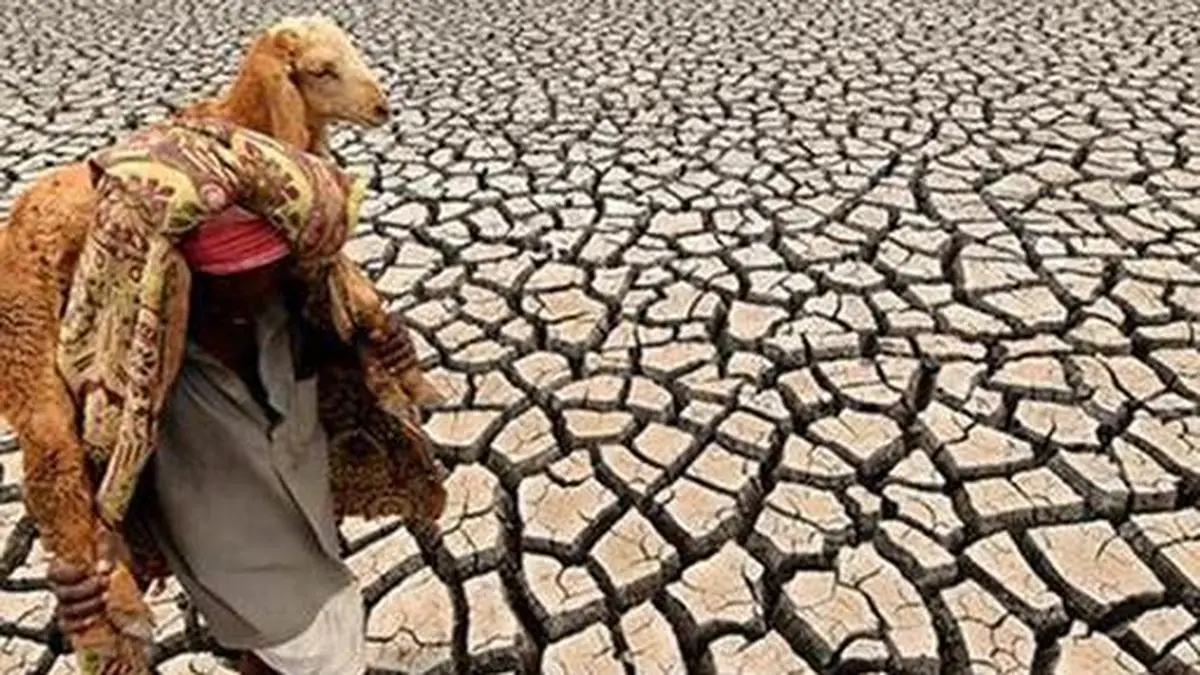
IMD has pegged the probability of below-normal or deficient rains at a high 66 per cent | Photo Credit: NAGARA GOPAL
It is good to see the India Meteorological Department (IMD) acknowledge the risk of El Nino disrupting the upcoming South-West monsoon, in its forecast released last week. In the past, it has tended to downplay El Nino risks in its early-stage forecasts.
In this forecast, IMD has estimated that the quantum of South-West monsoon rainfall all-India is likely to be at 92 per cent of the Long-Period Average (LPA) this year. While it has made no comment on the severity, it has pegged the probability of below-normal or deficient rains (5-10 per cent below LPA) at a high 66 per cent, while there’s only a 27 per cent chance of a normal monsoon and a 7 per cent likelihood of above-normal rains this season. Global weather agencies have been more decisive, assigning a 62 per cent probability of El Nino conditions emerging between June and August 2026, with a 25 per cent chance of a ‘very strong’ event this year.
The emergence of an El Nino in itself is not cause for alarm, as this phenomenon makes an appearance every 4-5 years. Reserve Bank of India researchers, after mapping long-term data, concluded that not all El Nino events disrupt the Indian monsoon. For one, it is the interaction between El Nino and the Indian Ocean Dipole (temperature differences between the Western and Eastern Indian Ocean) that decides the quantum of rains during the monsoon. About 34 per cent of the El Nino years still saw the South West monsoon delivering normal or above-normal rains due to a positive IOD. The IMD has forecast that currently neutral IOD conditions may turn positive by end of the monsoon season. But whether it will be too late to ensure adequate rainfall in the crucial sowing months of July and August remains to be seen. Two, while agricultural growth has been zero or negative during most El Nino years, foodgrain output seems to be more vulnerable than other crops. Here, it is a comfort that the Food Corporation of India is sitting on comfortable buffer stocks of rice and wheat (at over two times the norm at the beginning of April). Shortfalls in the kharif foodgrain crop can be made up in rabi if El Nino fades by year-end.
Below-normal rainfall in itself doesn’t stoke food inflation at all times, SBI Research has been at pains to highlight this. It has pointed out that there have been above-normal rainfall years like FY11-12 when food inflation rose to double digits and below-normal ones like FY19 which saw negligible inflation. However, it appears unlikely that India will prove lucky on this score this year. With the Iran war already leading to fertilizer shortages, agri-producers globally are likely to scramble to ensure nutrient supplies this year. This is likely to stoke imported inflation. Pre-emptive measures to encourage sowing of drought-resistant crops and discourage hoarding may thus need to be taken, before the verdict is out on El Nino. Overall, it would be prudent for policymakers to hope for the best, but prepare for the worst on this year’s monsoon.
Published on April 17, 2026
此内容由惯性聚合(RSS阅读器)自动聚合整理,仅供阅读参考。 原文来自 — 版权归原作者所有。