








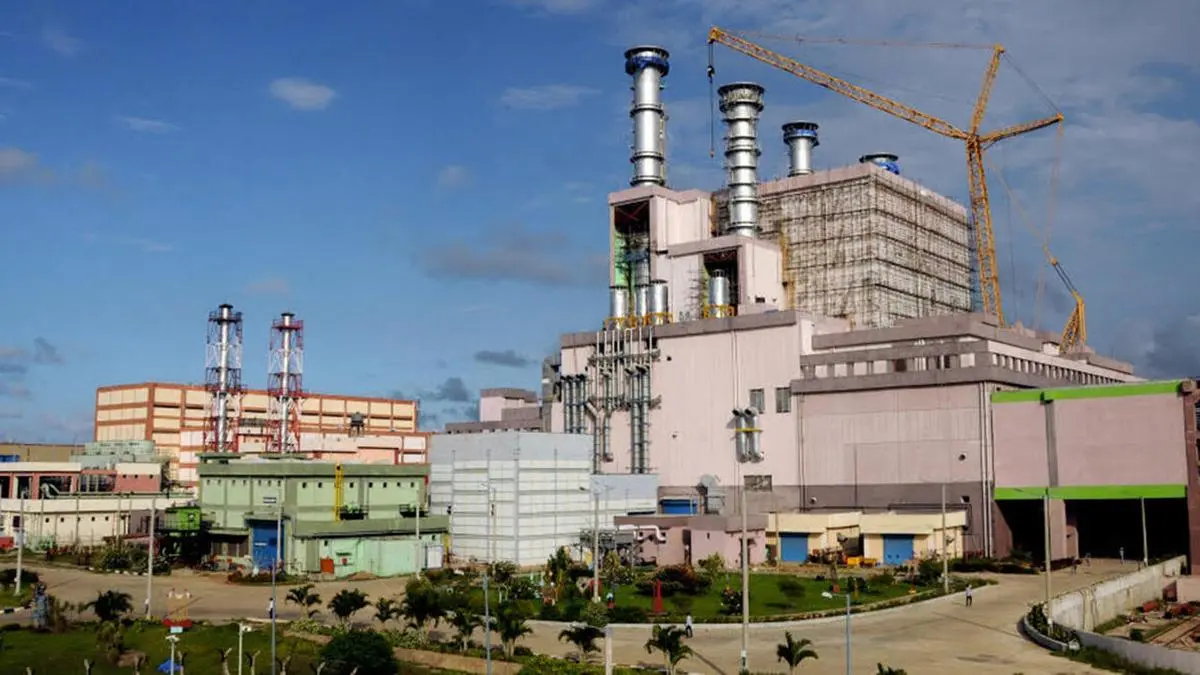
ATOMIC OPTION. The prototype fast-breeder reactor at Kalpakkam, which went critical recently, paving the way for thorium use in energy production
The deliriously joyful reaction of the social media commentariat to the news of the 500 MWe prototype fast-breeder reactor (PFBR) going critical is not without basis. It is certainly a significant milestone in India’s energy history. However, it is useful to temper the frenzy with some hard facts.
Indeed, PFBR paves the way for India to use thorium for energy production. India has a fourth of the world’s thorium reserves. Estimates vary — from the most optimistic 1.07 million tonnes (according to the government) to 518,000 “extractable” tonnes (according to Bhabha Atomic Research Centre).
Now, here is a telling data: a tonne of thorium (after it is converted into nuclear fuel uranium-233) can — conservatively speaking — provide as much energy as 3 million tonnes of coal. So, even at BARC’s estimate, India is sitting on thorium resources equivalent to 1.3–1.5 trillion tonnes of coal, which is a little more than all the coal reserves discovered in the world till today.
What this means is, long after West Asia has run out of oil, India could be lounging on the energy throne, producing clean, cheap power.
Social media has intuited this promise — that explains the delirium.
For sure, nuclear energy powered by a fleet of breeder reactors will play a big part in India’s quest for ‘net zero’ by 2070.
However, there are two points of note in all this. The first is that a commercial thorium reactor is likely three to four decades away.
India took 22 years to build the PFBR. While the next fast-breeder reactors may not take as much time from start to finish, the start line is still at least a decade away.
After all, the PFBR is still a demonstrator. As Dr Anil Kakodkar, India’s pre-eminent nuclear scientist and former chairman of Atomic Energy Commission, put it, you have to “do to learn”. Learning on the hoof is inherently riddled with surprises. The PFBR needs to be stabilised first. It will take 12-18 months to start pumping electricity into the grid, but those running the plant would still need to observe and absorb operational nuances, which is time-consuming.
Secondly, the first few reactors are likely to be more oriented towards producing (breeding) plutonium-239 rather than converting thorium into U-233.
Theoretically both can be done simultaneously, but there is a trade-off, as U-233 production will reduce Pu-239 breeding. The need is to first build enough stocks of Pu-239 before starting in-situ production of U-233.
So even after the first few breeder reactors come up — after over a decade, if done quickly — getting into the thorium cycle is farther away. By then, there is a distinct possibility that nuclear fusion may have emerged as a better alternative — investors are already betting on it.
Moreover, we cannot really get carried away by the fact that India is only the third country — after Russia and China — to have a fast-breeder reactor. Russia, with two operating reactors — BN 600 and BN 800 — and another under construction (BN 1200) is a master in this technology; China is only slightly ahead of India.
It is not as if India succeeded where other countries failed. France, Japan and the US dabbled in breeder reactors but gave up, not because they could not do it but realised they did not need it.
You don’t need to break your head over hard-to-build, difficult-to-run breeder reactors if you have enough uranium, though Russia has chosen to do that.
India went down this path because it has thorium; breeders are the quickest route to get to it.
Building an indigenous breeder reactor is creditable, but not evidence that India has succeeded where others failed.
Published on April 13, 2026
此内容由惯性聚合(RSS阅读器)自动聚合整理,仅供阅读参考。 原文来自 — 版权归原作者所有。