





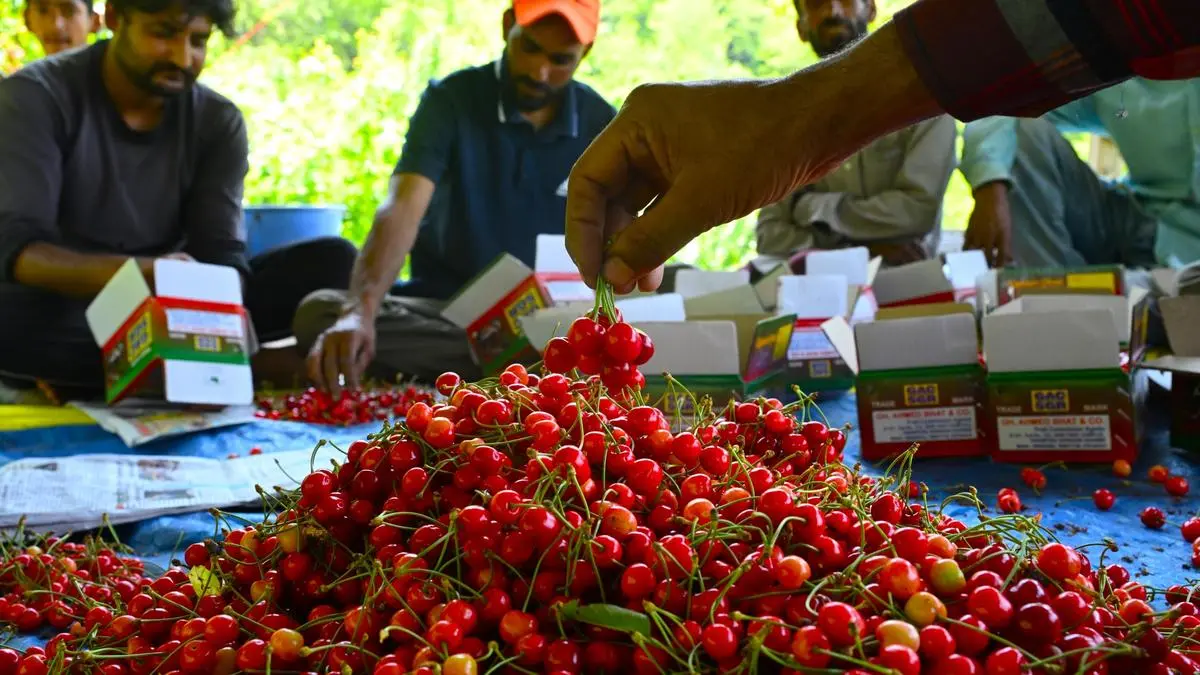
Cultivators said higher-than-usual temperatures followed by intermittent rainfall during the flowering and fruit-setting period significantly reduced yields across major cherry-growing areas in the Valley | Photo Credit: IMRAN NISSAR
Cherry growers in Kashmir have reported a sharp fall in production this season, with output declining by nearly 50 per cent due to erratic weather conditions, farmers and industry representatives said.
Cultivators said higher-than-usual temperatures followed by intermittent rainfall during the flowering and fruit-setting period significantly reduced yields across major cherry-growing areas in the Valley. Farmers said the adverse weather affected flowering and fruit development, resulting in smaller harvests this year.
Despite the decline in production, growers said market prices have remained relatively stable, offering some relief to orchardists.
Bashir Ahmad Bashir, Chairman, Kashmir Valley Fruit Growers Cum Dealers Association, told businessline that production had fallen by 45 to 50 per cent this season. He attributed the losses to unstable weather patterns witnessed in April and the first week of May.
He said strong market demand had helped sustain prices, preventing major financial losses for many growers despite lower yields.
Imported cherry varieties like Italian and Bulgarian cultivars are currently fetching good prices in the market, selling between ₹200 and ₹300 per kilogram, growers said.
Riyaz Ahmad, a cherry cultivator from Shopian, said continued adverse weather in the coming weeks could further impact returns for farmers.
“Only early varieties are being harvested so far. Several varieties, particularly in the upper reaches, are yet to ripen. Continuous rainfall could severely affect their quality,” he said.
Kashmir accounts for more than 90 per cent of India’s total cherry production, with an estimated annual output of 12,000 to 14,000 metric tonnes.
The Valley produces both sweet and sour varieties of cherries and has traditionally been known for indigenous cultivars such as mishri, makhmali and double cherry. In recent years, however, growers have increasingly shifted towards imported varieties including kordia, regina and stella, which are considered better suited to changing climatic conditions.
India imports cherries from countries including Chile, Afghanistan, the United States, Turkey and Canada, with Chile emerging as the largest exporter.
According to 2024 trade data, Chile exported cherries worth around $4.8 million to India, significantly higher than exports from other suppliers such as the US and Turkey.
Last year, premium cherries from Kashmir orchards were supplied to Lulu supermarkets in Saudi Arabia and the United Arab Emirates, following their first commercial export to Gulf markets.
Farmers cultivating drupes often face post-harvest losses due to transportation challenges, as the fruit has a limited shelf life. However, the introduction of parcel trains is expected to prove a game changer by ensuring faster and more efficient transportation to major markets across the country.
Railway authorities are planning to transport more than 640 tonnes of cherries to Mumbai during the ongoing season. The Jammu Division of Northern Railway has booked 28 parcel vans for transporting the fruit to Bandra Terminus, with each wagon capable of carrying around 23 tonnes.
In 2025, 14 parcel vans loaded with cherries were dispatched from Shri Mata Vaishno Devi Katra railway station to Bandra Terminus, marking a first-of-its-kind initiative that opened faster access to distant wholesale markets for Kashmir growers.
Published on May 21, 2026
此内容由惯性聚合(RSS阅读器)自动聚合整理,仅供阅读参考。 原文来自 — 版权归原作者所有。