






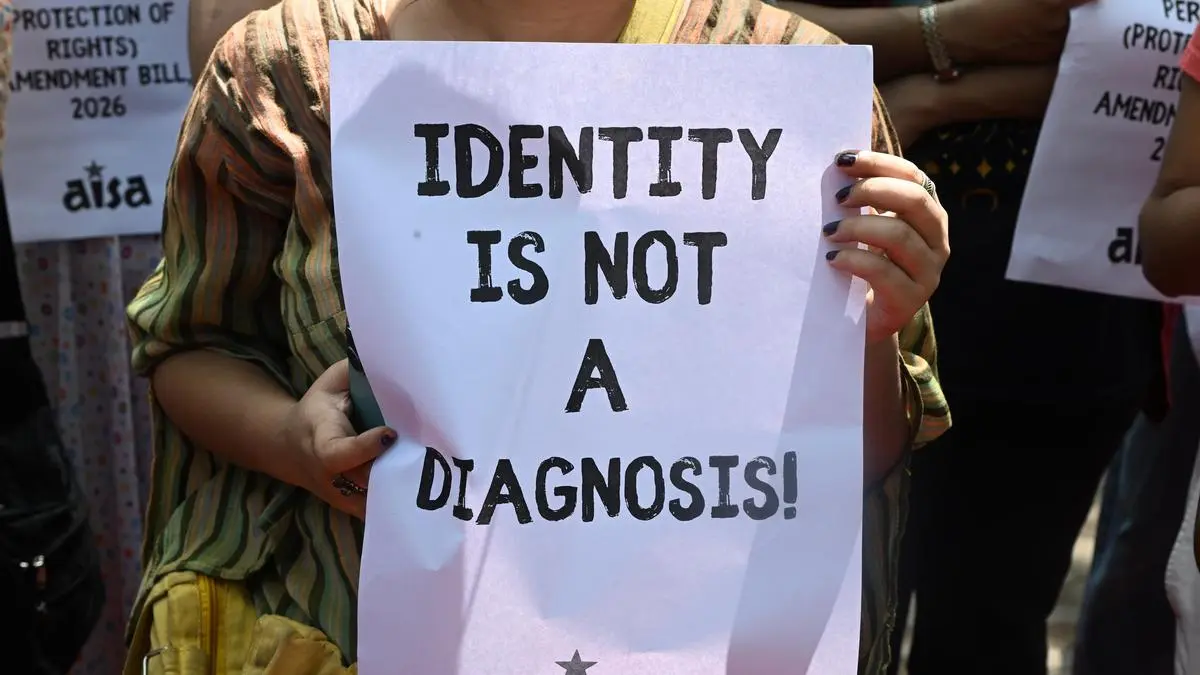
NON-NEGOTIABLE. The right to gender arming care | Photo Credit: SUSHIL KUMAR VERMA
Over the past two months, India’s transgender community has been navigating what it calls a “medico-social crisis” in accessing medical care.
This follows the presidential assent given to the the Transgender Persons (Protection of Rights) Amendment Bill, 2026, on March 30. The bill rejects self-identified trans individuals, and this has led to a pause or complete halt in gender-assigning surgeries and supportive treatments at hospitals, according to community representatives.
People seeking to align their biological sex with their self-identified gender are now asked to provide waivers and affidavits as well as consent forms from parents to access surgeries and treatments. In other instances, patients have to provide gender identity certificates containing a psychiatrist’s approval. These procedural changes have introduced a layer of uncertainty when it comes to accessing surgeries and supportive treatment for the transgender community, they add.
Barely a day after the presidential assent for the bill, a Delhi resident who had been waiting for gender-affirming surgery for a long time was told the surgery had been cancelled due to changes in the law. Similarly, Mumbai-based Shine Rahman, a trans-man and board member of international transgender organisation FLUX City edition, who had undergone a gender-affirming surgery in 2020, had to fight for the mandatory post-surgery hormone replacement therapy (HRT) at a local hospital.
“After the surgery, patients undergo HRT along with medical tests every three months… HRT cannot be stopped suddenly as it can lead to mental and physical health issues,” says Rahman, who witnessed another trans-man battling a similar situation with another doctor.
While medical professionals are citing the amendment to deny services, in reality the only change effected is in the definition of ‘transgender’ and not the provisions related to medical procedures and surgery.
In fact, when Rajya Sabha member Tiruchi Siva asked about the impact of the amendment on healthcare, the Union Ministry of State for Social Justice and Empowerment replied the changes “are not intended to restrict legitimate gender-affirmative care”. And yet, doctors and health practitioners hesitate to provide medication and treatment, say members of the trans community.
“The amendment comes with a clause on criminalisation for individuals who support transgender persons in affirming their self-perceived gender identities. Aside from hefty fines, the penalties include imprisonment anywhere between 10 years and a lifetime. This has scared doctors from providing medical care to self-identified transgender folk,” says Vihaan, a trans-activist, who alleges that hospitals have put surgeries on hold until the government defines the guidelines.
Dr Sanjay Sharma, founder of the Association for Transgender Health in India (ATHI), is concerned about the amendment’s interim impact. “The silence of the health ministry and the National Medical Council is killing people. If this environment of fear among the healthcare community continues, the mental and physical health of transfolk will decline. Support groups are also under mental pressure. For people who are already mid-transition, a pause in the process can reverse their progress. Some might resort to self-medication, which is dangerous. We’re facing a public health emergency,” says Sharma, who has received calls from confused healthcare professionals across India since March 30.
About 4.87 lakh individuals are categorised as “others”, according to Census 2011. Sharma estimates that 1.7–2.6 per cent of Indians identify as transgender — that is upwards of 2 crore individuals.
The amended Act recognises only members of kinner, hijra, aravani and jogta communities, intersex individuals and victims of forceful conversion as transgenders. Others need to undergo a psychiatric assessment to confirm a “gender identity disorder”.
This requirement had earlier been discontinued, since 2019, when transgender identity was not considered a “disorder”, says Sharma. With its reintroduction, people seeking surgery “would need at least two additional documents, on top of preparing mentally and physically for the transition”, he adds.
Sharma is worried about care under the public health system as most cannot afford private practitioners. A single private mental health session costs ₹1,500–2,000. Hormonal care costs ₹2,500-5,000. The surgeries cost ₹5-10 lakh depending on the intervention required. A government hospital does it at half the cost, and it’s covered by insurance, he says.
Though court judgements recognise surgeries based on self-identification, healthcare professionals in Mumbai’s Sion Hospital, among other centres, said they always asked patients to get two certifications from mental health professionals before undertaking the surgery.
“As doctors, we have to follow the law… I would advise patients to keep certifications and identity cards ready. Those who have the documents need not worry,” says Amarnath Munoli, plastic surgeon at Sion Hospital, attributing the recent instances of denied services to a lack of clarity in the rules for health institutions.
Some transgender people have taken legal recourse to seek medical care. In April, two transgender persons approached the Kerala High Court to direct hospitals to continue with HRT. They argued that the removal of self-identification and the need for mandatory medical certification went against the Supreme Court’s 2014 National Legal Services Authority or NALSA judgement. Similar petitions have been filed in the Karnataka and Rajasthan high courts.
“Gender affirming care is still a right for trangenders... we must explain to the medical practitioners that they cannot deny care,’ says Vihaan.
Published on May 4, 2026
此内容由惯性聚合(RSS阅读器)自动聚合整理,仅供阅读参考。 原文来自 — 版权归原作者所有。