惯性聚合 高效追踪和阅读你感兴趣的博客、新闻、科技资讯
阅读原文 在惯性聚合中打开

推荐订阅源

博客园 - Franky
WordPress大学
WordPress大学
Hugging Face - Blog
Hugging Face - Blog
freeCodeCamp Programming Tutorials: Python, JavaScript, Git & More
小众软件
小众软件
人人都是产品经理
人人都是产品经理
罗磊的独立博客
博客园 - 聂微东
雷峰网
雷峰网
量子位
美团技术团队
V
V2EX
The GitHub Blog
The GitHub Blog
大猫的无限游戏
大猫的无限游戏
奇客Solidot–传递最新科技情报
奇客Solidot–传递最新科技情报
IT之家
IT之家
The Cloudflare Blog
爱范儿
爱范儿
T
Tailwind CSS Blog
博客园 - 三生石上(FineUI控件)
让小产品的独立变现更简单 - ezindie.com
宝玉的分享
宝玉的分享
Last Week in AI
Last Week in AI
Jina AI
Jina AI

Business News Today: Latest Business News, Finance News

Markets’ dilemma: Trust the bark or wag of oil prices The sector call illusion Bandu’s Blockbusters For April 12, 2026 Mastering Derivatives: Does Lag Impact Effectiveness Of OI? Who Am I? April 12, 2026 Index Outlook: Rising From Dire Straits US Market Outlook: Gaining Strength Bullion Cues: Gold And Silver Futures Face Barrier F&O Tracker: Tentative Shift In Trend F&O Strategy: Buy L&T Put Maruti Suzuki to launch 4 EVs by 2031 India Inc flags surge in cost of packaging raw material, seeks relief measures India-flagged LPG tanker Jag Vikram crosses Strait of Hormuz after US-Iran ceasefire Muted pricing power, rising costs to curb benefits of demand in cement sector: HDFC Securities Iran's new supreme leader Mojtaba Khamenei has severe and disfiguring wounds, sources say No road tax, registration fees for electric vehicles priced up to ₹30 lakh till March 2030: Delhi’s draft EV policy Central Railway to run four special local trains for Ambedkar Jayanti West Asia tensions push up costs for India; further impact hinges on stability: Report ED initiates fresh raids against former Bengal minister Chatterjee in teacher recruitment scam Election Commission reverses Mittal’s DVAC posting, appoints him DGP, TN Armed Police Israel and Lebanon are expected to hold talks. Here’s what to know US, Iran set for peace talks but doubts emerge over Lebanon, sanctions Cotton Association revises output estimates for 2025-26 up at 324 lakh bales of 170 kg each Orbicular gets USFDA’s tentative nod for generic Semaglutide Injection in partnership with Apotex Malls, high-streets in NCR clock 45% rise in leasing of retail spaces in Jan-Mar: C&W FIIs pull ₹28,375 crore in five sessions; domestic buyers cushion fall as indices post best week in months Nifty and Bank Nifty Prediction for the week 13 Apr’26 to 17 Apr’26 by BL GURU Proposed Trump arch in Washington DC includes winged figure, eagles, lions and gold inscriptions 'Ladakh' replaces 'Jammu and Kashmir' in Aadhaar records for UT residents Misri ends US trip with focus on civil nuclear cooperation and LPG exports
Should founders cash in while the firm is still shaky?
2026-04-13 · via Business News Today: Latest Business News, Finance News

I was one of the judges at a startup pitch event sometime back. One of the key questions entrepreneurs had to answer was, “Why do you want to startup?” Most answers were conventional, such as the desire to create something, work for self, change the world, passionate about starting up, and so on, until a young lady brought the house down by saying, “I want to make lots of money.” Beyond the instant laughter, she raised an important issue: Is it fair for entrepreneurs to sell a part of their shares in a secondary and create some personal wealth, while the startup struggles financially?

Every first-generation startup founder invests a lot of passion and conviction to compensate for low salaries, insanely long hours, relentless pressure and a disproportionate amount of personal risk. Several tiring years later, after perhaps some economic stress at home and watching peers in professional careers getting ahead financially, a thought starts nagging: “When should I look out for myself and consider a secondary?” In simple terms, selling a slice of personal equity before the firm becomes profitable.

Folks who have never experienced the hardships and challenges of being a first-time founder may think of such an act as questionable, but the reality is a lot more nuanced. Founders are not hermits. Building a startup is not just intellectually demanding but also financially asymmetric. For years, the founder’s net worth is trapped in illiquid equity, while others, including employees with ESOP buybacks and investors with portfolio diversification, have some degree of liquidity and protection. To expect founders to take a high moral ground and not take secondaries early is unfair.

Global examples like Travis Kalanick, Mark Zuckerberg and Brian Chesky, who sold partial stakes in secondaries in Uber, Facebook and AirBnB, respectively, before IPOing, and the Indian examples like Vijay Shekar Sharma and the Bansals executing small secondaries before the PayTM IPO and Walmart’s acquisition of Flipkart, respectively, shows that not only are secondaries common but markets also understand them.

Secondaries help entrepreneurs diversify their risks. No one should invest all their money in a single and risky asset, so why should founders? A small nest egg helps founders focus on their startup with renewed energy. A key concern about founders exiting partially early is that it could reduce their commitment. In startup jargon, this is called “skin in the game”. I believe this can cut both ways. A founder who has secured some sort of upside is more likely to stay the course longer. So, the question is not if secondaries are fair. The more important point is the timing. What is the status of the startup when the secondary happens? Is there a context where that is not normal? We will discuss these aspects in the next column.

(The writer is a serial entrepreneur and best-selling author of the book ‘Failing to Succeed’; posts on X @vaitheek)

More Like This
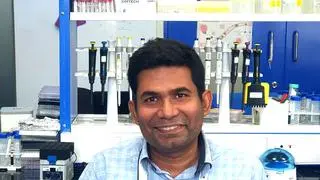
PREVENTIVE TECH. Arnab Roy Chowdhury, founder of Mestastop

Anirudh A Damani, director at Artha India Ventures

WIDENING ACCESS. SuperHealth is focused on optimising hospital infrastructure to reduce the cost of care delivery

Published on April 13, 2026