








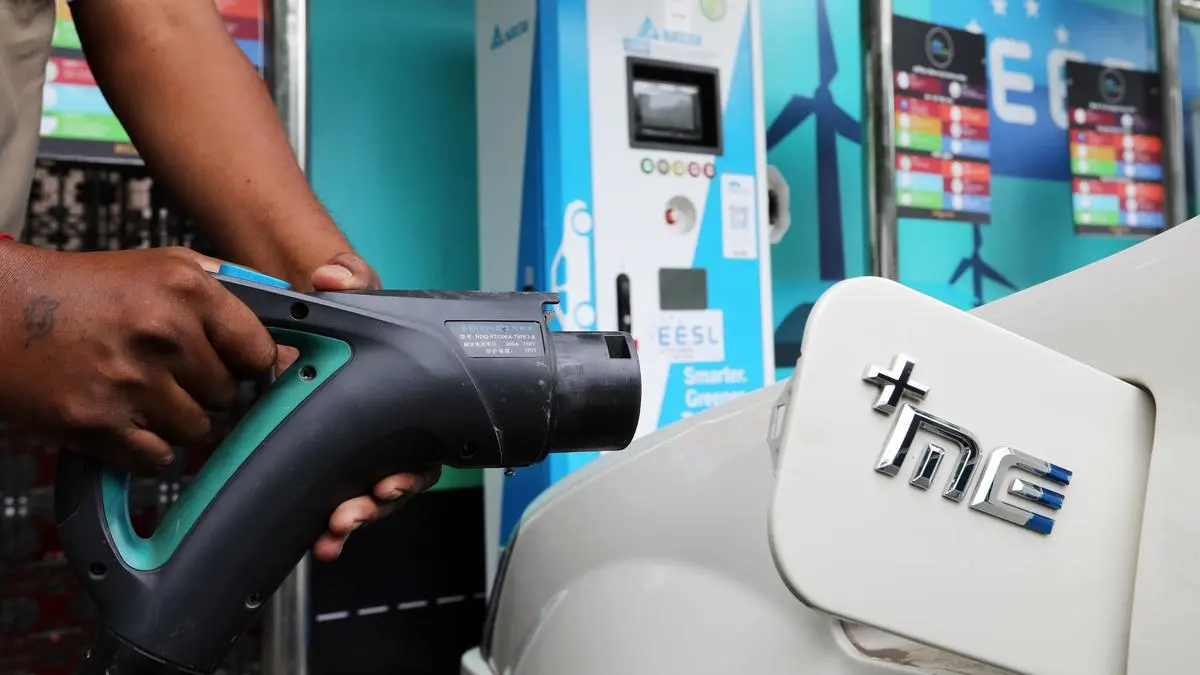
PLUG AND PLAY. Adequate charging infrastructure can hasten the electrification of the transport sector | Photo Credit: T. Narayan
In 2024-25, India’s energy supply stood at 9,32,816 kilotonnes of oil equivalent (domestic production and imports); the energy consumed was 6,08,578 KToe, according to Energy Statistics India. This means 35 per cent of total primary energy supply (TPES) was taken away by conversion and system losses.
The number, which was the same the previous year too, is indeed high but not shocking. It is comparable to most countries. The main reason for the loss in India is thermal power, where a good 60-65 per cent of energy contained in coal is lost during conversion into electricity.
Energy lost is money lost.
There is, however, considerable scope for loss reduction.
The first option is to use higher efficiency boiler-turbine systems for thermal power plants. The second is to reduce dependence on coal-based electricity, which is happening. Today, 28 per cent of the electricity that flows in India’s grid comes from non-fossil fuels. Indeed, the country would need to build around 80 GW of new coal power plants, but the share of thermal power in the electricity mix can be expected to fall.
All of this will help reduce the gap between the primary energy supply and final energy consumption, but only a little — unless the share of electricity in the total final consumption (TFC) of energy increases substantially. Today it is just 23 per cent. This means 77 per cent of energy is consumed as molecules and not electrons. Increasing the share of renewable energy and nuclear can improve energy security, while dependence on imported molecules leaves the country vulnerable — as the current Strait of Hormuz experience illustrates.
Vinay Pabba, CEO, Vibrant Energy, notes in his LinkedIn post that “until we change that, no amount of solar and other RE capacity will buy us security”.
So, the task before energy planners is to first increase the share of electricity in TFC while reducing the share of coal and oil in TPES.
Much of India’s industrial energy demand is still met through direct combustion of coal, furnace oil and diesel for process heat.
In 2024-25, industry used 1,72,369 Ktoe of energy directly from coal. A substantial part of it can be used more efficiently if electricity is used instead of coal for applications such as industrial heating. Many electric end-use technologies are significantly more energy-efficient than direct fuel combustion. Take heat pumps, for example. A coal boiler may convert 100 units of energy in coal into roughly 80 units of useful heat. But if the same coal is first converted into electricity to run a heat pump, the system can deliver even more useful heat because heat pumps move ambient heat rather than generate all heat directly. Burning coal that holds, say, 100 kWhr of energy can produce 80 kWhr of heat energy (conversion into heat energy is more efficient than conversion into electricity); comparatively, the same coal when converted into electricity to run a heat pump can give 120 kWhr of heat, because of the high coefficient of performance (CoP) of heat pumps.
Experts, therefore, argue that policy must focus explicitly on industrial electrification. This would initially shift energy demand toward the power sector but, over time, allows cleaner generation sources to decarbonise a much larger share of the economy.
Pabba suggests mandating electric boilers for low-temperature (below 150 degrees C) industrial heating applications — a segment that accounts for a significant share of industrial heat demand. He also calls for phased replacement schedules for diesel and fuel-oil boilers, restrictions on new coal-fired industrial boilers in metros, and a redesign of India’s ‘Perform, Achieve and Trade’ (PAT) scheme to push industries toward fuel switching rather than merely incremental efficiency gains.
The transport sector offers another pathway to electrification — one that is perhaps easier than industry. Oil products account for 49 per cent of TCS (2,42,386 Ktoe out of 6,08,578 Ktoe). If the charging infrastructure can be quickly built, then a substantial share of vehicles can move from oil to electricity. Here, Pabba argues that direct bans and mandates catalyse the process faster than India’s current approach of subsidies.
Raising electricity in the overall energy mix will face political headwinds. Increasing the share of electricity necessarily means keeping its cost low. But in a country where industry is asked to pay for free or low-cost supply to underprivileged communities, lowering industrial tariffs is politically fraught.
The draft New Electricity Policy 2026, developed by the Ministry of Power in January, speaks against “relentless cross-subsidy”. Therein lies some hope for the electrification of energy.
Published on May 25, 2026
此内容由惯性聚合(RSS阅读器)自动聚合整理,仅供阅读参考。 原文来自 — 版权归原作者所有。