







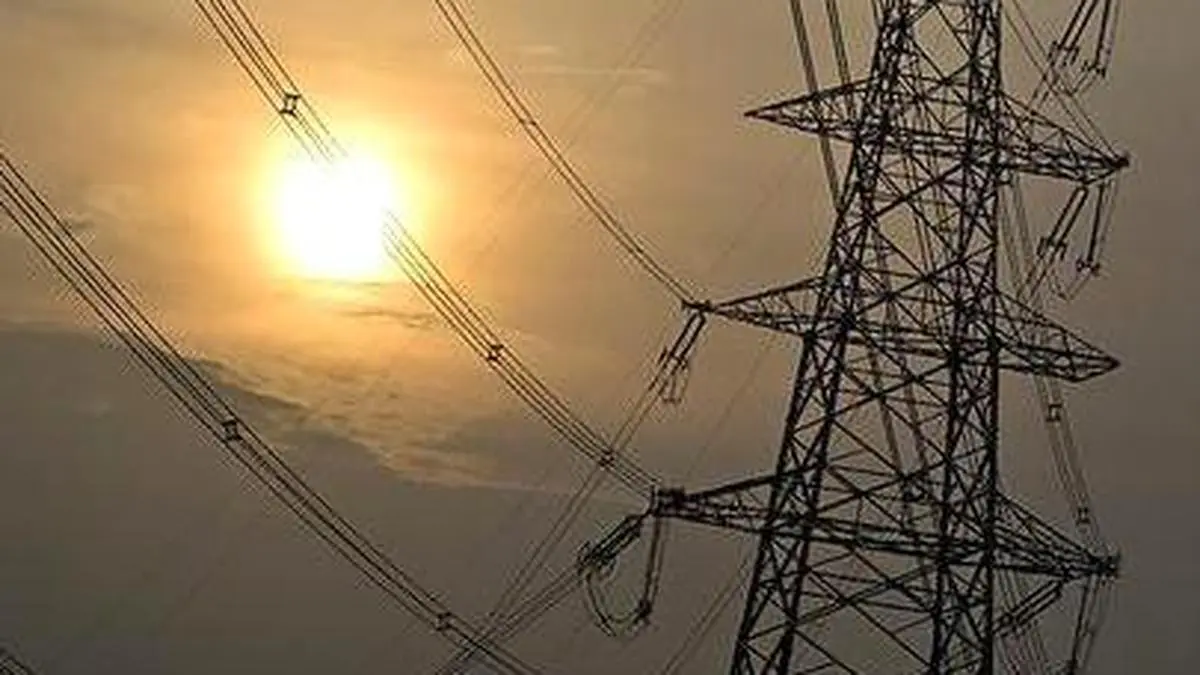
Power: Managing the summer demand | Photo Credit: th-online Administrator
We are in the midst of a searing summer — and peak power demand (which lasts for a brief duration in a day) — is breaking new records. On May 21, this touched 270 GW at about 3 pm. The power requirement ebbs as evening sets in, and climbs again after sundown, when home ACs come to life, touching about 250 GW. It is during this second spike that the power system is really stretched, leading to occasional outages — since about 150 GW of solar capacity is out of reckoning. A deficit between rising demand and assured supplies is met largely by captive generators supplying on the spot market, and at prices as high as ₹10 a unit — the limit set by law. However, rising power demand is now being met with less fuss — when compared with the alarming regional blackouts of yesteryears.
It is interesting that while thermal power accounts for 70 per cent of electricity generated over the course of any given day, this dips to 60 per cent or less between noon and 2 pm in summer when peak demand soars; here, solar power pitches in with 30 per cent. In the evening hours, other sources such as hydel, gas, wind, nuclear and storage comprise 30 per cent of units generated — with hydel and gas being able to ramp power output more quickly than any source. During the day, much more solar power is generated than the grid can absorb, while thermal power cannot be ‘backed down’ quickly to adjust for this supply. Under electricity rules, thermal power output cannot be backed down below a point. This is because it affects costs of operations, creates maintenance issues; above all, it takes more time than hydel or gas, for thermal power to be ramped up when needed.
However, China has re-engineered its thermal power plants, allowing them to ‘flex’ capacity to accommodate renewables supply. This may be worth looking at as an option, since it needs to be seen against solar power forgone. However, the impact on PPAs needs to be worked out. In view of the rising role of solar in the energy mix, the role of battery storage in capturing excess daytime output can hardly be overstated. This push makes sense because grid infrastructure is unable to keep pace with rising capacity in renewables. The National Electricity Plan 2023 projects a requirement of 208 GwH of battery storage energy systems by 2030. The Centre has announced a number of incentives. According to analysts, tendered battery storage capacity stands at 90 GW today, up from about 7GW eight years ago. To meet future power needs, the power generated must be stored and used efficiently. This is all the more because a renewables dominated system cannot operate at much more than 50 per cent installed capacity, as it is weather-dependent. In this context, a push for nuclear could play a role in plugging future power deficits.
Looking ahead this year, the prospect of a weak monsoon could prolong a period of high demand in September and October, even as hydel and gas supplies remain constrained. The Centre should be prepared for such a situation.
Published on May 22, 2026
此内容由惯性聚合(RSS阅读器)自动聚合整理,仅供阅读参考。 原文来自 — 版权归原作者所有。