









The Andhra Pradesh (AP) government is exploring DigiLocker-linked “age tokens” to verify children’s ages, as revealed in a press release following a brief meeting with a few social media companies.
“As part of the enforcement architecture, the government is evaluating the use of secure age-verification mechanisms, including ‘age tokens’ integrated with DigiLocker. This could enable platforms to authenticate user age without compromising privacy, a critical step toward implementing age restrictions at scale,” the press release said.
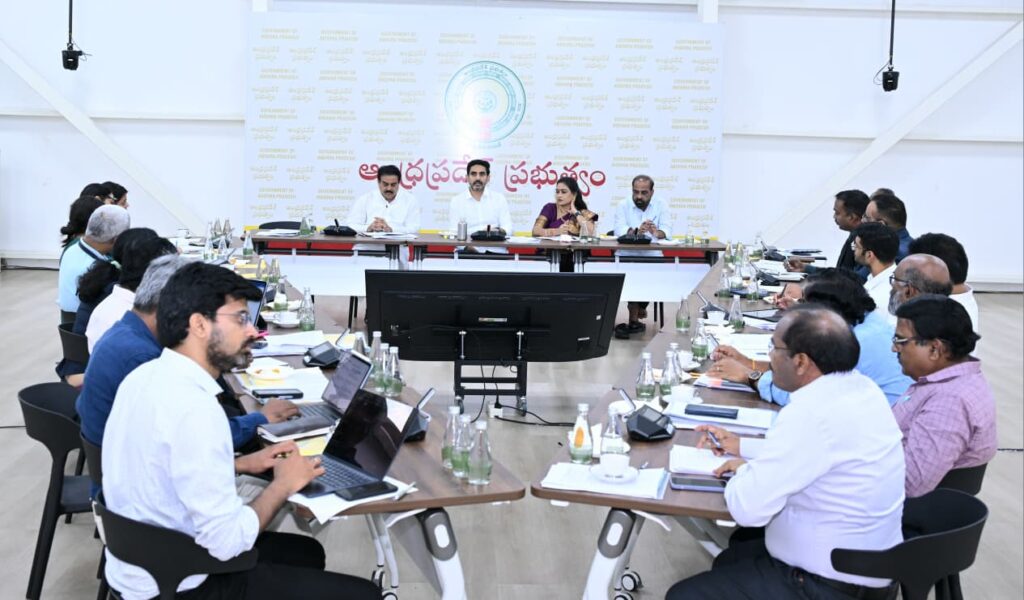
On April 9, AP’s group of ministers held a meeting with several tech companies and proposed:
- An age-based access framework, particularly for users aged 13–16, to ensure that children are not exposed to “harmful or inappropriate content.”
- Strict action on online abuse by strengthening enforcement of existing IT laws, including Section 46 of the IT Act, which empowers the government to appoint an adjudicating officer with the authority to inquire into violations and impose penalties or award compensation.
- The proposal also includes awareness campaigns.
The government said it will seek public feedback on this issue and submit recommendations to the central government, according to the press statement.
AP government frames this as “move to regulate children’s social media use,” and doesn’t use the word “ban”, unlike the neighbouring state Karnataka, whose CM announced the government’s plans without introducing a bill during the recent budget session. Later, Karnataka’s Department of Health and Family Welfare released the “Draft Policy for Responsible Digital Use Among Students,” without consulting Karnataka IT ministry, social media companies, smartphone manufacturers, or Internet Service Providers (ISPs), and involving only mental health experts and school teachers.
Who attended the AP meeting?
The press release listed the following platform representatives:
- Meta‘s Natasha Jog.
- Google‘s Mira Swaminathan.
- X‘s Japreet Grewal.
- Snapchat‘s Sagar Deoskar.
- ShareChat‘s Tamoghna Goswami, and
- Josh‘s Ramanujan Chakravarthy.
Government officials attended the meeting:
- Minister for Human Resources Development of Andhra Pradesh: Nara Lokesh
- Minister for Home Affairs and Disaster Management of Andhra Pradesh: Vangalapudi Anitha,
- Minister of Civil Supplies, Food & Consumer Affairs of Andhra Pradesh: Nadendla Manohar,
- Minister of Health, Family Welfare and Medical Education of Andhra Pradesh: Satyakumar Yadav,
- And officials from the Cyber Crime and Digital Corporation, General Administration Department (GAD), Information and Public Relations Department,
What does the DPDP Act say about age verification? The finalised Digital Personal Data Protection Rules, 2025 (DPDP Rules, 2025) also refer to token-based ID systems to verify the age and identity of the user, i.e., a child. Rule 8 mandates verifiable consent before processing the personal data of a child. To comply with this Rule, platforms should deploy “appropriate technical and organisational measures to ensure the verifiable consent of the parent.”
These include:
- Identity and age details are already available from reliable records, or
- Identity and age details voluntarily provided by the parent, including through an authorised digital token or ID system.
The DPDP rules define an authorised entity as a Central or State government-authorised body or service, including a Digital Locker service provider, that can issue or verify identity and age details.
How would you establish a parent-child relationship? While token-based age verification systems may help verify a user’s age, the verifiable parental consent will require additional mechanisms to establish and verify the parent-child relationship. In one of the DPDP Rules discussions in February 2025, anonymous speakers suggested that Automated Permanent Academic Account Registry (APAAR) IDs could emerge as a solution for verifying parent-child relationships.
Read MediaNama’s event report on “Exploring Anonymity and User Verification” — [PDF]
Also, read some of MediaNama’s coverage from the same event:
- Is age-verification the answer to protecting children from online harms?
- How Do India’s Growing Verification Mandates Impact Companies and Industries?
- Why is Online Anonymity Important—And Does Taking It Away Hurt Fundamental Rights?
For You
- Read Reasoned by Nikhil Pahwa: How AI is changing our world
- Sign up for MediaNama's Daily Newsletter to receive regular updates
- Sponsor a MediaNama Event