


Serving tech enthusiasts for over 25 years.
TechSpot means tech analysis and advice you can trust.
What just happened? Apple has agreed to pay $250 million to settle legal claims that it overstated the capabilities of its first major generative AI rollout. According to court filings released Tuesday, the settlement covers multiple class-action lawsuits filed after the rollout of Apple Intelligence in 2024. The cases were consolidated in the US District Court for the Northern District of California. The agreement still requires judicial approval.
The complaints focused on how Apple marketed its AI features alongside the iPhone 16 and certain iPhone 15 models. Consumers who purchased those handsets between June 2024 and March 2025 may be eligible for payments of up to $95 per device. Apple denied any wrongdoing as part of the settlement.
The dispute stems from Apple's effort to build AI directly into its operating systems rather than offer it as a standalone product. When Apple unveiled Apple Intelligence in June 2024, it described it as a set of features built directly into iOS and its broader ecosystem. The pitch focused on practical use cases: summarizing notifications, improving writing in messages and emails, and making Siri better at handling context and natural language.
At the time, Apple positioned these features as its answer to tools like ChatGPT, but with tighter integration into everyday device use. Demonstrations suggested a more proactive assistant, one that could track details across apps and help users manage information in real time.
But when the iPhone 16 shipped in September 2024, many of those features were not ready. Apple instead rolled them out gradually, and some early versions did not work as intended. Notification summaries, for example, generated inaccurate interpretations of news stories, prompting Apple to disable the feature. A more advanced version of Siri, which had been central to the company's AI strategy, was delayed in March 2025 because of quality issues.
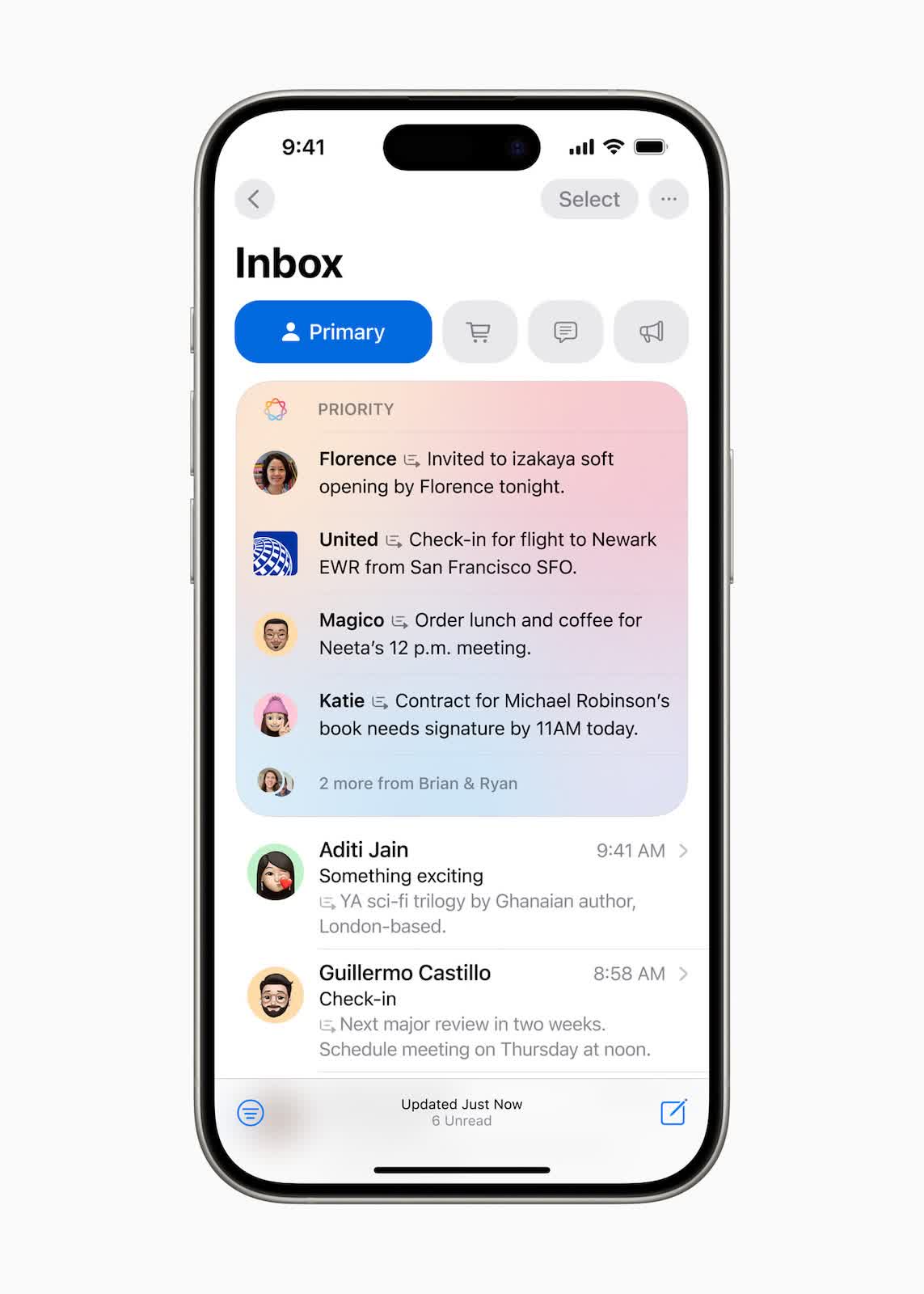
One of the lawsuits described the gap more bluntly, alleging Apple misrepresented the "capabilities of the series 16 iPhone and deceived millions of consumers into spending hundreds of dollars on a phone they did not need, based on features that do not exist."
The situation highlights a broader challenge for Apple. Unlike companies such as Google and OpenAI, which built large-scale AI models and deployed them quickly, Apple took a more cautious route. Its approach emphasized on-device processing and privacy, along with selective use of external models. That strategy has made it harder to keep pace with competitors that moved aggressively into generative AI.
The company has already made some internal and strategic adjustments. John Giannandrea, Apple's head of AI, retired in December. In January, Apple said it would incorporate Google's Gemini models into parts of its AI stack, including Siri, signaling a greater reliance on outside technology.
Apple says its platform has improved since the initial rollout. "Since 'the launch of Apple Intelligence, we have introduced dozens of features across many languages that are integrated across Apple's platforms,'" said Marni Goldberg, an Apple spokeswoman. "We resolved this matter to stay focused on doing what we do best, delivering the most innovative products and services to our users."
Even with the settlement in place, the underlying issue remains unresolved. Building AI systems that are both reliable and tightly integrated into consumer devices is still an open challenge. Apple's experience shows how difficult it can be to align product timelines with the unpredictable performance of generative models, especially when expectations are set early and publicly.
此内容由惯性聚合(RSS阅读器)自动聚合整理,仅供阅读参考。 原文来自 — 版权归原作者所有。