


Serving tech enthusiasts for over 25 years. TechSpot means tech analysis and advice you can trust.
In a nutshell: Nobody likes a freeway that's so congested it resembles a parking lot. The usual solution is to widen the road, but that comes with huge costs and lengthy disruptions. In California, transportation officials are piloting a much cheaper option: a "smart freeway" that uses an algorithm to control the flow of cars and offer suggested speeds.
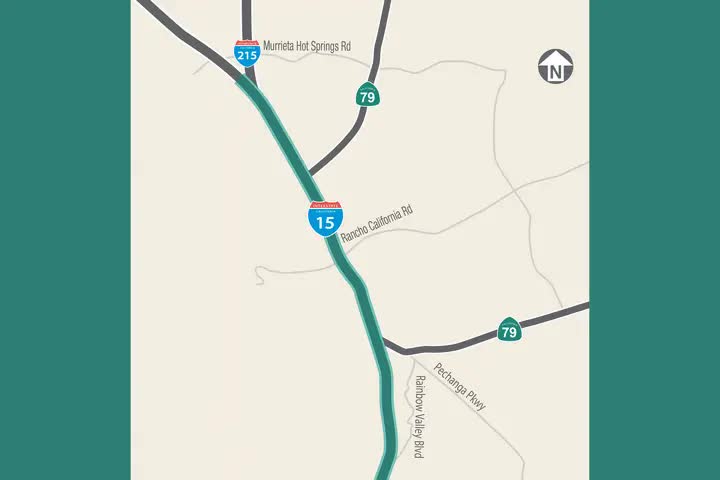
The Riverside County Transportation Commission launched the smart freeway on an eight-mile stretch of the northbound lanes of Interstate 15 in Temecula on June 1.
SFGate reports that three on-ramp meters at Temecula Parkway, Rancho California Road, and Winchester Road are now managed by an algorithm. Unlike typical ramp meters, which operate on short fixed cycles, these determine when vehicles should be allowed to enter the freeway. That means drivers could end up waiting four minutes or more before being allowed to merge into traffic.
While four minutes is a lot longer than a few seconds, transportation officials believe the system will improve traffic flow and reduce stop-and-go traffic. Ultimately, this should reduce the amount of time people spend on the freeway, allowing them to reach their destination faster than they would with traditional on-ramp meters.
The project cost $33 million and will run for two years. Riverside County Transportation Commission spokesperson David Knudsen told SFGate that if the pilot is successful, it will be deployed elsewhere in the county and could make its way to other traffic choke points in California.
"This system is a lot less expensive than trying to build new lanes, and so the idea here is let's make the system that we have work better," Knudsen said.
It's noted that the stretch of freeway that connects Temecula at the Riverside/San Diego County line to the Interstate 215 interchange in Murrieta is notorious. It's only a 10-minute drive – if there were no traffic – but during afternoon peak periods, drivers can spend 25 to 45 minutes traveling through this section.
There are understandable concerns that this could be seen as AI being used to control something potentially dangerous, but Knudsen emphasized that the system is not managed by artificial intelligence. Instead, it uses advanced sensors in the roadway to monitor real-time traffic conditions and make adjustments.
"The intent is to create a consistent flow of traffic on the freeway system, and the coordinated ramp metering among the three on-ramps […] will help do that," Knudsen explained.
This isn't the first use of smart freeways. Similar smart freeway technology was introduced in Australia in 2020. It was also used on Interstate 25 in Denver and other freeways across the state. The results appear promising, too: in Australia, travel times fell between 35% and 65%, and they were down around 20% in Denver.
Image credit: Ken Lund
此内容由惯性聚合(RSS阅读器)自动聚合整理,仅供阅读参考。 原文来自 — 版权归原作者所有。