



惯性聚合 高效追踪和阅读你感兴趣的博客、新闻、科技资讯
阅读原文 在惯性聚合中打开

推荐订阅源

L
LangChain Blog
B
Blog RSS Feed
阮一峰的网络日志
阮一峰的网络日志
Cyber Security Advisories - MS-ISAC
H
Help Net Security
MyScale Blog
MyScale Blog
WordPress大学
WordPress大学
Microsoft Azure Blog
GbyAI
GbyAI
小众软件
小众软件
大猫的无限游戏
大猫的无限游戏
Martin Fowler
Martin Fowler
Vercel News
Vercel News
S
SegmentFault 最新的问题
M
MIT News - Artificial intelligence
Microsoft Security Blog
G
Google Developers Blog
Last Week in AI
Last Week in AI
Hugging Face - Blog
Hugging Face - Blog
酷 壳 – CoolShell
酷 壳 – CoolShell
博客园 - 【当耐特】
Google DeepMind News
Engineering at Meta
Engineering at Meta
云风的 BLOG
云风的 BLOG

TechSpot

Flagship Rematch: Ryzen 7 5800X3D vs. Core i9-12900K Slack chats and internal data from failed startups are finding a second life in AI training A $5 Bluetooth tracker hidden in a postcard exposed a warship's movements Leakers claim PlayStation 6 could offer at least 3x the performance of the PS5 The Mac Mini is no longer a niche product, it's local AI infrastructure IPv6 traffic reaches parity with IPv4 for the first time, Google data shows Xbox expansion cards are now cheaper than SSDs, and PC users are repurposing them Blue Origin prepares to reuse New Glenn booster in bid to challenge SpaceX Nvidia could bring back the 12GB RTX 3060 as supply issues disrupt GPU roadmap What was the first OS you ever used? SNK revives NeoGeo AES with modern upgrades and HDMI support Valve's Proton 11 beta boosts Linux gaming with better performance and classic game support Researchers warn Microsoft Defender vulnerability is already being exploited A four-day Steam freebie turned into $250,000 for an indie game AMD may relaunch Ryzen 7 5800X3D for AM4's 10th anniversary This humanoid robot can almost run as fast as a human sprinter Two New Jersey men jailed for helping North Korean IT workers infiltrate 100+ companies A $7,000 DIY radar project is taking on hardware that usually costs over $100,000 Metro 2039 is going darker than ever, launching this winter on PC and consoles Gemini arrives on macOS with a dedicated desktop app AI infrastructure boom pushes AMD, Intel and Arm to new valuation heights New self-healing material can repair itself over 1,000 times, extend the lifespan of cars and aircraft Japan's bullet train to debut high-tech private cabins, for an added fee Memory card and flash drive pricing surges 120%, with some models spiking 260% Open-source tool decrypts all private data collected by Windows Recall on Copilot PCs The 2026 PC and Console Gaming Report shows most revenue now comes from games outside the Top 20 PureMac is a new open-source macOS cleanup and app removal tool Your Airbnb host might actually be AI Steam might soon display 30-day price history for game deals Intel brings 18A process to budget laptops with new Core Series 3 CPUs
Arm is bringing Android its own version of DLSS – game wi...
Daniel Sims · 2026-06-12 · via TechSpot

Serving tech enthusiasts for over 25 years.
TechSpot means tech analysis and advice you can trust.

Something to look forward to: Advanced rendering features such as ray tracing, Unreal MegaLights, and neural supersampling are primarily associated with Nvidia's PC graphics cards. But Arm recently revealed that these technologies are coming to new Android mobile devices later this year. A short game from Sumo Digital demonstrates how the latest phones and tablets can handle ray tracing at playable framerates with AI-based upscaling.

Sumo Digital's upcoming Neural Dawn aims to demonstrate that mobile graphics chips can achieve high-quality upscaling, denoising, frame generation, and ray tracing with large numbers of dynamic lights. The tech demo is set to launch in the fourth quarter of this year exclusively for devices equipped with an upcoming successor to Arm's Mali G1 GPU.

Neural Dawn will be the first mobile game to support Unreal Engine 5's MegaLights. Introduced in 2024, MegaLights enables games to render scenes with a massive number of dynamic light sources at a lower performance cost compared to earlier methods. It achieves this by estimating the directions of most lights based on a heuristically selected set of primary lights.
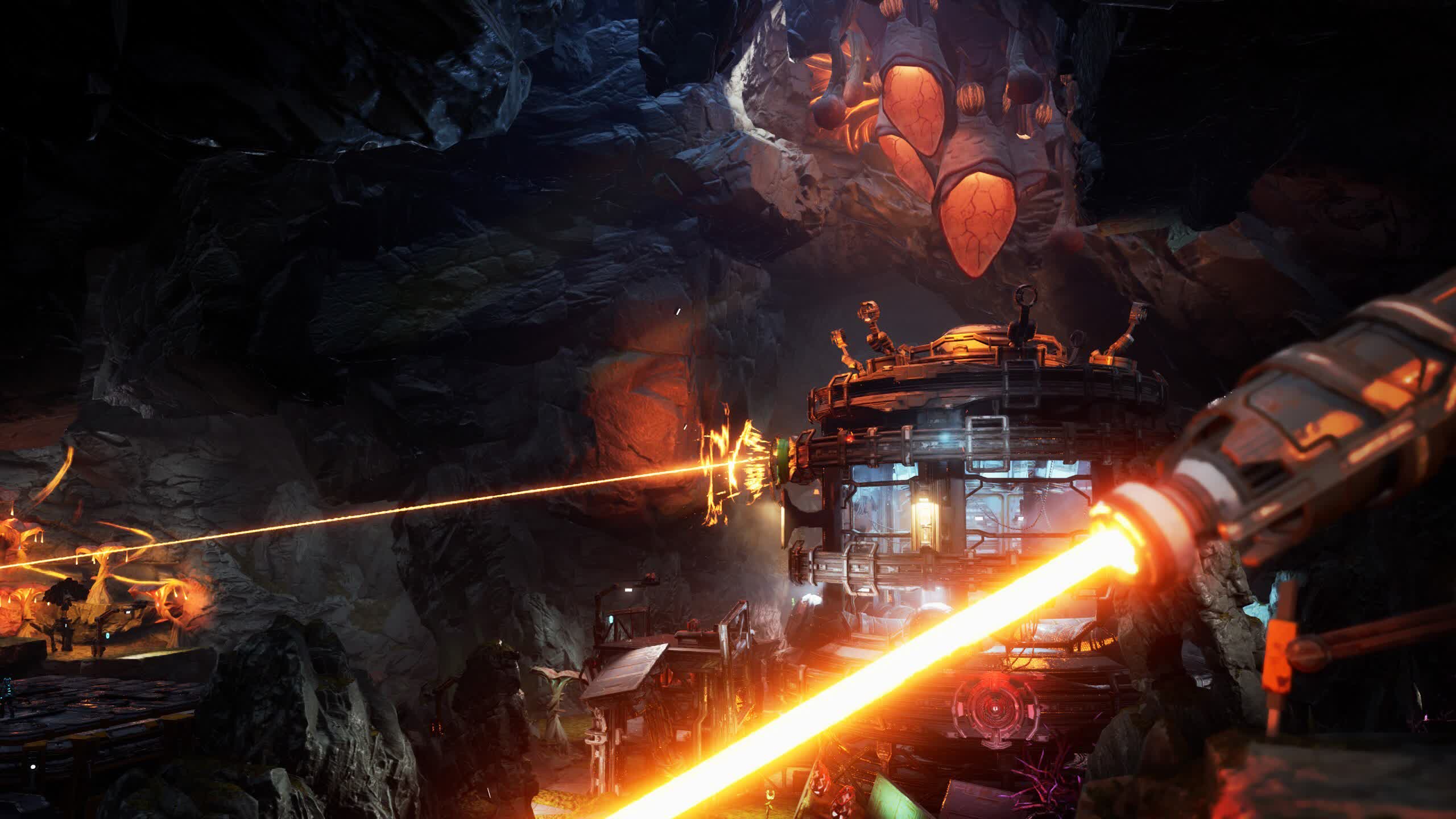
Unreal MegaLights has thus far been exclusively associated with high-end console and PC games, such as Microsoft's upcoming Gears of War: E-Day. Furthermore, adding ray tracing to the pipeline increases the number of visible lights, thus raising the cost of MegaLights, but Arm's Mali G1 is up to the task.

Arm introduced Mali G1 as part of its Lumex platform late last year. Mobile processors featuring G1 have seen significantly improved ray tracing performance, but the next generation introduces support for neural upscaling features that closely resemble Nvidia DLSS. Mali G1's Neural Super Sampling and Denoising (NSSD) and Neural Frame Rate Upscaling (NFRU) sound a lot like Nvidia's DLSS, Ray Reconstruction, and Frame Generation technologies, and appear to target similar workloads.

Sumo Digital told Digital Foundry that combining these techniques allows Neural Dawn to display numerous ray-traced light sources at approximately 30 frames per second. Implementing MegaLights consumes nearly half of the game's rendering budget – about the same as more traditional alternatives. However, NSSD and NFRU are still undergoing optimization, so their final performance impact remains unclear.

Other upcoming important details include Neural Dawn's final release date and information about devices that will support the new Mali G1 lineup.